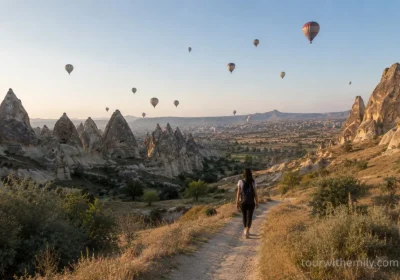
Cappadocia gets reduced to one image — balloons at sunrise — and while that image is accurate, it only shows a single hour of what is one of the most layered destinations in Turkey. The valleys, the underground cities, the cave churches, the hiking trails that connect it all — most visitors barely scratch the surface because every article they read starts and ends with the balloon.
This guide covers the things to do in Cappadocia that are worth your time, with enough detail to plan your days on the ground.
For a full overview of the region — transport, costs, when to visit — the Cappadocia Travel Guide covers it from the beginning.
Hiking the Valleys — and How to Actually Do It
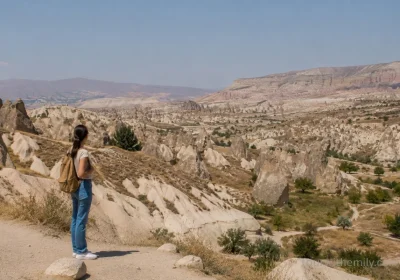
Cappadocia’s valley hikes are free, start directly from Göreme, and put you inside the landscape rather than above it. The fairy chimneys, the carved dovecotes, the ancient cave churches — you walk through all of it on foot in a way no tour bus or ATV replicates. If the balloon is still on your list too, the Hot Air Balloon Cappadocia Guide covers everything you need to book it right.
Most articles list valley names without telling you how long each trail takes, how the terrain runs, or which valleys connect. Here’s what you actually need before you lace up.
Rose Valley (Gül Vadisi)
| Trail Length | Difficulty | Best Time |
| 4–6km | Easy to moderate | Sunset |
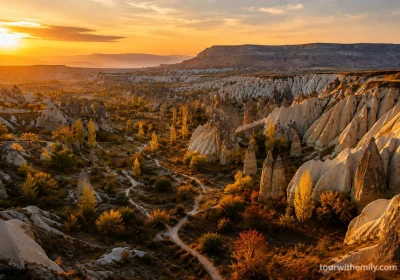
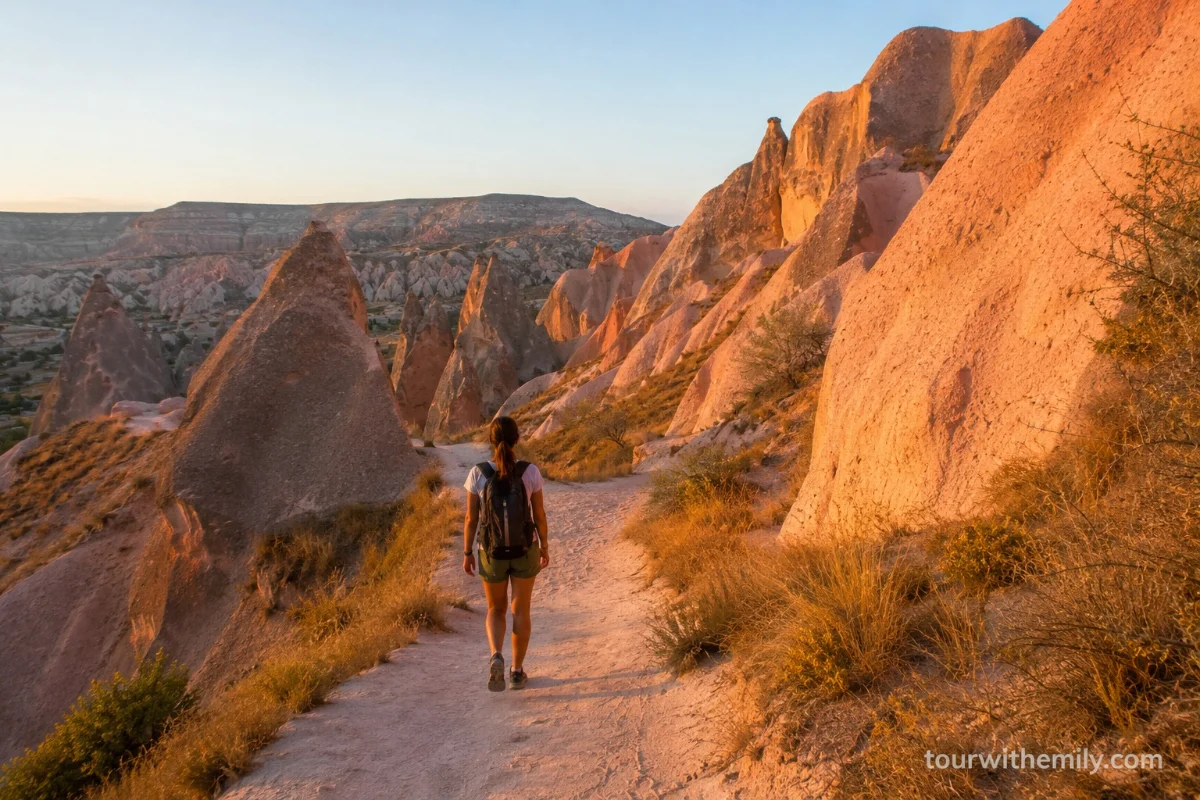
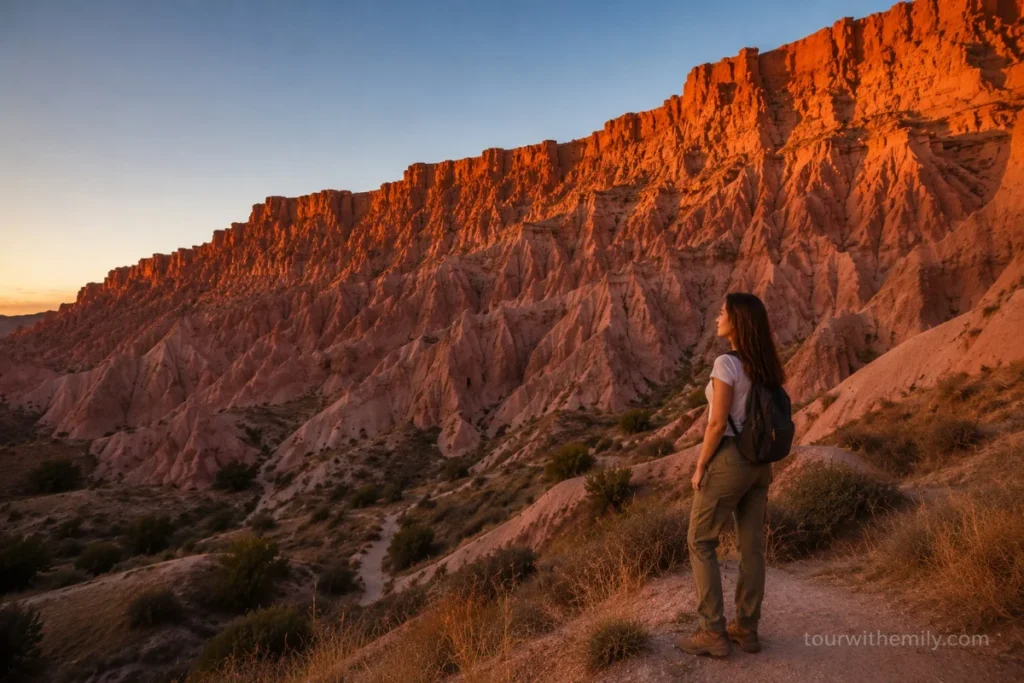
Rose Valley takes its name from the pink-red hue the volcanic rock takes on in late afternoon light. The trail runs between Çavuşin and the Göreme-Avanos road, passing through fairy chimneys and ancient cave churches with partially preserved frescoes still visible inside. Most people walk it in 1.5 to 2 hours one way.
The sunset light in Rose Valley is the best in the region. The rock shifts from pink to deep red to burnt orange as the sun drops. Start from Çavuşin in late afternoon in summer, earlier in autumn — you want to be inside the valley when the light changes, not walking toward it from the road.
Rose Valley connects to Red Valley at its northern end, making it easy to combine both in a single afternoon.
Red Valley (Kızılçukur Vadisi)
| Trail Length | Difficulty | Best Time |
| 3–5km | Easy | Late afternoon |
Red Valley runs parallel to Rose Valley with the same volcanic rock palette but wider, more open terrain. Fewer cave churches, but better unobstructed views of the fairy chimney clusters rising above the canyon walls. It’s the easier of the two — less scrambling, no significant elevation change.
The standard entry point is from the Kızılçukur viewpoint on the Göreme-Ürgüp road. The trail descends into the valley and links up with Rose Valley. Most hikers run Red Valley first then push into Rose for the sunset section — combined, the walk takes around 3 hours.
Pigeon Valley (Güvercin Vadisi)
| Trail Length | Difficulty | Best Time |
| 3.5km one way | Easy | Morning or midday |
Pigeon Valley connects Göreme and Uçhisar. It’s named for the thousands of dovecotes carved into the cliff walls — historically, pigeon droppings fertilized the volcanic soil and communities maintained large pigeon populations for exactly this reason. The trail is flat and well-marked — one of the easier hikes in the region, and a good option if you want distance without any real climbing.
The walk from Göreme to Uçhisar takes about 1.5 hours. Walk it one way and take a taxi or dolmuş back — most people don’t bother retracing it. Uçhisar Castle at the far end is worth climbing for the view across the valley before you leave.
Love Valley
| Trail Length | Difficulty | Best Time |
| 2–4km | Easy | Morning |
Love Valley is known for its unusually shaped fairy chimneys — tall, narrow rock columns that rise from the valley floor and have made it one of the most photographed spots in Cappadocia. It sits just north of Göreme, a short drive or walk from the town center.
The rock formations are concentrated enough that an hour covers what you need to see. Pair it with Pigeon Valley for a solid morning of cappadocia hiking without overlap.
Ihlara Valley
| Trail Length | Difficulty | Best Time |
| 14km full / 3–4km popular section | Easy | Any time of day |
Ihlara is different in character from the valleys around Göreme. It’s a river canyon with the Melendiz River running along the bottom and rock-cut churches carved into the canyon walls at intervals. The vegetation is dense and green — a sharp contrast to the dry, open landscape around Göreme.
It’s a longer drive from town, which makes it a half-day or full-day excursion rather than a morning walk. Most organized tours cover a section between Ihlara village and Selime Monastery. With your own transport, the full canyon length makes for one of the best full-day walks in central Turkey.
Ihlara is included in the Green Tour — covered in the next section.
Göreme Open Air Museum
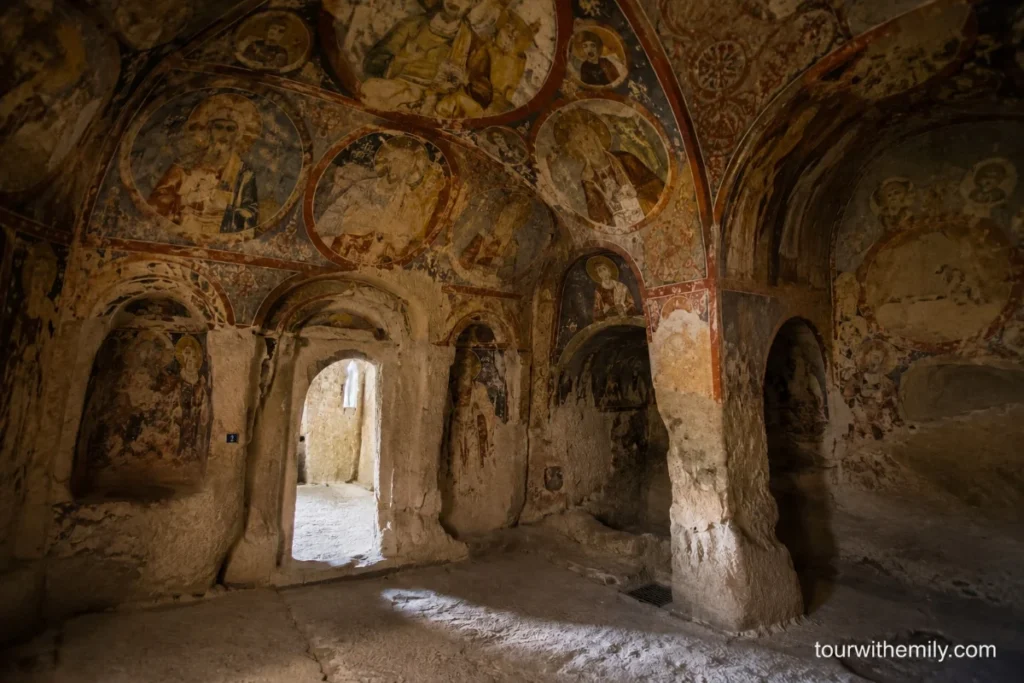
The Göreme Open Air Museum is a UNESCO World Heritage Site and one of the most important early Christian complexes anywhere in the world. It’s a cluster of cave churches, chapels, and monasteries carved into the volcanic tuff between the 10th and 13th centuries, most still decorated with Byzantine frescoes.
The churches are small and the complex is walkable in under two hours. The ones worth prioritizing are the Dark Church (Karanlık Kilise) — best-preserved frescoes in the site, separate entrance fee, genuinely worth it — the Snake Church (Yılanlı Kilise), and the Apple Church (Elmalı Kilise).
Get there early. Tour groups arrive mid-morning and the interior spaces are narrow. Entrance fees change regularly so confirm on arrival rather than planning around a figure you read online.
This is one of the cappadocia attractions most people rush through. Give it two hours minimum.
Underground Cities: Derinkuyu and Kaymakli
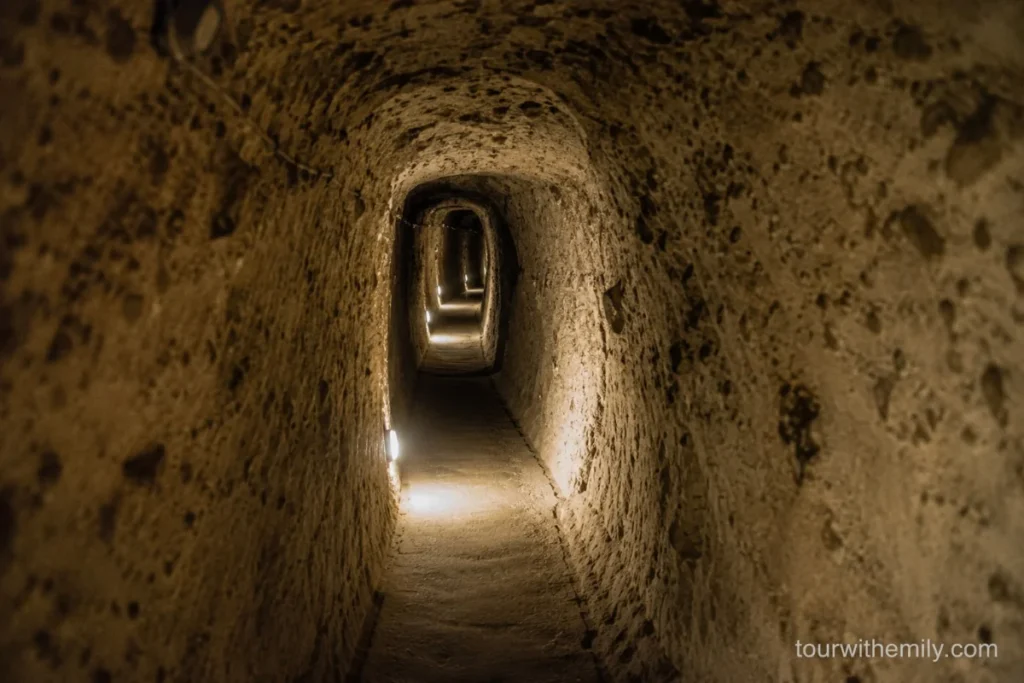
Cappadocia’s underground cities are a different category of experience from the valley hikes and open air sites. Early Christian communities carved entire functioning cities into the soft volcanic rock — ventilation shafts, water wells, livestock stables, kitchens, churches, storage rooms — all connected by tunnels that could be sealed from the inside with rolling stone doors.
Derinkuyu is the largest and deepest. Walking its narrow tunnels and dropping through the levels makes the scale of what was carved here hard to take in. The ventilation system — shafts running the full vertical depth of the city — is the detail that stays with you.
Kaymakli is smaller and covers more horizontal ground. The tunnels are tighter and the layout denser — more claustrophobic than Derinkuyu, but the layout makes it easier to identify what each space was for: stables, communal areas, storage rooms.
If you visit one, visit Derinkuyu. If you have time for both, they’re close enough to combine in a single day. Both are a drive from Göreme and both typically appear on the Green Tour.
The Green Tour and Red Tour — What’s Actually Included
These two organized day tours come up in every Cappadocia guide without a clear explanation of what they cover. Most people book one without knowing why.
The Red Tour covers the north: Göreme Open Air Museum, Uçhisar Castle, Çavuşin village, Paşabağ (Monks Valley) and its multi-headed cappadocia fairy chimneys, Devrent Valley, and usually a pottery stop in Avanos. It’s a full day of the region’s most iconic cappadocia attractions — the visual highlights, all within a relatively short radius of Göreme.
The Green Tour goes south and covers entirely different ground: one of the underground cities (Derinkuyu or Kaymakli), a section of Ihlara Valley on foot, Selime Monastery, and sometimes a local workshop visit. More distance, more physical, less overlap with what you’d see independently around Göreme.
One day available: book the Red Tour. The visual payoff is higher and it covers the sites most people are trying to see. Two days: do both. The Green Tour’s underground city and Ihlara canyon don’t duplicate anything in the Red Tour — they’re a completely different side of the region.
Both tours run daily from Göreme with transport included. Confirm lunch arrangements before booking — it’s included on some Green Tours, not on others.
ATV Safari, Horseback Riding and Camel Rides
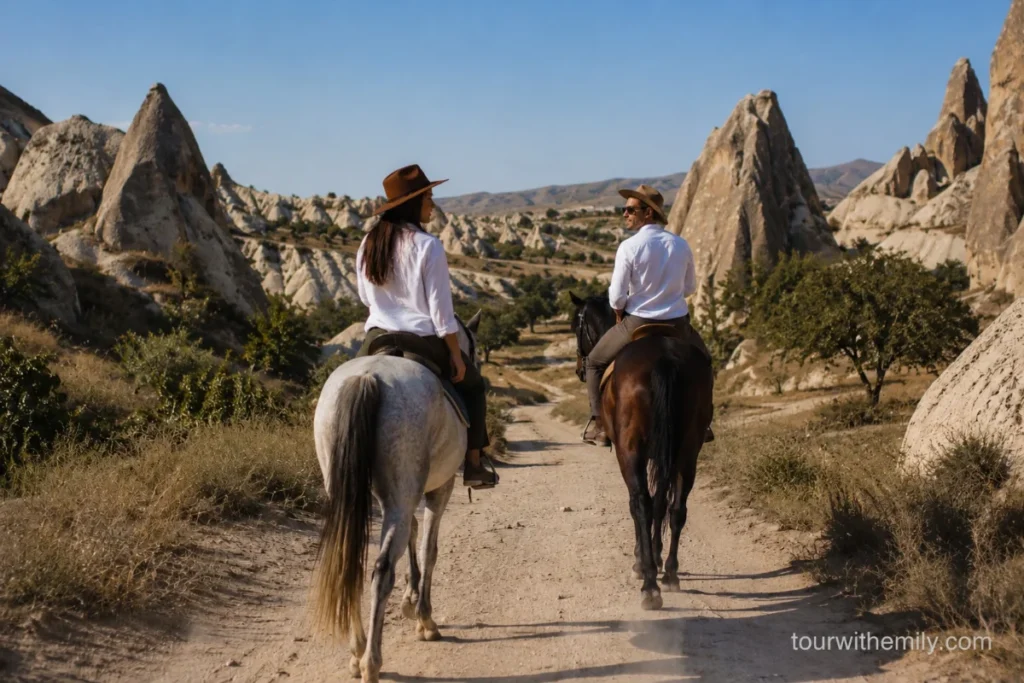
Three of the most-booked cappadocia activities, and each one moves through the landscape differently.
ATV safaris run through Rose Valley, Red Valley, or the fairy chimney terrain north of Göreme — automatic machines, wide trails, no experience needed. Book the afternoon slot if you can; the valleys look completely different when the light drops low.
Horseback riding is slower, which is the point. The trails are well-worn and the horses know the terrain. Rose Valley on horseback gives you time to look up and around in a way that an ATV pace doesn’t. Tours run from one hour to a full day; operators in Göreme handle both beginners and experienced riders.
Camel rides run short — around the fairy chimneys near Göreme or on the road toward Uçhisar. Touristic by nature, worth doing if it appeals to you.
Turkish Night Show and Whirling Dervishes
Not the same thing, though most guides treat them as one.
A Turkish night show is dinner with entertainment — folk dances from across Turkey, belly dancing, and a whirling dervish segment, all in a cave venue. It’s designed for tourists and it plays that way. That’s not a criticism; if you want one evening of Turkish music and performance in a dramatic setting, it delivers.
A Sema ceremony is a Sufi devotional practice. The whirling is meditation, not performance, and the experience — no dinner, no folk dances, near silence — is completely different from what happens in a night show. Authentic Sema ceremonies run periodically in Göreme and Ürgüp. Ask your hotel to point you toward one rather than booking through a tour operator, where the Sema is usually a segment of a larger show.
Pottery in Avanos and Other Local Experiences
Avanos has been a pottery town for centuries. The red clay comes from the Kızılırmak River — Turkey’s longest river — that runs through the center of town. Most workshops offer hands-on sessions at the wheel with a local potter. An hour here is time well spent away from the valley circuit.
Carpet weaving demonstrations come up in Göreme and as a Red Tour stop in Avanos. Worth watching for the craft itself.
Turkish cooking classes are available from a small number of Göreme operators, usually run in small groups. If this is something you’d enjoy, book ahead rather than looking for availability on the day.
Where to Eat in Cappadocia
The regional food here is specific enough to seek out rather than settle for whatever’s closest.
Testi kebab is the dish most identified with Cappadocia — meat and vegetables cooked inside a sealed clay pot, then cracked open at the table. The sealed cooking concentrates the flavors differently from an open braise. It takes time, so order it at the start of your meal.
Gözleme — Turkish flatbread filled with spinach and cheese, meat, or potato and cooked on a griddle — is a reliable lunch. You’ll find it at market stalls and small restaurants throughout the region.
Mantı, small Turkish dumplings served with yogurt and paprika butter, is worth ordering if it’s on the menu.
The wine is worth mentioning separately. The volcanic soil around Ürgüp produces wines from indigenous Turkish varieties — Öküzgözü and Boğazkere for reds. Several local producers have tasting rooms in the area. Argos in Cappadocia has a working winery on site.
Frequently Asked Questions
What is there to do in Cappadocia besides hot air balloons?
Valley hiking, the Göreme Open Air Museum, underground cities at Derinkuyu and Kaymakli, ATV safaris, horseback riding, pottery in Avanos, and the Green and Red day tours. Two to three full days of activities exist independently of the balloon.
Which is better — the Green Tour or Red Tour in Cappadocia?
One day: Red Tour — it covers the visual highlights. Two days: do both. They cover completely different ground and don’t overlap.
How long do you need in Cappadocia?
Three days minimum. The Best Time to Visit Cappadocia guide covers the best window to go.
Is cappadocia hiking difficult?
No. Most valley trails are easy to moderate, well-marked, and flat. Wear proper shoes — sandals don’t work on the rocky surfaces.
What is the Göreme Open Air Museum?
A UNESCO World Heritage Site — cave churches and monasteries carved into volcanic rock between the 10th and 13th centuries, with Byzantine frescoes still visible inside. One of the essential cappadocia attractions in the region.
What is a testi kebab?
Meat and vegetables slow-cooked in a sealed clay pot, cracked open at the table. A Cappadocian regional dish. Order it early — it takes time to prepare.