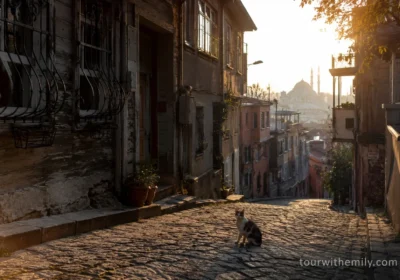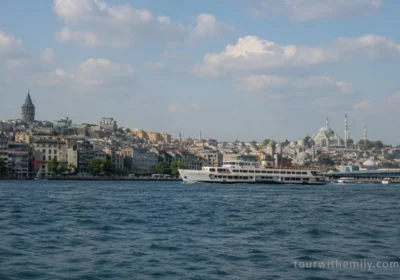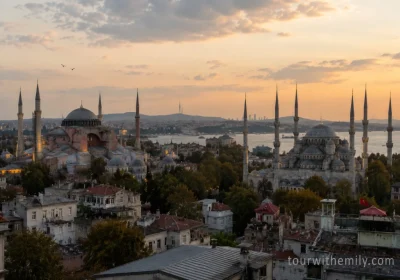
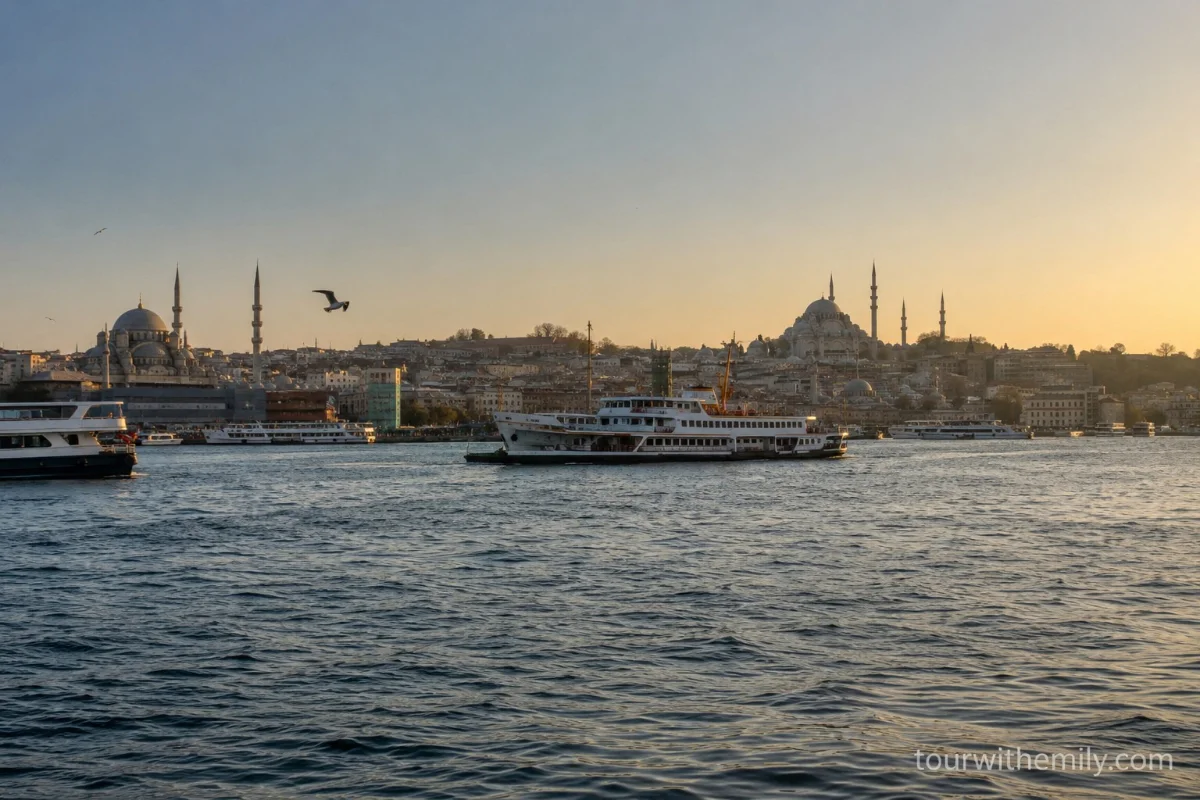
Istanbul is one of those cities that stays with you. It sits across two continents, carries the weight of three empires — Roman, Byzantine, and Ottoman — and somehow still feels completely alive. The Hagia Sophia has been standing for nearly 1,500 years. The Grand Bazaar has been selling things since 1461. The ferries cross the Bosphorus every 15 minutes, the same way they always have.
I came to Istanbul expecting history. What I didn’t expect was how much the city would pull me in the direction of just wandering — down side streets in Balat, onto a random ferry to the Asian side, into a lokanta with no English menu and the best lentil soup I’ve had anywhere.
In 2025, Istanbul was named the Most Desirable City in Europe at the Wanderlust Reader Travel Awards — not because it’s new or trending, but because it keeps delivering something that’s hard to find elsewhere: a city that’s genuinely historic, genuinely modern, and genuinely its own thing.
This guide covers everything a first-time visitor needs to plan a trip to Istanbul — when to go, where to stay, what to see, how to get around, and how much to budget. Each section links out to a dedicated guide where the detail lives.
When to Visit Istanbul
April, May, September, and October are the best months. The weather is mild, the light is good, and the city isn’t at its most crowded. Summer (June–August) is warm and lively but busy. Winter is quiet, atmospheric, and significantly cheaper — the main sites are less crowded and hotels drop in price.
How to Get to Istanbul
Istanbul has two airports. Istanbul Airport (IST) on the European side is the main international gateway — most long-haul flights land here. Sabiha Gökçen Airport (SAW) on the Asian side handles primarily budget carriers and domestic routes.
Getting into the city from either airport takes time — both are far from the center. The Havaist shuttle bus runs from IST to Taksim and other city points. From SAW, the Havabus covers the same function. Taxis work but cost more; the metro from IST is cheaper and reliable.
For travelers coming from Europe by land, long-distance buses arrive at Esenler Otogar.
Getting Around Istanbul
The city is large and hilly, but the public transport network covers most of what a first-time visitor needs.
The İstanbul Kart is a rechargeable transit card that works on the metro, tram, ferry, and bus. Buy one at any major metro station or ferry terminal on arrival — it saves money over single tickets and removes the need to carry change.
The T1 tram line is the most useful for visitors, running from Kabataş through Sultanahmet and across the Galata Bridge to Eminönü. The Marmaray rail line crosses under the Bosphorus and connects the European and Asian sides. The Tünel, built in 1875, is the second-oldest underground railway in the world and connects Karaköy to Beyoğlu in a single short ride.
Ferries are the most enjoyable way to cross between continents — and the most practical. They run frequently from Eminönü, Karaköy, and Beşiktaş to Kadıköy, Üsküdar, and the Princes’ Islands.
Best Neighborhoods to Stay In
Istanbul is large enough that where you stay shapes what the trip feels like.
Sultanahmet is the historic heart — the Hagia Sophia, Blue Mosque, Basilica Cistern, and Topkapi Palace are all walkable from here. It’s the most convenient base for first-timers who want to cover the main landmarks without spending time on transport.
Beyoğlu and Taksim cover the modern, cosmopolitan side of Istanbul — Istiklal Avenue, rooftop bars, restaurants, and nightlife. Better for travelers who want energy and variety over historic proximity.
Karaköy and Galata sit below Beyoğlu and have a quieter, more creative atmosphere — independent cafes, the Galata Tower, and easy ferry access to the Asian side. A strong choice for travelers who want the city without the tourist-area density.
Kadıköy is on the Asian side. More local, more relaxed, excellent food market, and a very different pace from Sultanahmet. Worth considering for repeat visitors or anyone who specifically wants a less tourist-heavy experience.
Hotel recommendations and a full neighborhood breakdown are in the Where to stay in Istanbul for Tourists guide.
Top Things to Do in Istanbul
The main sites are all in or near Sultanahmet and can be covered in two to three days of focused sightseeing.
Hagia Sophia — Built in 537 AD, converted between church, mosque, and museum across the centuries, and now an active mosque again since 2020. Entry is free. Women need to cover their heads inside.
Blue Mosque (Sultan Ahmed Mosque) — The only mosque in Istanbul with six minarets. Interior of 20,000 hand-painted blue tiles. Still an active mosque, so there are closing times around prayer.
Basilica Cistern — An ancient underground water reservoir beneath Sultanahmet, columns rising from dark water. Best visited first thing in the morning before tour groups arrive.
Topkapi Palace — The administrative and residential center of the Ottoman Empire for four centuries. The Harem section requires a separate ticket. Allow at least three hours.
Grand Bazaar — Over 4,000 stalls in a covered market that has operated since 1461. Go to look and explore as much as to buy. Prices are negotiable.
Galata Tower — Medieval stone tower with a 360-degree view over the city and the Bosphorus. Queue early or book ahead.
Bosphorus Cruise — The short public ferry route from Eminönü gives views of both shorelines, the bridges, and the waterfront palaces. Cheaper than a tour boat and the experience is comparable.
The full list with practical details on tickets, timing, and what to skip is in Things to Do in Istanbul: 15 Best Attractions.
The Asian Side — Worth Half a Day
Most first-timers stay on the European side and treat the Asian side as an optional extra. It isn’t. Taking the ferry from Eminönü or Karaköy across to Kadıköy is one of the more distinctly Istanbul experiences available — the crossing takes 20 minutes and the view of the city from the water is something the streets don’t give you.
I took the ferry across on my second day and spent the afternoon at the Kadıköy food market before walking down to Moda for a slow coffee by the water. It felt like a completely different city — quieter, more local, less rushed. That afternoon was one of the best parts of the trip.
Üsküdar, slightly north of Kadıköy, is quieter and more residential — the Maiden’s Tower sits just offshore and the sunset from the waterfront there is one of the better views in the city.
What to Eat in Istanbul
Istanbul’s food scene runs from street stalls to serious restaurants and the best of it tends to be cheap.
Simit — sesame bread rings sold everywhere for almost nothing. Breakfast standard.
Balık ekmek — grilled fish sandwich sold from boats moored at the Galata Bridge. An Istanbul institution. Eat it standing at the water.
Midye dolma — stuffed mussels sold by street vendors, priced per mussel. Common around Istiklal and the waterfront.
Lahmacun — thin crispy flatbread with spiced meat, usually rolled with parsley and lemon. Tatbak in Beyoğlu has been serving it since 1960 and is Michelin-recommended.
Döner kebab — widely available and variable in quality. Dürümzade in Beyoğlu is the one Anthony Bourdain featured.
Turkish coffee — small, strong, served with grounds that settle at the bottom. Fortune telling from the grounds is a local tradition worth trying once.
Baklava — available everywhere. Hafız Mustafa, with multiple locations across the city, is the most reliable. I stopped at their Sirkeci branch after visiting the Basilica Cistern and ended up going back the next morning.
Where to find all of this — from cheap lokantas to rooftop restaurants — is covered in Best Food in Istanbul: What & Where to Eat.
Hidden Gems
Balat — Istanbul’s most colorful neighborhood, with painted houses on cobbled streets, hip cafes, and a genuinely local feel that Sultanahmet doesn’t have. The famous colorful houses are on Kiremit Street.
Princes’ Islands (Büyükada) — A ferry ride southeast of the city, car-free, with Ottoman wooden mansions and beaches. A half-day or full-day escape from the city’s pace.
Tünel — The historic underground funicular between Karaköy and Beyoğlu, built in 1875. A two-minute ride through nearly 150 years of city history.
Serdar-ı Ekrem Street in Galata — Lined with vintage boutiques, independent coffee shops, and art spaces. A good alternative to the crowded main drag of Istiklal Avenue.
Kadıköy food market — The Asian side’s answer to the Spice Bazaar, but with fewer tourists and better prices. Worth the ferry ride on its own.
More spots that most visitors miss are in Hidden Gems in Istanbul Most Tourists Miss.
How Much Does Istanbul Cost?
Istanbul is more affordable than most major European cities but less cheap than it used to be. Entrance fees have risen significantly in recent years and some travelers find the cost higher than they expected.
What’s affordable: street food, local transport, lokanta meals, ferries, Turkish coffee and tea.
What costs more than expected: major attraction entrance fees, hotel rooms in Sultanahmet during peak season, taxis from the airports.
The Müze Kart (Turkish Museum Pass) covers entry to Topkapi Palace, the Harem, Istanbul Archaeological Museums, and other state-run sites. For a 3-day trip visiting multiple attractions, it saves money over individual entry.
Turkish Lira: Istanbul is priced in TRY, and the lira has weakened against the dollar and euro. Foreign visitors get meaningful purchasing power — the gap is most visible in food, local transport, and mid-range hotels.
Istanbul on a Budget: How to Travel Cheap breaks down daily costs by tier and covers where to save without cutting what matters.
Is Istanbul Safe?
Istanbul is a safe city by international standards for most travelers. The main areas visitors use — Sultanahmet, Beyoğlu, Karaköy, Kadıköy — are busy, well-policed, and well-lit. Petty theft exists in crowded tourist areas; violent crime against tourists is rare.
Solo female travelers report mixed experiences depending on the area and time of day. Sultanahmet is generally fine during the day; some areas require more awareness at night. Is Istanbul Safe? Honest Solo Traveler’s View covers the full picture by neighborhood and time of day.
Practical Information
Visa: Most nationalities need an e-Visa, obtained online before travel at evisa.gov.tr. Apply at least a few days before departure.
Currency: Turkish Lira (TRY). ATMs are widely available. Card payments accepted in most hotels and restaurants; cash useful for street food, markets, and local transport.
Language: Turkish. English is widely spoken in tourist areas and hotels.
Dress code: Cover shoulders and knees when entering mosques. Women need to cover their heads inside the Hagia Sophia and Blue Mosque — scarves are available at the entrance.
Emergency numbers: Police 155, Ambulance 112, Fire 110.
Continuing to Cappadocia: Most visitors combine Istanbul with Cappadocia. The flight takes 1.5 hours; overnight bus and train options also exist. How to Get to Cappadocia from Istanbul covers every transport option with current timing and cost.
Frequently Asked Questions
How many days do you need in Istanbul?
Three days covers the main landmarks, a Bosphorus ferry, and a proper meal at a lokanta. The Istanbul Itinerary: Perfect 3-Day Plan lays it out day by day.
What is the best area to stay in Istanbul for first-timers?
Sultanahmet for the main sites. Beyoğlu for atmosphere and food. Karaköy for a quieter middle ground.
Is Istanbul expensive?
More than it used to be, but affordable compared to Western Europe. Street food and local transport are cheap; major attraction fees add up quickly.
What is Istanbul best known for?
The Hagia Sophia, the Grand Bazaar, and the Bosphorus. Beyond the landmarks, it’s the food, the neighborhoods, and the ferry rides between continents that people remember most.
Is Istanbul worth visiting in winter?
Yes. Fewer crowds, lower prices, and the city stays atmospheric year-round.
Is Istanbul safe for solo female travelers?
Generally yes, with awareness. Main areas are fine during the day; some require more caution at night.