Quick Answer: Stay in Sultanahmet first, explore the rest later.
Istanbul is a city of 16 million people spread across two continents. Where you stay determines how much of your time you spend actually seeing things versus sitting in traffic — and in a city where road congestion runs at almost any hour, that’s a real consideration.
How to Choose Where to Stay in Istanbul
Start with transport, not attractions.
Istanbul’s public transit network — the T1 tram, the M2 metro, the Marmaray rail tunnel under the Bosphorus, and the ferry network — is excellent. But the bus network runs in the same traffic as taxis and private cars, which means it’s unreliable. Staying close to a tram or metro stop is the most practical decision you’ll make before you book.
The second question is what kind of trip you want. Sultanahmet puts you next to the main historical sites but goes quiet at night. Beyoğlu and Karaköy have energy and better food but require a tram or taxi to reach the main sights. Kadıköy gives you the most local experience but puts a ferry crossing between you and Sultanahmet every time. If you’re still working out the broader trip — flights, costs, what to see — the Istanbul Travel Guide covers it all in one place.
Quick Comparison
| Area | Best For | Transport | Vibe |
| Sultanahmet | First-timers, sightseeing | T1 tram | Historic, tourist-heavy |
| Beyoğlu / Taksim | Nightlife, shopping | M2 metro, T1 tram | Modern, busy |
| Karaköy / Galata | Central + local balance | T1 tram, ferry | Creative, gentrified |
| Cihangir | Local feel, quiet base | Walk to Taksim | Residential, expat |
| Beşiktaş / Ortaköy | Couples, luxury | Bus, ferry | Bosphorus views |
| Kadıköy | Repeat visitors, foodies | Ferry | Local, relaxed |
| Üsküdar | Families, quiet | Ferry, Marmaray | Residential, safe |
Sultanahmet — Best for First-Timers
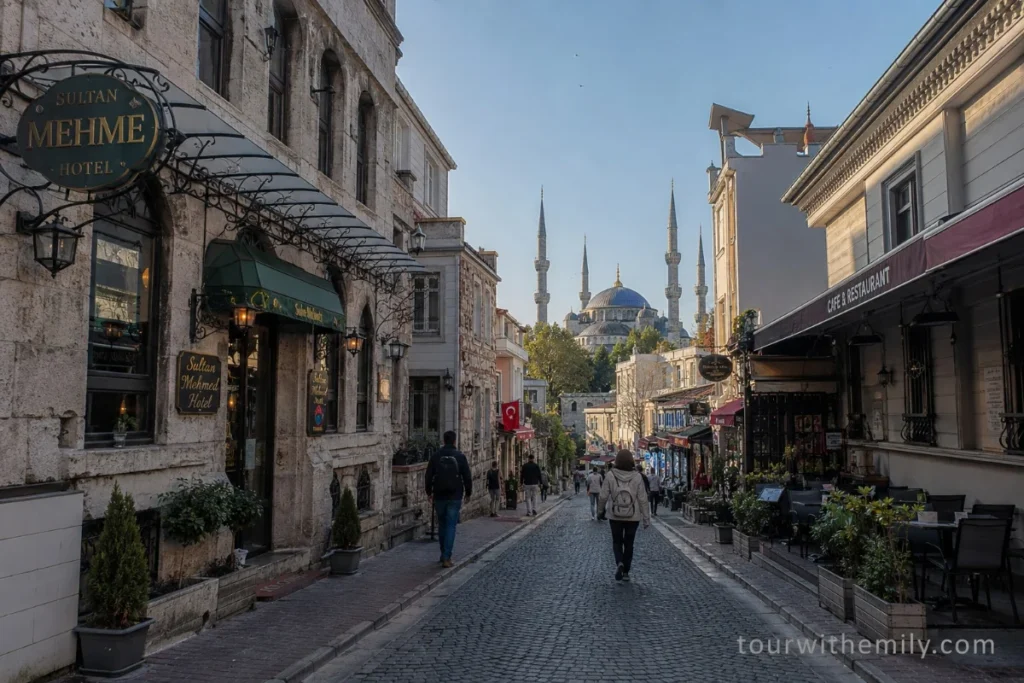
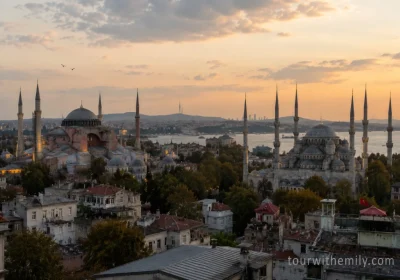
Sultanahmet is the historic center of Istanbul — the Hagia Sophia, Blue Mosque, Basilica Cistern, Topkapi Palace, and Grand Bazaar are all here, most within ten minutes’ walk of each other. The T1 tram runs through Sultanahmet and connects to Karaköy, Eminönü, and the ferry terminals. The full list of what to see and how long each site takes is in Things to Do in Istanbul: 15 Best Attractions.
The food is the main drawback. Sultanahmet restaurants are priced for tourists, not for quality — you’ll eat better in almost any other neighborhood for less money. Sultanahmet hotels also cost more than equivalent quality in Karaköy or Beyoğlu. And if you’re a light sleeper, the morning call to prayer from the surrounding mosques starts around 6am. It’s worth hearing once. Pack earplugs for the rest of the trip.
First-timers on a short stay, and anyone prioritizing proximity to the main historical sites, are in the right place here. For food, skip the restaurants immediately around the main sites — walk two streets back and the quality improves and the prices drop. If you’re ready to book, Sultanahmet has a wide range of hotels across every budget.
Beyoğlu and Taksim — Best for Nightlife and Shopping
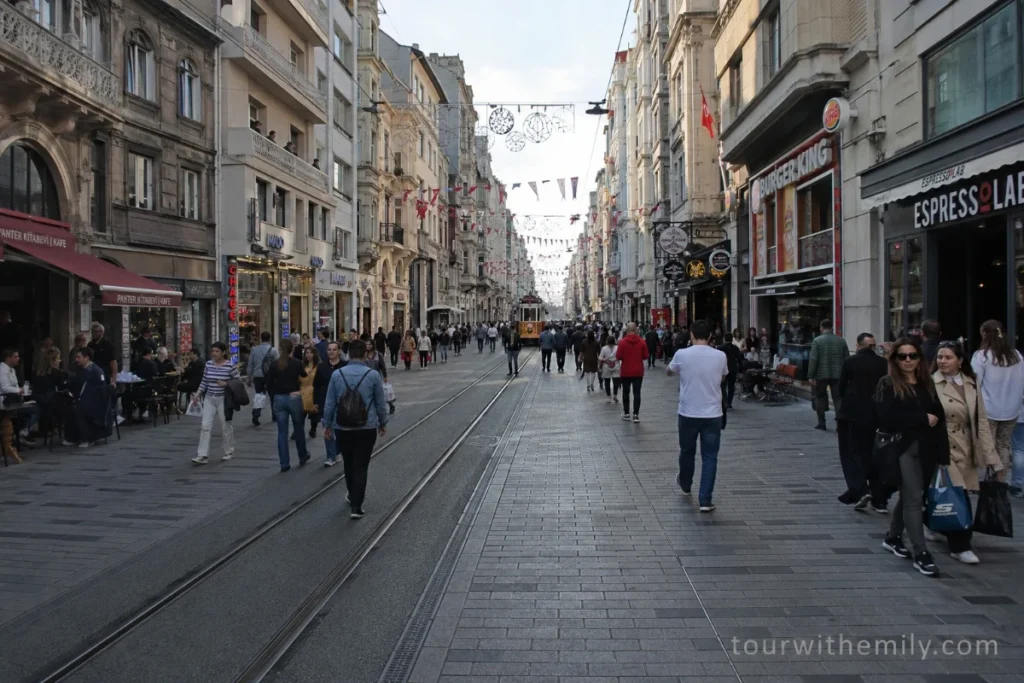
Beyoğlu is the modern, cosmopolitan side of Istanbul. İstiklal Avenue runs through the heart of it — a long pedestrian street of shops, cafes, restaurants, and bars leading from Taksim Square down toward Galata. The M2 metro connects Taksim to the airport. The T1 tram, reachable via a short walk or the Tünel funicular, connects south to Sultanahmet.
Beyoğlu accommodation runs cheaper than Sultanahmet for similar quality and the food here is noticeably better. It’s also the right base for shopping — İstiklal and the streets off it have everything from global brands to independent boutiques and vintage stores. The Pera Museum and Istanbul Modern are both here for galleries alongside the sightseeing.
One thing to know before booking: Dolapdere and Tarlabaşı, both close to Taksim Square, have a rougher character than the rest of Beyoğlu. Hotels in those streets exist but the surrounding area is uncomfortable for tourists, particularly at night. Stay on the İstiklal side of Taksim rather than the streets immediately north of the square.
Beyoğlu suits travelers who want nightlife, good restaurants, and a modern city feel. The food ranges from cheap street food on İstiklal to proper sit-down restaurants in the side streets — Dürümzade in Beyoğlu is the döner spot Anthony Bourdain featured, still worth the queue. Beyoğlu hotels tend to offer better value than Sultanahmet for the same price bracket.
Karaköy and Galata — Best Balance of Central and Local
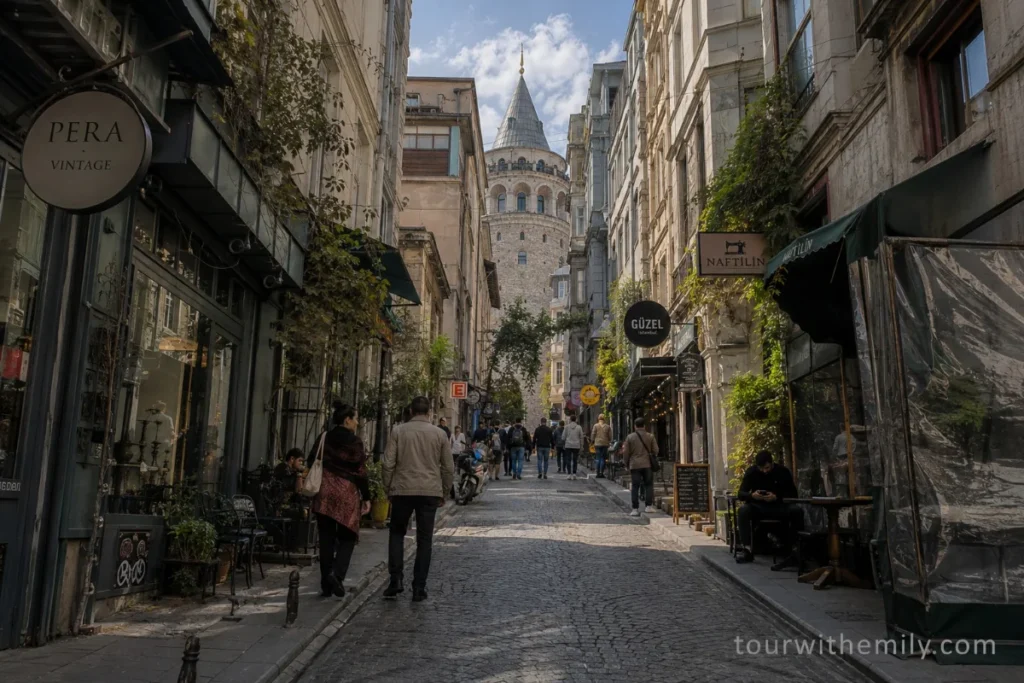
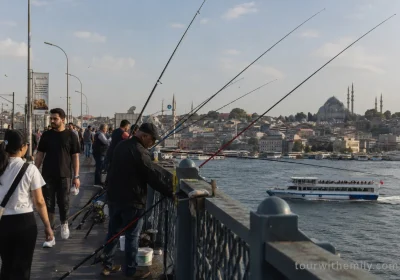
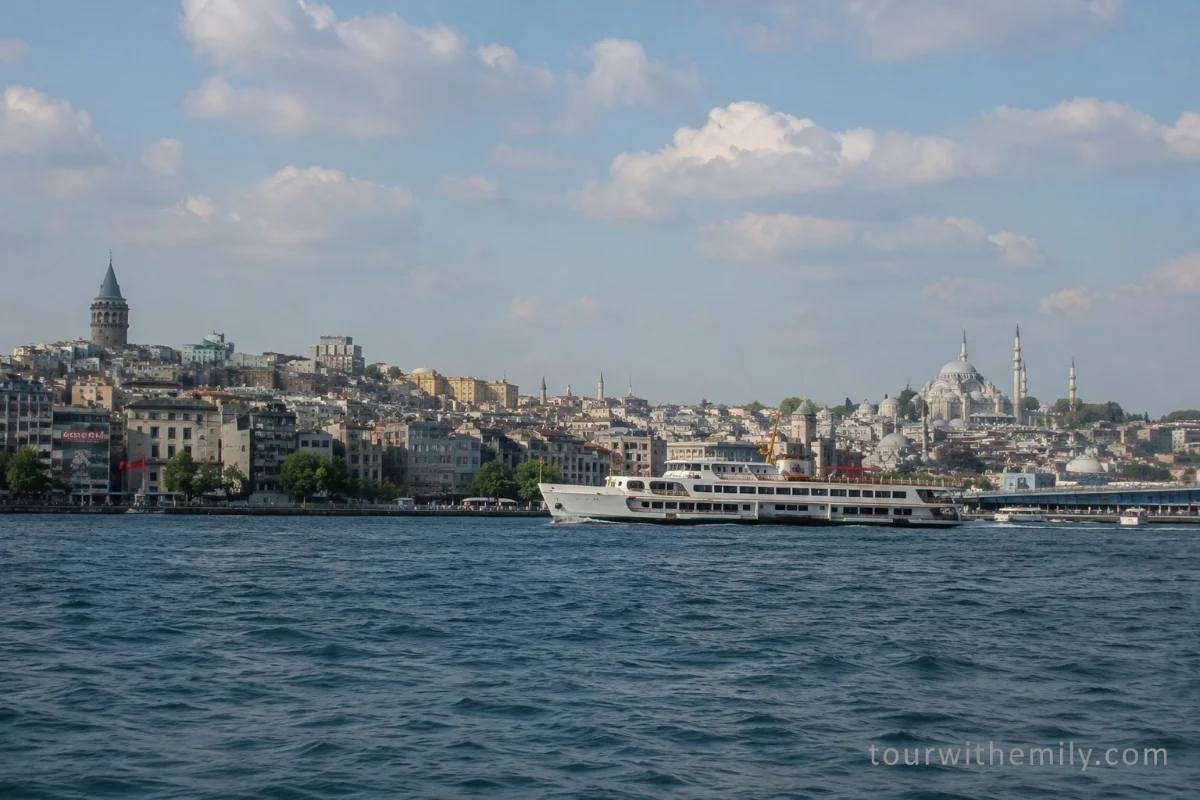
Karaköy sits at the southern end of the Galata Bridge, between Sultanahmet and Beyoğlu. It’s walkable to both — down across the bridge to Eminönü and the historic sites, or up the hill into Galata and Beyoğlu. The ferry terminal here connects directly to Kadıköy on the Asian side.
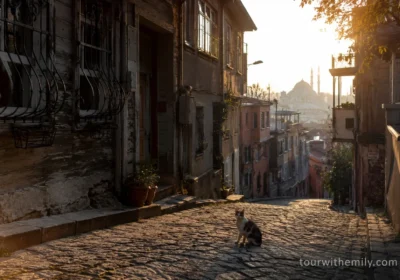
Galata Tower anchors the upper part of the area, surrounded by independent cafes, boutiques, music shops, and the narrow cobbled streets that define the neighborhood. The Kılıç Ali Paşa Hamam — a 16th-century Ottoman bath built by Mimar Sinan — is here and books up in advance. The hill between Karaköy and Galata is steep. Comfortable shoes matter here more than in Sultanahmet.
Karaköy works well as a central base for couples, solo travelers, and anyone who wants easy ferry access to the Asian side without being in the middle of the tourist center. The food in Karaköy is good and fairly priced — fish sandwiches at the Galata Bridge, lokanta lunches in the side streets, and some of the best breakfast spots in the city. Karaköy hotels typically cost less than Sultanahmet for comparable quality.
Cihangir — Best for a Local Feel
Cihangir is a residential neighborhood just north of Galata, popular with artists, writers, and expats. The streets are quieter, the cafes are independent, and the pace is different from Sultanahmet or İstiklal. There are no major landmarks here — it’s a place to stay, not to sightsee. Taksim Square is a 10-minute walk, the T1 tram reachable in the same time.
Cihangir suits repeat visitors, longer stays, and anyone who wants a residential neighborhood with good transport access rather than a hotel district.
Beşiktaş and Ortaköy — Best for Couples and Luxury
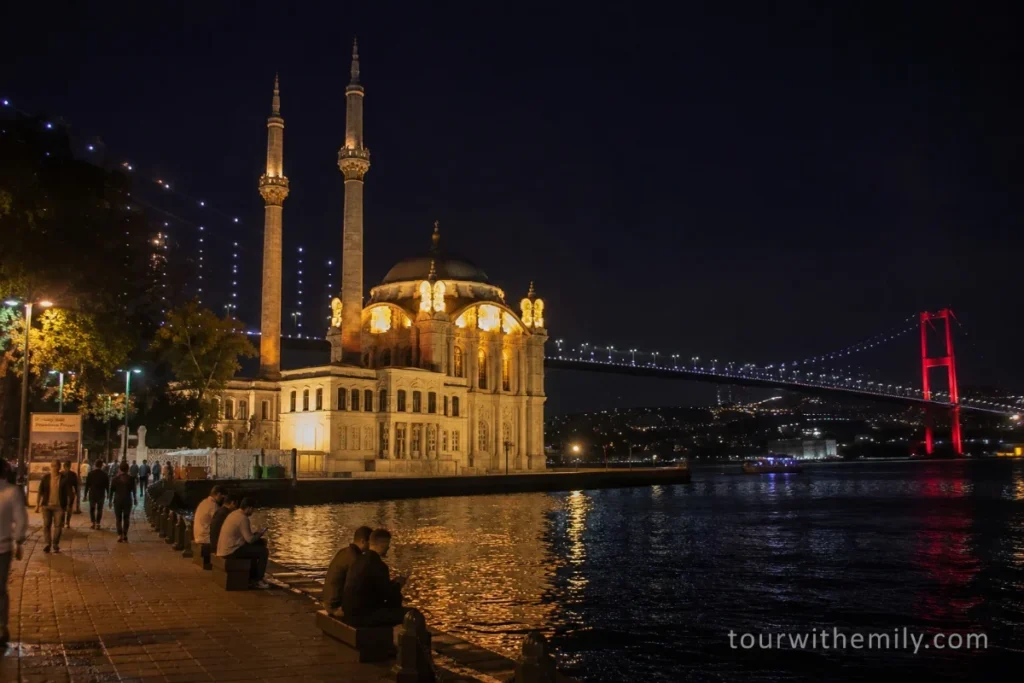
Beşiktaş and Ortaköy run along the European Bosphorus waterfront, north of the historic center. Dolmabahçe Palace sits in Beşiktaş; Ortaköy has the Neo-Baroque Ortaköy Mosque right on the waterfront — one of the most photographed spots in Istanbul. The 5-star hotels along this stretch have Bosphorus views that no Sultanahmet hotel can offer.
The waterfront at Ortaköy on an evening, with the illuminated Bosphorus Bridge behind the mosque, is one of the better views Istanbul has to offer. The trade-off is distance — getting to Sultanahmet from here requires a bus or taxi through traffic. For couples prioritizing the view and the hotels over sightseeing convenience, that trade-off makes sense.
Ortaköy is also known for its kumpir — baked potatoes stuffed with toppings, sold from street stalls right on the waterfront. For luxury hotels in Ortaköy and Beşiktaş, the Bosphorus-view properties here are some of the best in Istanbul.
Kadıköy — Best for the Asian Side Experience
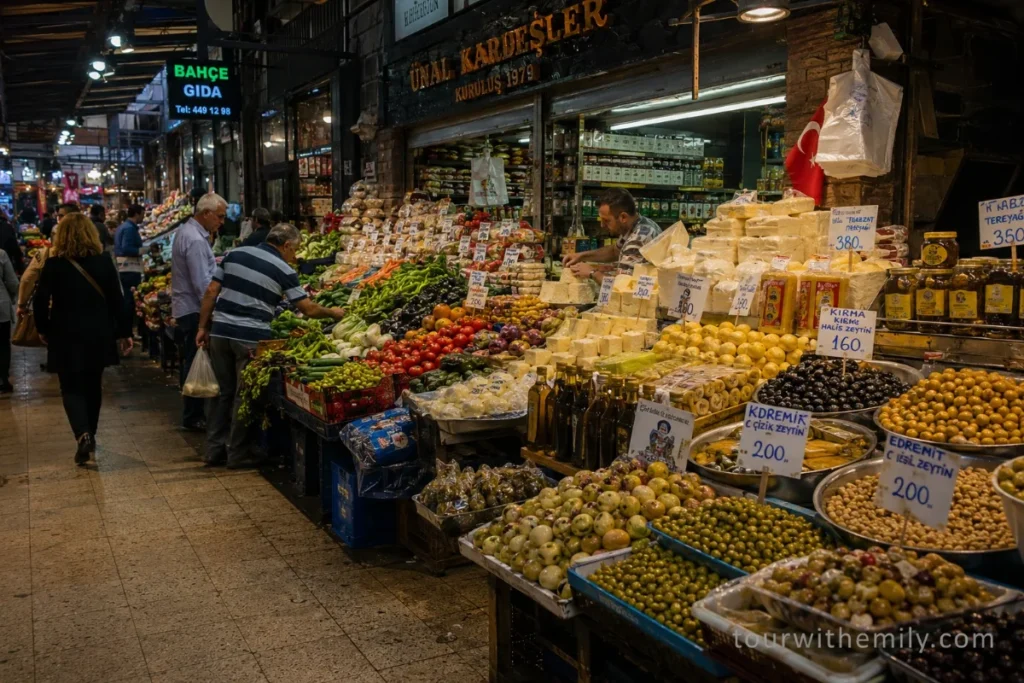
Kadıköy is on the Asian side, reached by a 20-minute ferry from Eminönü or Karaköy. It’s the neighborhood I ended up staying the longest when I returned to Istanbul — the food market is better than anything on the European side, the coffee shops are excellent, and the Moda waterfront promenade is good for a slow afternoon.
The caveat: every trip to Sultanahmet requires a ferry crossing. For a 3-day first visit, that adds time you may not want to spend. For a longer stay or return visit, Kadıköy is the better base. The hotels in Kadıköy are well priced and the food market nearby has fresh produce, cheese, olives, and street food at prices that simply don’t exist on the European side.
Üsküdar — Best for Families
Üsküdar is a quieter residential neighborhood on the Asian coast, north of Kadıköy. The Marmaray rail line connects it directly under the Bosphorus to the European side without a ferry. The Maiden’s Tower sits just offshore and the waterfront views across to the European skyline at sunset are some of the best in the city.
Istanbul is a physically demanding city — cobblestone streets, steep hills, uneven pavements. For families with young children, Üsküdar’s wider and flatter streets make it more manageable than Sultanahmet or Galata.
Üsküdar suits families, travelers who want a quieter residential base, and anyone sensitive to noise. The local restaurants here are priced for residents, not tourists — simple Turkish breakfasts, çay at every corner, and fish restaurants along the waterfront that most visitors never find. Üsküdar hotels are among the most affordable in the city for the quality on offer.
Which Area Is Right for You?
First time, short stay: Sultanahmet. Convenience outweighs the tourist-area downsides on a first visit.
Nightlife and food: Beyoğlu or Karaköy. Both run cheaper than Sultanahmet with better restaurants.
Couples: Ortaköy for Bosphorus views and luxury hotels; Karaköy for something more central and independent.
Families: Üsküdar for quieter streets and Marmaray access; Sultanahmet if the main sites need to be walkable.
Return visit or longer stay: Kadıköy or Cihangir — the parts of Istanbul most first-time visitors never see.
Budget priority: Karaköy or Beyoğlu. Same quality as Sultanahmet at lower prices, and the food is better.
Practical Notes
Hotels are a better practical choice than short-term rentals in Istanbul. Round-the-clock reception, airport transfer arrangements, and local knowledge from hotel staff make a meaningful difference — particularly on arrival and for late-night logistics.
Frequently Asked Questions
Where should a first-time visitor stay in Istanbul?
Sultanahmet — walkable to the main sites, on the T1 tram. Food and hotels cost more, but the convenience is unmatched on a first visit.
What is the best area to stay in Istanbul for couples?
Ortaköy for Bosphorus views and luxury hotels. Karaköy for something central with good restaurants and ferry access.
What is the best area to stay in Istanbul for families?
Üsküdar — quieter streets, safe, direct Marmaray connection to the European side.
Is Kadıköy worth staying in?
For repeat visitors or longer stays, yes. For a first visit, the daily ferry crossing to Sultanahmet adds up.
What areas of Istanbul should tourists avoid?
Dolapdere and Tarlabaşı near Taksim Square. Stay on the İstiklal side of Beyoğlu.
Is Sultanahmet noisy?
Quiet at night. The noise is the morning call to prayer starting around 6am — pack earplugs.