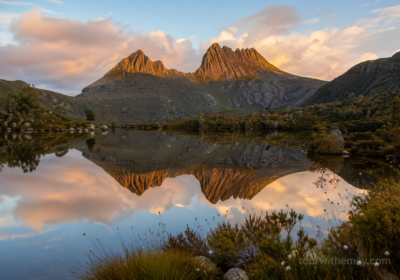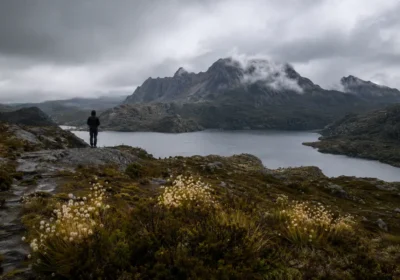
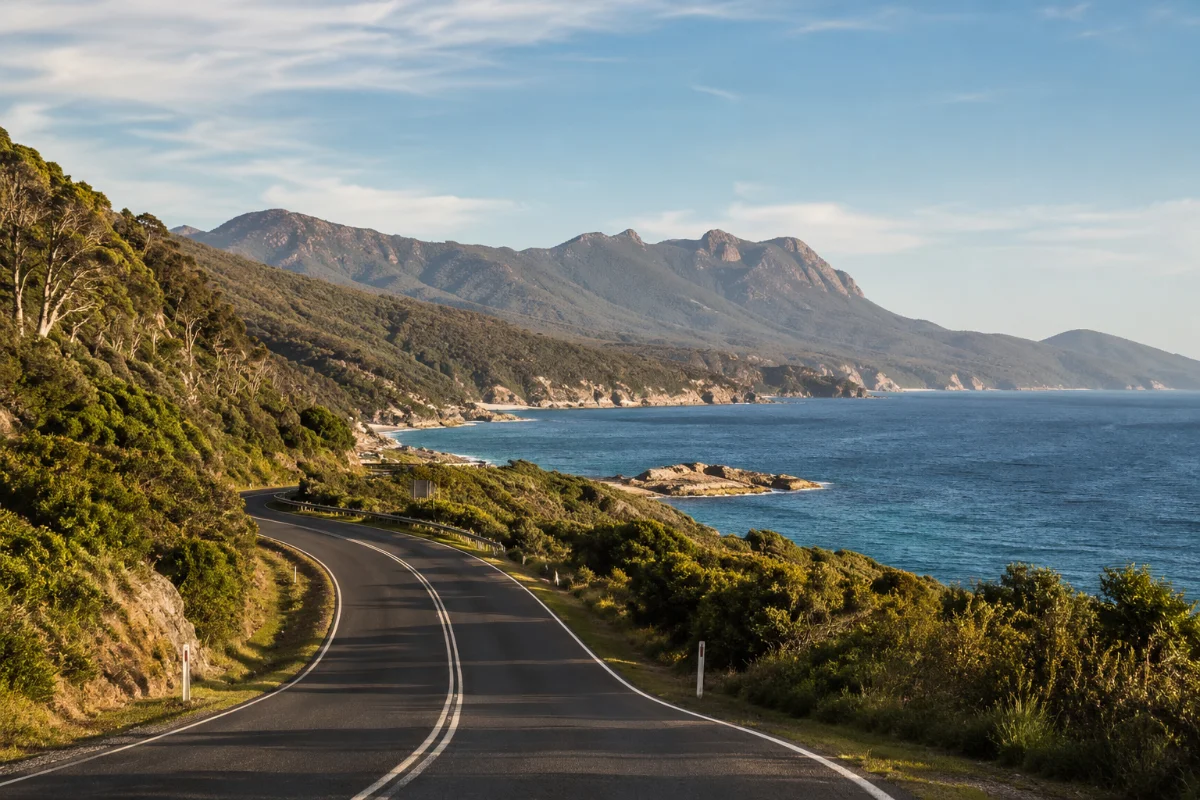
The best time to visit Tasmania is late February through March for most first-time road trips. You still get relatively warm days and useful daylight, while the busiest summer holiday period is usually easing. Choose January or February for beaches, late April to May for fagus, and June to August only if winter scenery matters more than easy hiking.
Quick answer: For the best balance of weather, daylight and crowd levels, plan a Tasmania trip for late February or March. December to February is warmer and better for beaches but busier. April and May suit autumn colour. Winter brings short days and possible highland snow, while spring offers flowers and wildlife with more changeable conditions.
There is no weather-proof month. Tasmania’s coast, cities and highlands can feel like different destinations on the same day. On my two-week road trip, I had sunshine on the east coast, sideways rain near Strahan, freezing wind on kunanyi/Mount Wellington and snow flurries around Cradle Mountain. The useful question is not “When will the weather be perfect?” but “Which trade-offs fit the trip I want?”
The best time for most first trips is late February to March
Late February to March is my pick for a first Tasmania road trip because it preserves much of summer’s warmth and outdoor usability without putting the entire trip inside the Christmas and January rush. It is a recommendation, not a guarantee of dry or calm weather.
Official tourism guidance gives a broader warm-weather window of December to April, when days are generally warmer and longer. That is sensible for travellers who want beaches, road trips and several outdoor days. Within that window, late February and March offer the most useful compromise for many adults who can travel outside school holidays. See Discover Tasmania’s seasonal guidance for the official overview.
Choose a different period if one experience is non-negotiable:
| Your priority | Best period | Main compromise |
| First road trip | Late February–March | Weather can still change quickly |
| Warmest beach conditions | January–February | Peak demand, popular trails and accommodation are busier |
| General day hiking | November–April | Alpine weather remains possible in every month |
| Autumn colour | Late April–May | Shorter days and colder nights |
| Lavender fields | December–January | Paid seasonal entry at Bridestowe and high summer demand |
| Little penguin activity | September–February | Spring can be windy and changeable |
| Highland snow scenery | June–August | Snow is not guaranteed; roads and tracks may be affected |
| Quieter, lower-demand travel | May–August outside events and school holidays | Short daylight and more challenging highland conditions |
| Spring flowers and young wildlife | October–November | Cold fronts and late highland snow remain possible |
If you are still choosing a route, use this timing guide alongside my complete Tasmania travel guide which covers transport, accommodation and realistic driving days.
Tasmania’s weather depends on region as much as season
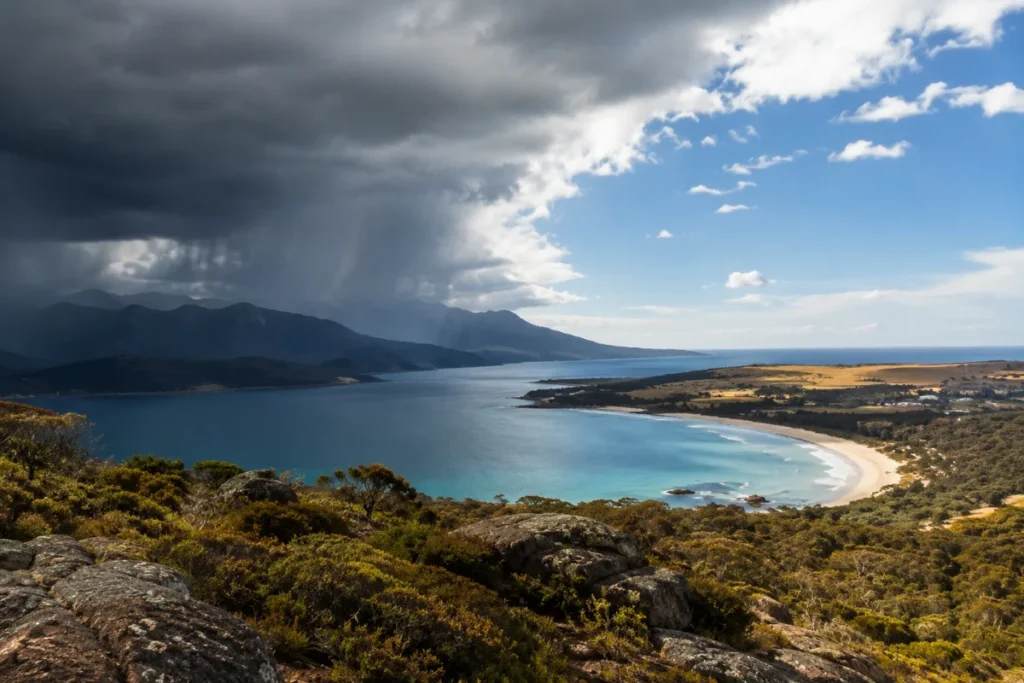
Do not use one Hobart temperature or a generic “Tasmania weather” figure to plan the whole island. Hobart and the east are relatively dry, Launceston has warmer summer afternoons and colder winter mornings, while the west coast receives far more rain.
The contrast is large. The Bureau of Meteorology’s long-term averages show annual rainfall of about 611mm at Hobart and 1,496mm at Strahan Aerodrome. Launceston’s Ti Tree Bend station averages about 680mm. These are historical averages, not promises for your travel dates. Compare the official BOM tables for Hobart, Launceston and Strahan.
| Area | What the climate means for planning |
| Hobart and the south-east | Relatively dry by Tasmanian standards, but exposed places such as kunanyi/Mount Wellington can be much colder and windier than the waterfront |
| Launceston and inland valleys | Warmer summer afternoons than Hobart; frosty winter mornings are more likely |
| Freycinet and the east coast | Usually the strongest choice for beaches and coastal walking, with a drier climate than the west |
| Strahan and the west coast | Rain should be expected in every season; January and February are the driest months in the Strahan averages, but not “dry months” in the everyday sense |
| Cradle Mountain and the Central Highlands | Colder, more exposed and less predictable than nearby towns; snow, ice, wind and poor visibility can affect plans outside winter too |
This regional split is why a circular itinerary needs waterproofs even when Hobart’s forecast looks settled.
Tasmania weather by month: Hobart is a useful baseline, not a statewide forecast
Hobart’s long-term figures provide a consistent month-by-month reference, but they should not be applied to Cradle Mountain or the west coast. Use them to compare seasons, then check the local forecast and park alert for each destination.
| Month | Hobart mean max/min | Mean rain | Best planning use |
| January | 21.8°C / 12.1°C | 46.3mm | Beaches, long outdoor days and festivals; book early |
| February | 21.8°C / 12.1°C | 38.8mm | Warm road trips and beaches, especially after the main school-holiday rush |
| March | 20.3°C / 11.0°C | 44.1mm | Best all-round compromise for touring and hiking |
| April | 17.4°C / 9.0°C | 49.4mm | Crisp walks, harvest experiences and the start of autumn colour |
| May | 14.6°C / 7.0°C | 47.4mm | Fagus and quieter touring; pack for cold evenings |
| June | 12.1°C / 5.2°C | 53.6mm | Winter atmosphere and indoor culture; limited daylight |
| July | 11.8°C / 4.6°C | 51.9mm | Best chance of a wintry highland landscape, not guaranteed snow |
| August | 13.2°C / 5.3°C | 54.0mm | Late winter; keep mountain and road plans flexible |
| September | 15.2°C / 6.5°C | 53.0mm | Flowers and wildlife with volatile spring weather |
| October | 17.0°C / 7.8°C | 62.0mm | Longer days and spring colour; Hobart’s wettest month by mean rainfall |
| November | 18.8°C / 9.4°C | 54.0mm | Good shoulder-season touring before peak summer |
| December | 20.4°C / 10.9°C | 56.6mm | Lavender, long evenings and rising holiday demand |
Each season suits a different kind of Tasmania trip
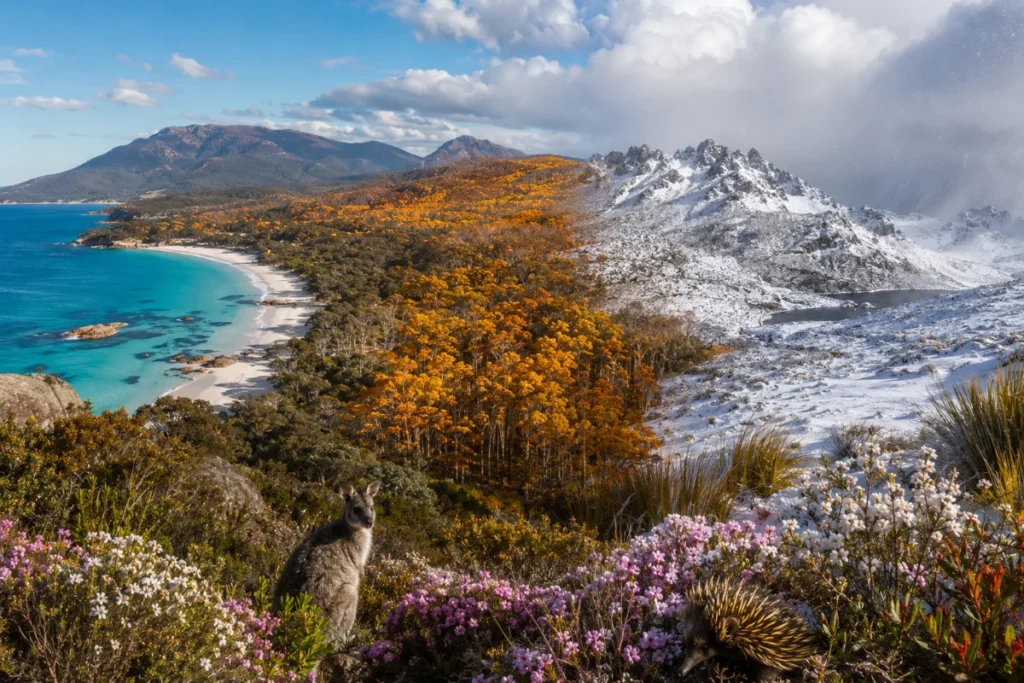
Summer is easiest for warmth and daylight, autumn gives the best overall road-trip balance, winter suits cold-weather experiences, and spring rewards flexible travellers with flowers and wildlife.
Summer is best for beaches and long outdoor days
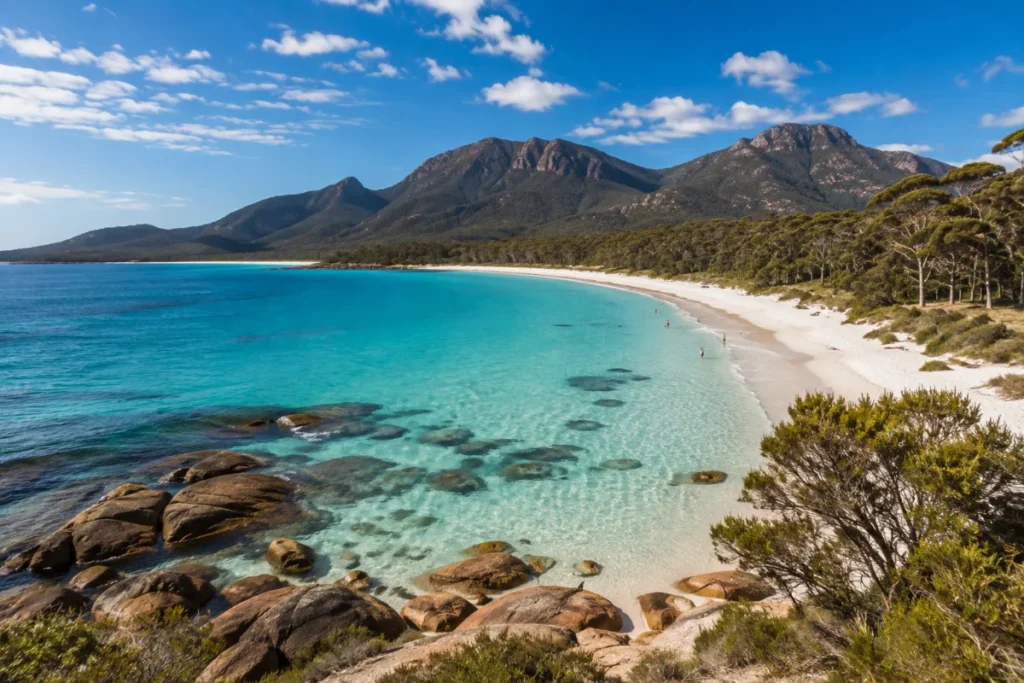
December to February gives Tasmania its warmest weather and longest evenings, so it is the simplest season for swimming, camping and fitting several stops into a road trip. It is also the busiest period, especially from late December through January.
Summer does not make every trail safe. Tasmania Parks and Wildlife Service warns that severe cold, wet and windy conditions can occur on the Overland Track even in summer. Heat, bushfire danger, strong wind and exposed rock can also change a day-hike plan. Treat the season as more usable, not risk-free.
Autumn is the best all-round season for touring and walking
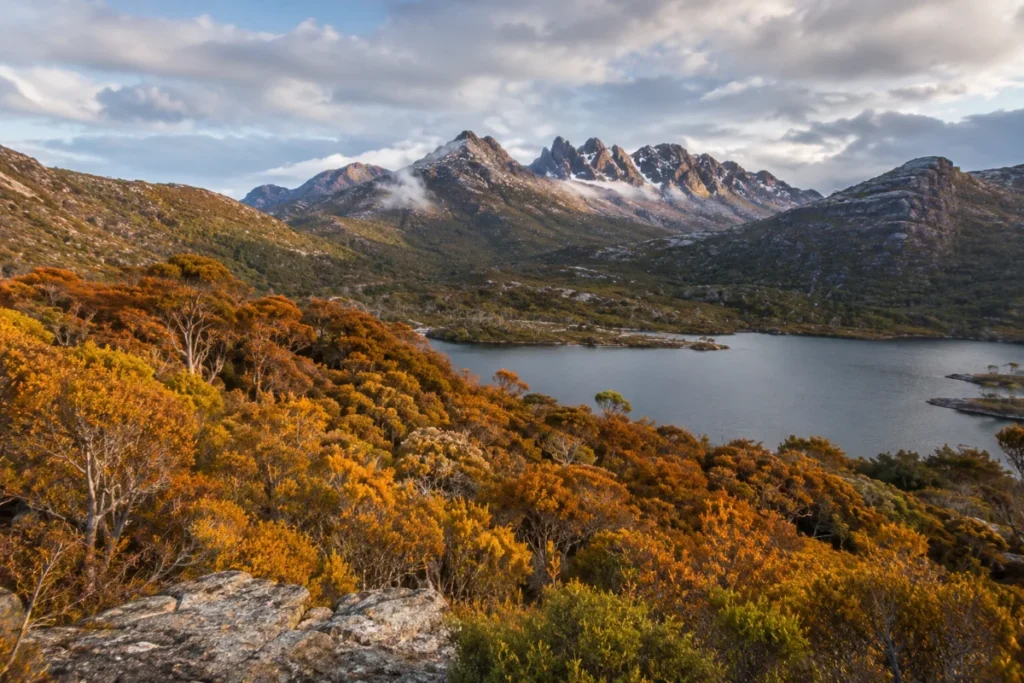
March to May combines milder days, cooler nights and generally lower visitor pressure after summer. March is the strongest all-purpose month; late April and May are more specialised for autumn colour and the turning of the fagus.
The trade-off is shrinking daylight and colder mountain conditions as the season advances. A late-May itinerary should not be planned like an early-March one.
Winter is best for atmosphere, possible snow and city breaks
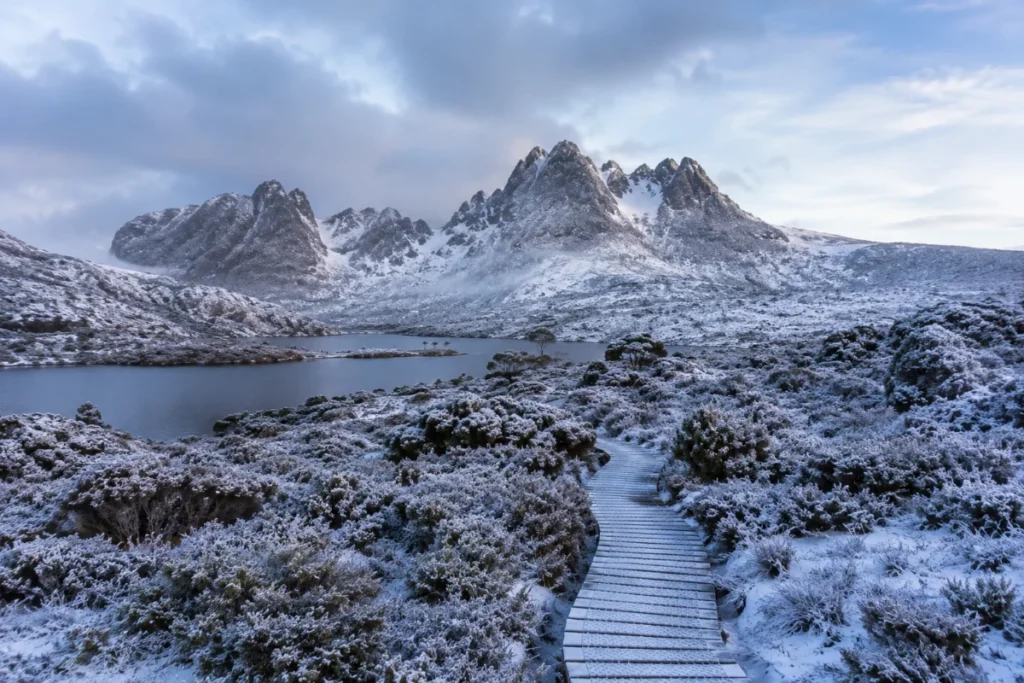
June to August works for travellers who value winter festivals, fireside stays, moody landscapes and the possibility of snow more than long hiking days. Hobart, Launceston, food stops and lower-level walks can still make a rewarding trip.
Winter is not the right default for an inexperienced alpine hiking holiday. Short daylight, ice, wind, snow and fewer transport services make remote trips more demanding. Snow is most common in elevated areas, but its depth, timing and road impact cannot be booked in advance.
Spring is best for flowers, waterfalls and active wildlife
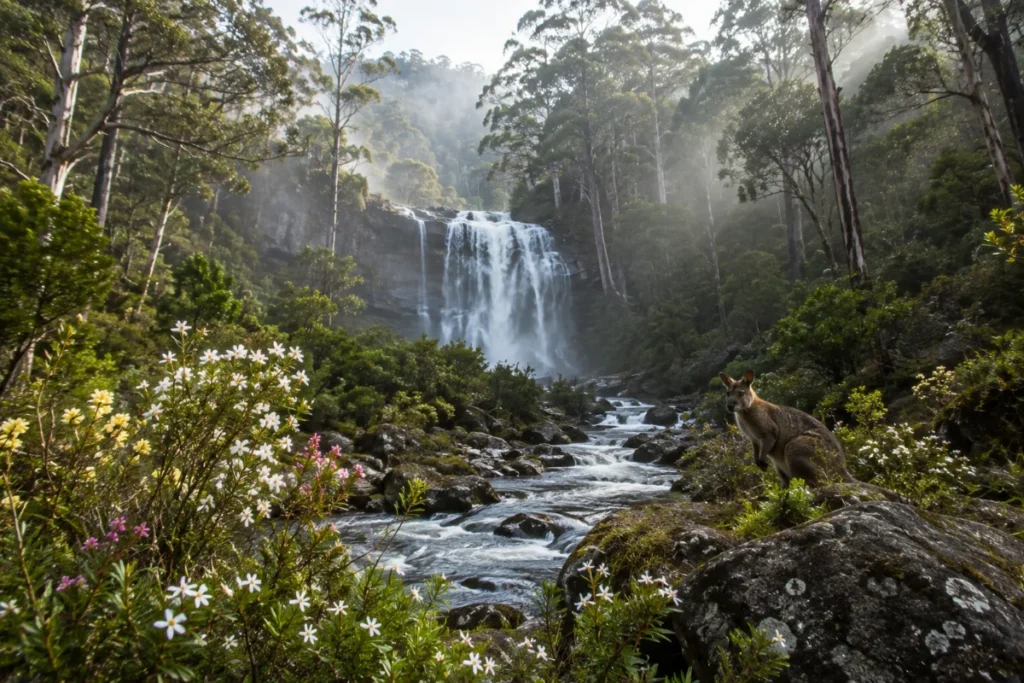
September to November brings longer days, spring flowers and strong wildlife interest, including higher little-penguin activity during the breeding season. Late October and November usually fit a general road trip better than September.
Spring is also a transition season. Cold fronts, highland snow and strong wind can interrupt exposed walks, so keep at least one flexible half-day in the itinerary.
The best time changes by destination
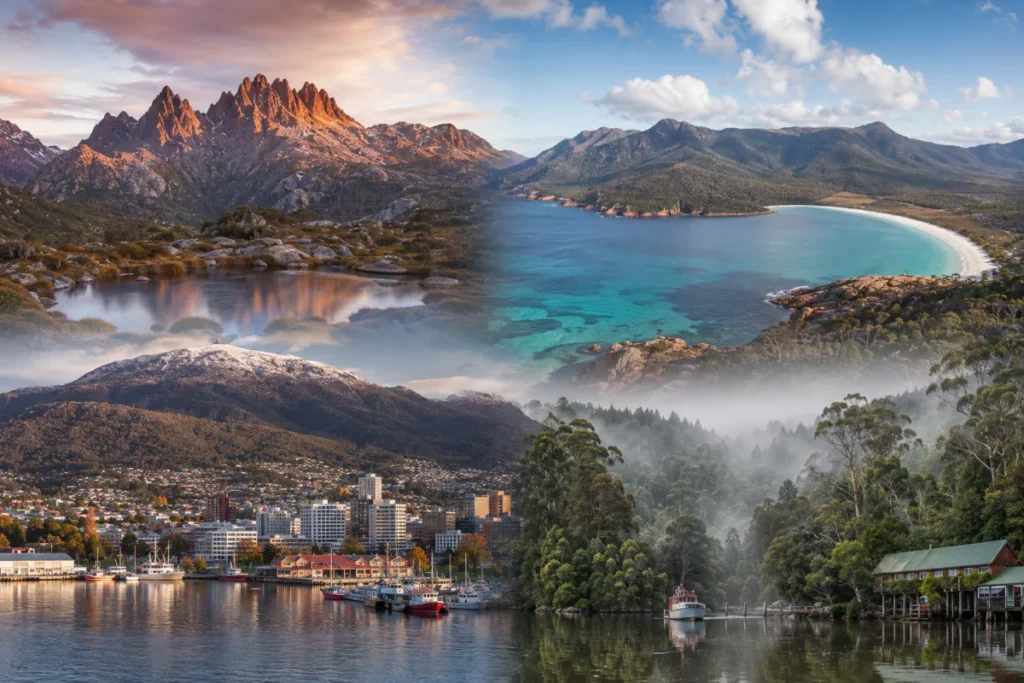
Choose dates around the most weather-sensitive part of your route. A good month for Hobart museums may still be a poor month for an inexperienced Cradle Mountain hike.
| Destination | Best general window | Why | Important limitation |
| Hobart and the Tasman Peninsula | November–April; winter for culture and food | Longer outdoor days for coast and history; city attractions provide weather backups | kunanyi/Mount Wellington can be far colder than central Hobart |
| Freycinet and Bay of Fires | December–March for beaches; November or April for a quieter compromise | Warmer coastal weather and longer daylight | Popular trails and Coles Bay accommodation are busy in peak summer |
| Launceston and Tamar Valley | December–April | Warm valley days, food, wine and autumn colour | Winter mornings can be cold and frosty |
| Cradle Mountain | February–April for a first visit; late April–May for fagus | Strong balance for day walking, scenery and seasonal colour | Alpine weather can turn severe at any time |
| Strahan and the west coast | January–March for the best relative weather odds | Strahan’s January and February rainfall averages are its lowest | The west remains wet and cloud-prone compared with Hobart |
| Central Highlands and Ben Lomond | Summer and early autumn for general access; winter for snow-focused trips | Conditions align better with either walking or snow interest | Snow, ice and road access are weather-dependent, not guaranteed |
Match the timing to the experience you care about most
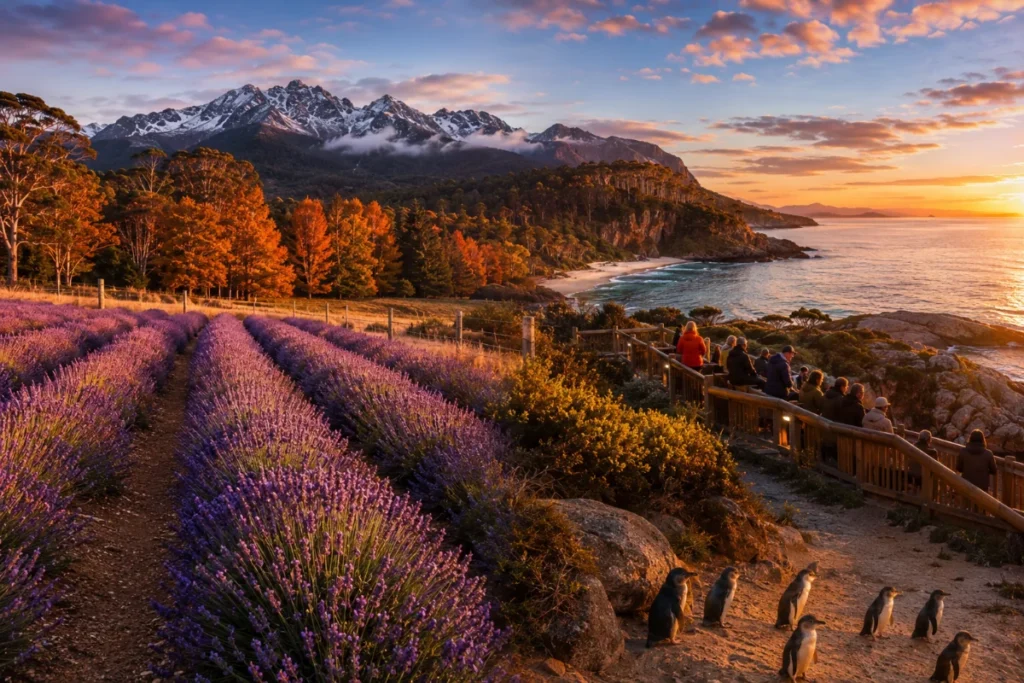
Tasmania’s “best month” changes sharply when a seasonal experience is the reason for the trip.
Road trips work best from late February to April
Late February through April gives self-drive travellers a useful balance of daylight, mild temperatures and less holiday pressure than January. November is the best spring alternative.
Campervan travellers should still confirm seasonal campground operation and avoid assuming that lower demand means every site or service remains open. In winter, build shorter driving days and avoid remote wildlife-heavy roads after dark.
General hiking is easiest from November to April
November to April is the broadest window for most day walks because days are longer and temperatures milder. The correct decision still depends on the specific track, elevation, wind, rain and recent damage.
The Overland Track has a formal fee and booking season from 1 October to 31 May. Parks Tasmania describes it as a serious remote alpine walk and warns that severe conditions can happen at any time. Winter travel requires registration, a valid parks pass and appropriate experience. Check the official Overland Track page rather than relying on a general seasonal article.
Beaches are best in January and February
January and February provide the best chance of warmer beach weather on the east coast. Tasmania’s sea and air can still feel cool to visitors used to tropical Australia, and unpatrolled beaches may have rips or steep drop-offs. Warm weather is not a substitute for local water-safety advice.
Lavender is best in December and January
Bridestowe Lavender Estate identifies December and January as the best months for flowering; most fields have been harvested by February. The estate currently charges AUD 20 per person aged 16 or older during December and January, with free entry from February to November. Flower timing varies with farm conditions, so check the official Bridestowe season page and Festival of Flowers entry details before driving out.
Fagus is best from late April into May
Tasmania’s native deciduous beech, Nothofagus gunnii, usually changes to gold, orange and rust in late April and May. Timing varies by year and location. Cradle Mountain and Mount Field are well-known viewing areas, but access and walking conditions still require a current check. See the official guide to the turning of the fagus.
Little penguin activity is highest from September to February
Little penguins come ashore at several Tasmanian locations throughout the year, but official tourism guidance identifies the spring and summer breeding period, September to February, as the time of highest activity. Use a legitimate viewing platform or tour, stay quiet and never use bright white light. See Discover Tasmania’s seasonal wildlife guidance.
For help choosing wildlife, hiking, heritage and rainy-day stops, compare the best things to do in Tasmania rather than adding every attraction to this timing guide.
Snow is most likely in the highlands in winter, but never guaranteed
June to August is the main snow window for Cradle Mountain, Ben Lomond, the Central Highlands and sometimes kunanyi/Mount Wellington. Snow can also fall outside winter at elevation.
Do not build a non-refundable itinerary around a precise snow day. Check the forecast, road status and park alerts close to travel, and do not enter icy or snow-covered terrain without the right skills and equipment.
Aurora Australis cannot be scheduled by month
Winter offers longer darkness, which creates more usable viewing hours, but it does not cause auroral activity. A visible display needs suitable space weather, darkness, limited cloud and a clear southern view.
The Bureau of Meteorology’s Australian Space Weather Forecasting Centre issues aurora watches up to 48 hours ahead and outlooks three to seven days ahead. Treat an alert during your trip as a bonus, not a reason to choose Tasmania in a particular month. Check the official BOM aurora service.
The quietest and cheapest periods are usually outside peak summer, but prices are not fixed
May to August often has lower general leisure demand than late December and January, but no season guarantees the cheapest trip. Dark Mofo, school holidays, public holidays, limited room supply and a one-off event can raise prices in a normally quiet month.
For a better-value trip without the shortest winter days, compare live prices in March, April, late October and November. Use the same route, room type, vehicle and cancellation terms when comparing dates. A cheaper nightly rate is not a saving if winter transport or weather disruption forces extra nights.
Book these first once your dates are fixed:
- Flights or Spirit of Tasmania if travelling during school holidays.
- Accommodation at Coles Bay, Cradle Mountain and Strahan, where supply is more limited than in Hobart.
- The Overland Track, if it is the purpose of the trip.
- Capacity-limited ferries, cruises, penguin tours and seasonal events.
Keep ordinary outdoor stops flexible until the short-range forecast is useful.
Book around current school-holiday and event dates
School holidays and major events can change availability more than the season label alone. The dates below were checked on 15 August 2026 and should be rechecked before booking.
Tasmanian government-school holiday periods are:
- 3–18 October 2026, followed by Term 4 from 19 October to 18 December.
- The main summer break follows the end of Term 4 on 18 December 2026.
- 10–25 April 2027.
- 3–18 July 2027.
- 25 September–10 October 2027.
Source: [Tasmanian Department for Education school terms and holidays](https://www.decyp.tas.gov.au/learning/term-dates/). Interstate holiday dates also affect Tasmania’s visitor demand, so check your origin state as well.
Confirmed event information that may affect routes or rooms:
- The Wynyard Tulip Festival is scheduled for 10 October 2026, with free entry, according to Waratah-Wynyard Council.
- Ten Days on the Island is scheduled for 12–21 March 2027, according to the official website.
- Taste of Summer’s website still displayed its 27 December 2025–3 January 2026 edition. It had not confirmed a 2026–27 date range when checked, so use the official Taste of Summer site.
Seasonal costs can change what “best time” means
National-park fees apply throughout the year, while the Overland Track and Bridestowe have season-specific charges. These prices were checked on 15 August 2026.
| Visit or pass | Current price | What to know |
| Tasmania parks daily vehicle pass | AUD 49.15 | Up to eight people; valid up to 24 hours; excludes Cradle Mountain |
| Holiday Pass | AUD 98.35 per vehicle | Up to eight people; all national parks for up to two months; Cradle shuttle not included |
| Cradle Mountain Icon Daily Pass | AUD 30.70 adult; AUD 12.30 child; AUD 73.75 family | Cradle only; family is two adults and three children; shuttle included |
| Cradle Mountain shuttle | AUD 15.50 per adult for 72 hours | Applies when an Icon Daily Pass or Overland Track Pass has not been purchased; under-18s travel free |
| Overland Track, 1 Oct–31 May | AUD 312 adult; AUD 272 child or concession | Includes park entry for the walk during the booking season; transport is separate |
| Bridestowe, Dec–Jan | AUD 20 for age 16+ | Seasonal Festival of Flowers gate fee; under 16 free; Feb–Nov entry is free |
Check the official Tasmania park-pass fees before visiting. Fees are reviewed and additional tours, ferries, campgrounds and guided walks may cost extra.
Weather and park alerts can overrule a perfect-looking month
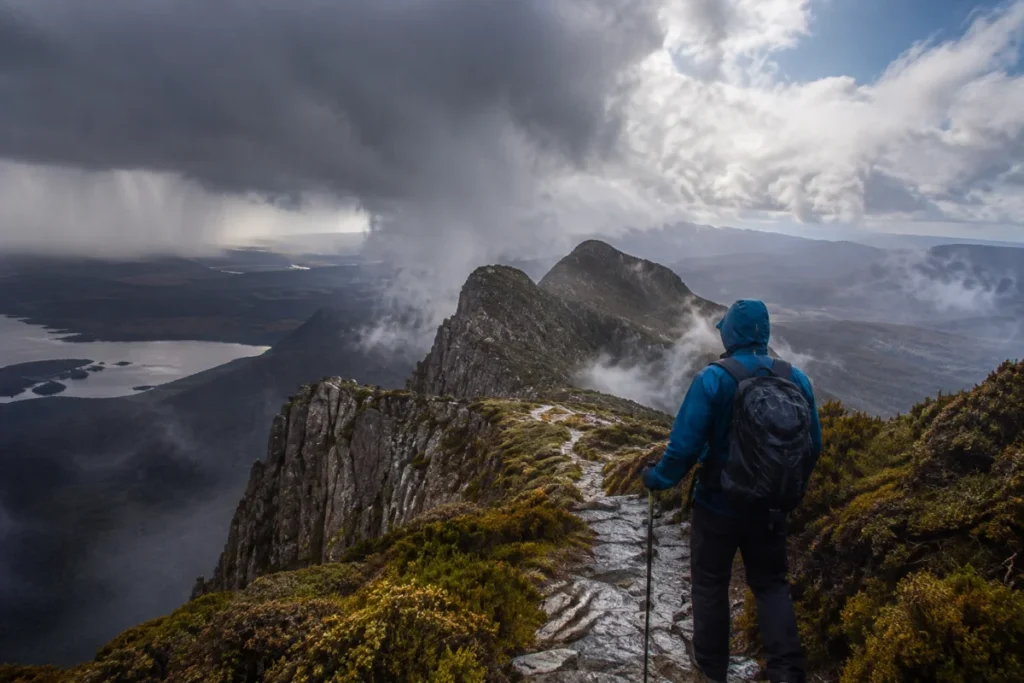
The safest plan is to check conditions again close to each outdoor day. A climate average helps choose a month; it cannot tell you whether a road, track or summit is usable on Tuesday morning.
Before a national-park day:
- Check the local BOM forecast, not only Hobart.
- Read the Tasmania Parks and Wildlife Service alerts for track, campground and reserve closures.
- Reconsider exposed or remote walks in high wind, heavy rain, snow, ice, extreme heat or high fire danger.
- Carry a backup activity and enough time to move the walk to another day.
Parks can close because of fire, flooding, storm damage or maintenance. Summer has more daylight but can bring bushfire or heat risk; winter can bring ice and snow; spring is often volatile. There is no season in which the alert check becomes unnecessary.
Pack for a temperature range in every season

Bring layers and a waterproof, wind-resistant outer shell in every month. Even summer travellers should have a warm layer for high ground, boat trips and sudden fronts.
A practical core list is:
- waterproof and wind-resistant jacket;
- warm mid-layer;
- quick-drying walking clothes;
- supportive shoes with suitable grip;
- sun hat, sunglasses and sunscreen;
- small daypack with water, food and an extra layer;
- beanie and gloves for highlands outside the warmest conditions.
For remote or alpine walks, a general packing list is not enough. Use the track’s official equipment and safety guidance.
Frequently asked questions
Does Tasmania have a rainy season?
Tasmania does not have one useful statewide rainy season. Strahan and the west coast are much wetter than Hobart throughout the year, while each station’s wettest month differs. Plan by region and carry waterproofs in every season.
Is Easter a good time to visit Tasmania?
Easter often has pleasant autumn conditions, but the holiday period can increase demand and reduce booking flexibility. If lower crowds matter more than the exact holiday, travel just before or after the school break and compare live rates.
Can I trust a weather forecast several weeks before the trip?
Use long-range information only for broad planning. Make decisions about exposed walks, ferries and mountain roads from the local short-range forecast and current operator or park advice closer to the day.
Is winter worth it if I do not want difficult hikes?
Yes. Hobart’s museums and food, heritage sites, wineries, lower-level walks and winter scenery can support a good trip. Keep driving days shorter, choose accommodation with indoor alternatives nearby and treat highland access as weather-dependent.
Is February or March better for Tasmania?
Choose February for warmer beach weather and longer evenings; choose March for a quieter all-round road trip with mild hiking conditions. Late February is the best compromise if you want features of both.
Choose dates around the least flexible part of your trip
For a first road trip, start with late February or March. Move to January or February for beaches, December or January for lavender, late April or May for fagus, and winter only when cold-weather atmosphere or possible snow is central to the trip.
Whichever month you choose, keep one outdoor half-day flexible and check the local forecast and park alerts. In Tasmania, a resilient itinerary matters more than finding a supposedly perfect week.