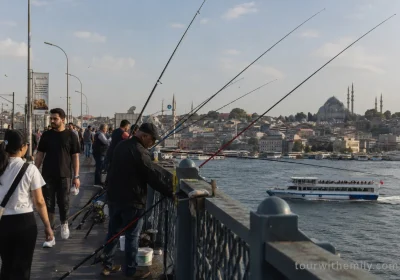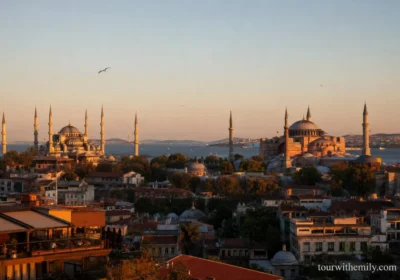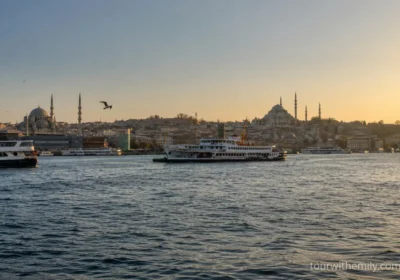
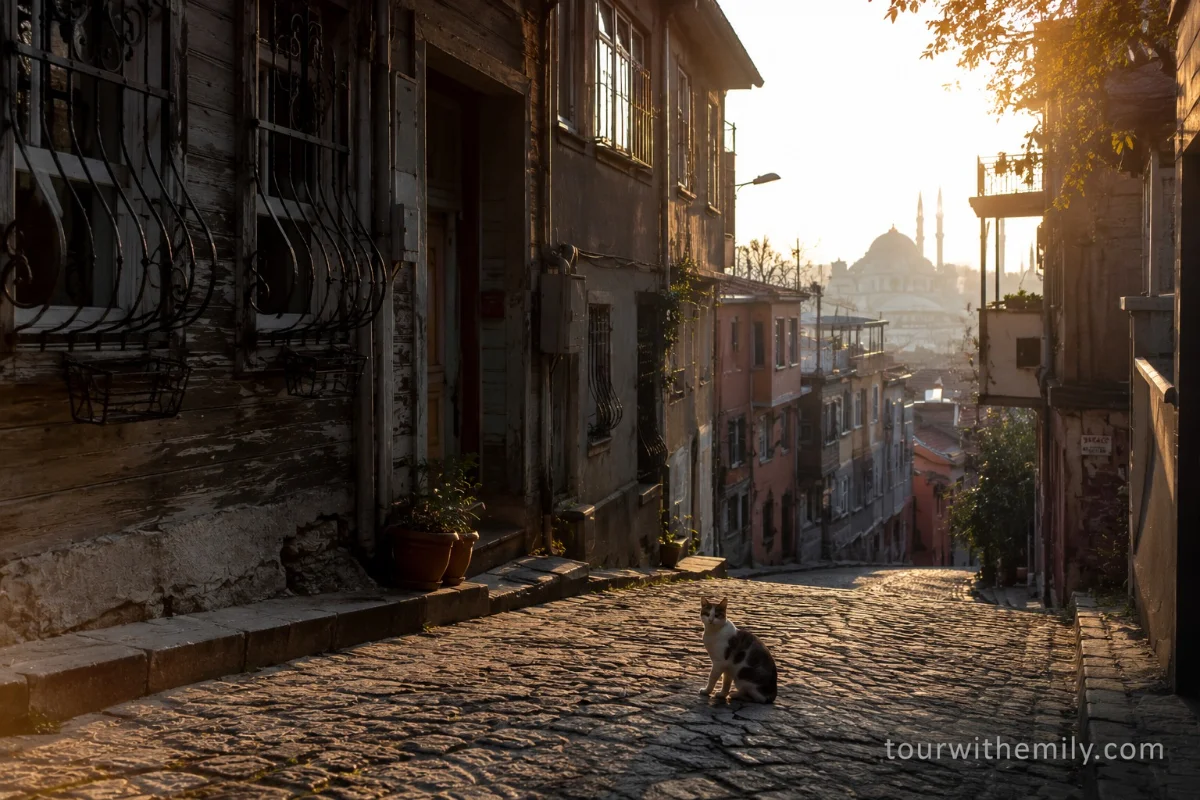
Hidden Gems in Istanbul Most Tourists Miss
The real Istanbul is not on the usual lists.
Every “hidden gems in Istanbul” article recommends the same places. Balat, Kadıköy, Pierre Loti Hill. They were hidden once. Not anymore. The colorful houses have queues for photo spots, and the “secret” viewpoints have dedicated parking lots.
I spent weeks walking this city, often with no plan beyond following a side street that looked interesting. Some of my best days in Istanbul, Turkey had nothing to do with a guidebook. They started with a wrong turn or a tea invitation from someone sitting outside a workshop I’d never have noticed from a cab.
This is not another numbered listicle of the same ten neighborhoods. This guide covers the Istanbul off beaten path spots that surprised me. Places I hadn’t read about before arriving, the kind of experiences that made me stop and think: how does nobody talk about this?
I’ve organized everything by what you’re actually looking for when you’re out there. Not European side vs. Asian side. More like: I want something quiet. Or something historical. Or something free. That’s what secret Istanbul is. Not a map pin. A feeling.
Hidden Historical Sites in Istanbul That Rival the Famous Ones
Most visitors do the Hagia Sophia, the Basilica Cistern, maybe Topkapı, and assume they’ve covered Istanbul’s historical side. They haven’t even scratched it. Some of the most underrated Istanbul sites are older, just as impressive, and you’ll have them nearly to yourself.
Theodosius Cistern (Şerefiye Sarnıcı)
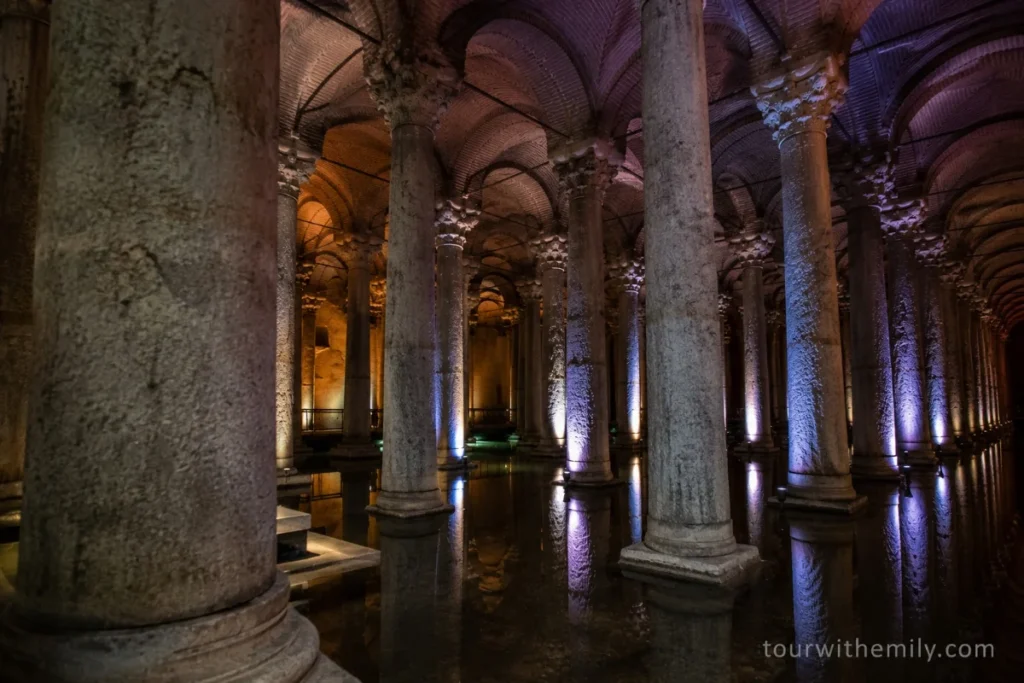
The cistern I wish I’d known about before lining up at the Basilica Cistern. Workers discovered it by accident in 2010 during the demolition of an old municipal building near Eminönü. It dates back to the 5th century, built during the reign of Emperor Theodosius II to supply water to Constantinople.
Smaller than the Basilica Cistern, but that works in its favor. Thirty-two columns with Corinthian capitals rise about nine meters under brick sail vaults. The space is fitted with 360-degree projection mapping that shifts the mood every few minutes. I walked in on a Tuesday afternoon and had the place to myself.
How to visit: Walk from Sultanahmet Tram stop, 5 minutes toward Eminönü. Open daily, usually 9 AM to 7 PM. Entry around 300 to 400 TL as of 2026.
Hagia Irene
Most people walk right past this one. It sits in the first courtyard of Topkapı Palace, behind a gate that looks like staff-only access. It’s open to visitors. And it’s the oldest church in Istanbul that was never converted into a mosque.
The original was destroyed during the Nika riots of 532 AD. Justinian I rebuilt it. Inside, there are no mosaics, no ornate decoration. Just a vast nave with a single gold cross in the apse and acoustics that explain why classical concerts are still held here. The ground level has risen over 1,500 years, so you walk down a stone ramp to enter the nave. I remember standing at the bottom of that ramp and realizing I could hear my own breathing echo off the walls. That’s how quiet it was.
How to visit: Enter through the Topkapı Palace first courtyard gate near Hagia Sophia. Open daily except Tuesdays, 9 AM to 5 PM.
Aqueduct of Valens
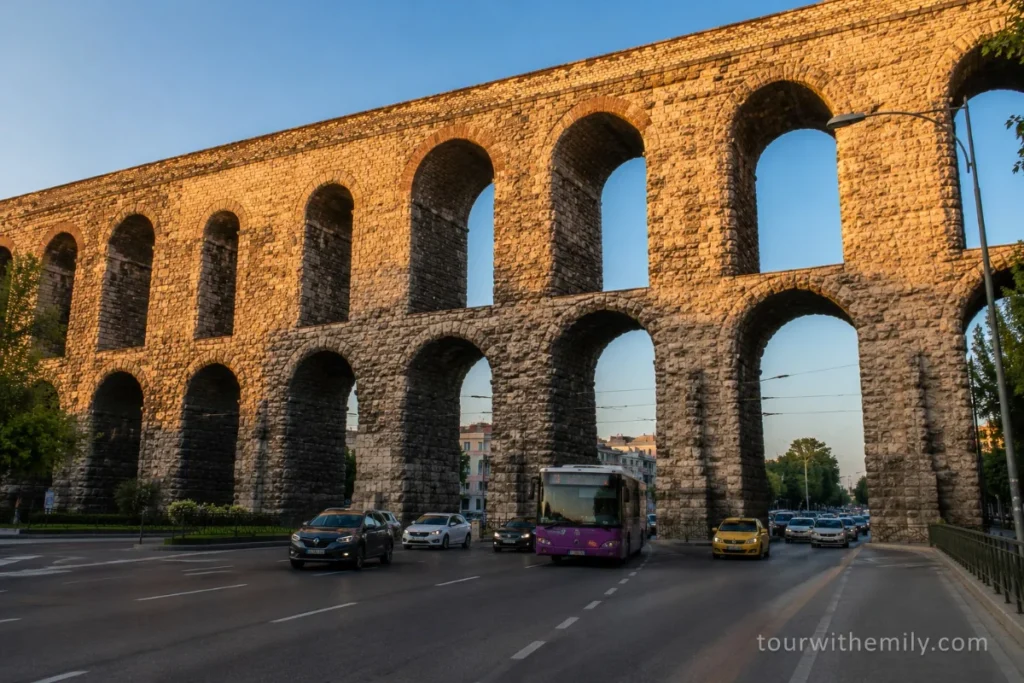
I saw this for the first time from a taxi window at 7 AM and made the driver pull over. A 1,600-year-old Roman aqueduct. Two tiers of arches stretching across six lanes of modern traffic on Atatürk Boulevard in the Fatih district. Built in the 4th century as part of Constantinople’s water supply, it gets zero tourist attention because there’s no ticket booth, no entrance, no gift shop. It just stands there with buses driving underneath it.
There’s nothing to “do” here. Walk under it, look up, let the scale land. The contrast of ancient stone arches over honking traffic is one of those moments you can only get in Istanbul. Best early morning when the light hits the stone and the roads are still quiet.
How to visit: M2 Metro to Vezneciler, 10-minute walk west. Always open, completely free.
Great Palace Mosaic Museum
Tucked inside the Arasta Market behind the Blue Mosque. This small museum holds 5th-century Byzantine floor mosaics from the Great Palace of Constantinople. Hunting scenes, mythological creatures, a griffin eating a lizard. The color and detail are remarkable for pieces this old. I nearly walked past the entrance because it’s wedged between souvenir shops with almost no signage.
How to visit: Enter the Arasta Market from Sultanahmet Square, behind the Blue Mosque. Small entrance between the shops.
Hidden Gem Restaurants in Istanbul Tourists Never Find
The restaurants worth eating at in Istanbul rarely have English menus propped on the sidewalk. If you’re searching for hidden gem restaurants in Istanbul, forget the review sites. Some of the best meals I had came from places with no online presence and no signage I could read.
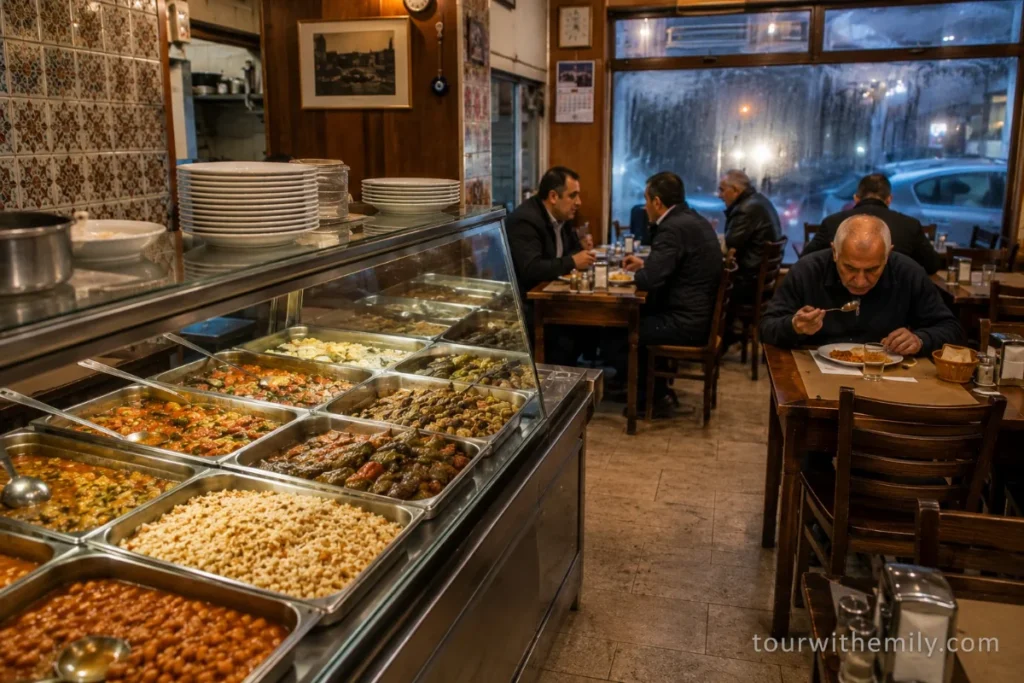
The backstreets around Süleymaniye Mosque hide old-school lokantas. The kind where you point at what looks good behind the glass counter and sit at a table with a paper placemat. Home-style Turkish cooking: kuru fasulye, pilav, shepherd’s salad, a glass of ayran. A full meal costs under 200 TL as of 2026. The one I kept going back to was on a side street between Süleymaniye and the Aqueduct of Valens. No name on the front. Just a steamed-up window and a line of locals at noon.
My general rule: skip the tourist zones and eat wherever you see construction workers or taxi drivers sitting down. That’s how I ended up buying simit from a cart near Eminönü most mornings and having çay at whichever tea stall had the biggest crowd around it.
For something more of a sit-down evening, try the meyhanes inside Çiçek Pasajı in Beyoğlu. The arcade dates back to the 19th century and used to be a flower market. Now it’s a row of meyhanes with ornate ceilings and live Turkish music most nights. I went on a Wednesday expecting it to be half-empty. It wasn’t. By 9 PM every table was full and the musicians were making their rounds. Order meze and rakı, and don’t rush.
Quiet Spots in Istanbul When the City Gets Too Much
Istanbul is relentless. After a few days of Grand Bazaar crowds and Istiklal Avenue shoulder-to-shoulder walking, you need somewhere to sit and do nothing. These are the spots I went to when I hit that wall.
Cihangir Mosque Garden
Cihangir sits above Tophane. Narrow residential streets, small coffee shops, more cats than people. Behind the mosque there’s a garden terrace with a bench under a tree and a straight, unblocked view across the Bosphorus to the Asian side. It’s not listed as a viewpoint anywhere. I sat here for an hour one afternoon with a takeaway çay and watched container ships pass below.
Yıldız Park Forest Paths
There is a genuine forest inside Istanbul. Yıldız Park climbs a hillside above Beşiktaş. The lower area near the old palace is known, but the upper trails are not. Dense tree cover, wooden bridges over small ponds, shaded dirt paths. On a weekday morning I walked for 40 minutes on those upper trails without passing another person.
Bulgur Palas
Opened to the public in 2024. Originally a mansion built for Mehmet Habib Bey, the so-called King of Bulgur. It later became an Ottoman Bank archive and, at one point, housed hundreds of canaries. Now it’s a library, art gallery, and café with an observation terrace facing the Sea of Marmara. I went there on a Friday afternoon and sat on the terrace with a coffee for close to an hour. That south-facing view is a different angle from the usual Bosphorus panoramas you see everywhere else in the city, and the building itself is beautiful.
How to visit: 11-minute walk from the Yusufpaşa tram stop on the T1 line. Open daily except Mondays, 10 AM to 7 PM. Free.
Free Places to Visit in Istanbul Most Tourists Walk Past
If you’re looking for places to visit in Istanbul for free, start here. These cost nothing and some of them are better than the paid attractions.
Salt Galata
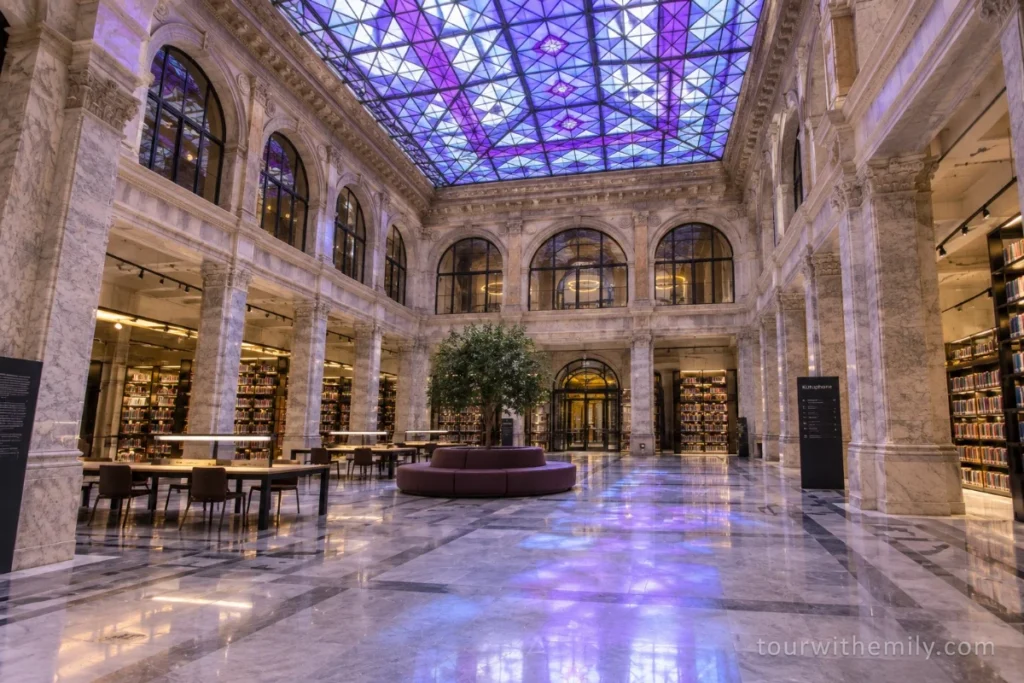
The former Ottoman Bank headquarters on Bankalar Caddesi, the old financial center of the empire. Now a free research library and exhibition space. Walk inside and look up: a purple and blue glass ceiling over the atrium, marble floors, a wide arched window facing the Golden Horn and the historic peninsula. Alexandre Vallaury designed the building. He also did the Pera Palace Hotel.
I found this by accident walking downhill from Galata Tower. From outside it still looks like a bank. Go in anyway.
How to visit: 10-minute walk from the Karaköy tram stop, T1 line. Tuesday to Saturday 11 AM to 7 PM, Sunday 11 AM to 6 PM. Closed Mondays. Free.
Librería Minoa Pera
A bookshop in a former French cultural building on Meşrutiyet Caddesi, Beyoğlu. Two-sided iron staircase with book spines lining every riser. Upstairs, a tall window fills the room with light. They carry Turkish and English titles. There’s a café if you want to sit and read for a while. I spent most of a rainy afternoon here once, reading on the second floor with a coffee. Nobody rushed me out.
This is the kind of alternative Istanbul that doesn’t appear on most travel lists. Not a sight. Not a landmark. Just a place where you’d lose two hours and not mind.
How to visit: 10 minutes on foot from the Tünel tramway or Şişhane M2 metro. Open daily.
Süleymaniye Mosque Complex Courtyards
Everyone goes inside the mosque, but few people explore the full complex around it. Mimar Sinan designed the Süleymaniye as a külliye. A hospital, a caravanserai, a bath, a madrasa, all arranged around interconnected courtyards. You can walk through most of them. The rear terrace has one of the best Golden Horn views in the city. I stood there one morning before the tour buses arrived and had the entire terrace to myself. No ticket, no queue.
Ecumenical Patriarchate of Constantinople
In Fener. The seat of the Greek Orthodox Patriarch. One of the most historically significant Christian sites in the world, and it’s open to the public. The Church of St. George inside the compound holds Byzantine-era icons, relics, and the Patriarchal Throne. The whole compound is quiet in a way that’s hard to find at Istanbul’s bigger religious sites. I had it to myself on a Thursday morning.
Istanbul Viewpoints That Don’t Involve a Queue
The standard suggestions are Galata Tower (long ticket line) or Pierre Loti Hill (cable car queue and a crowded tea terrace). These are better.
Büyük Valide Han Rooftop
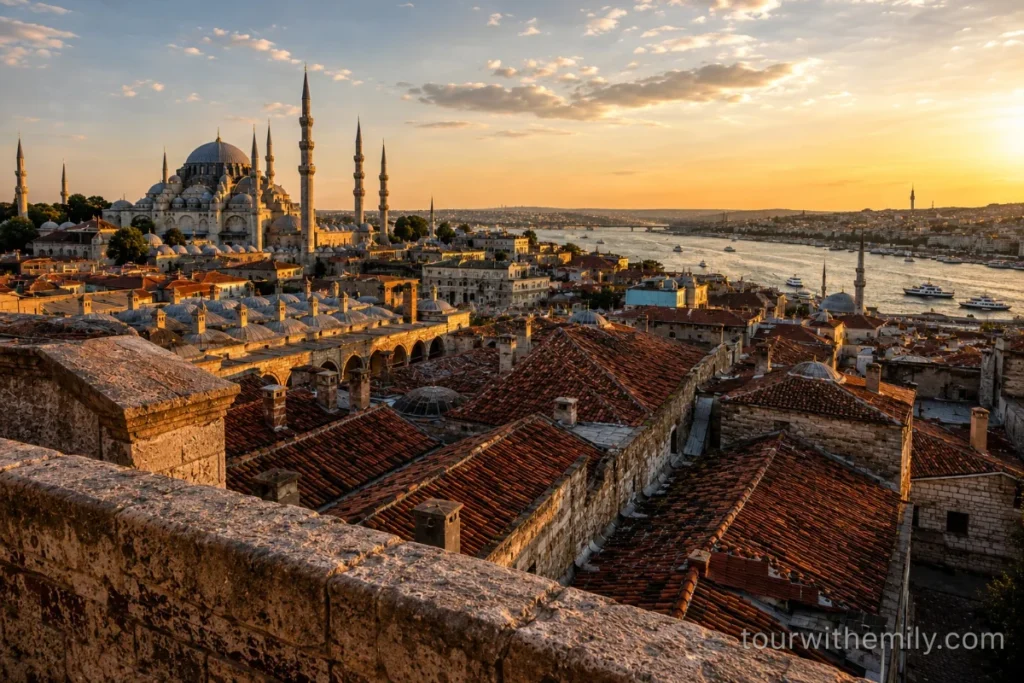
The largest han in Istanbul. Built in the 17th century, near the Grand Bazaar, and somehow completely ignored by tourists. The interior courtyard alone is something. Crumbling Ottoman architecture, small workshops still running. But the rooftop is the reason to come. You might need to ask a shopkeeper to point you toward the stairs. I did, and the man waved me through a back door without blinking. From the top: the Süleymaniye Mosque, the Golden Horn, the Bosphorus, the rooftops of the bazaar district. All at once.
The Less Touristy Asian Side of Istanbul
The Kadıköy market and Moda coastline are covered in my Istanbul food guide and things to do in Istanbul. But there’s a less touristy side of Istanbul on the Asian shore that most visitors skip entirely.
Kuzguncuk
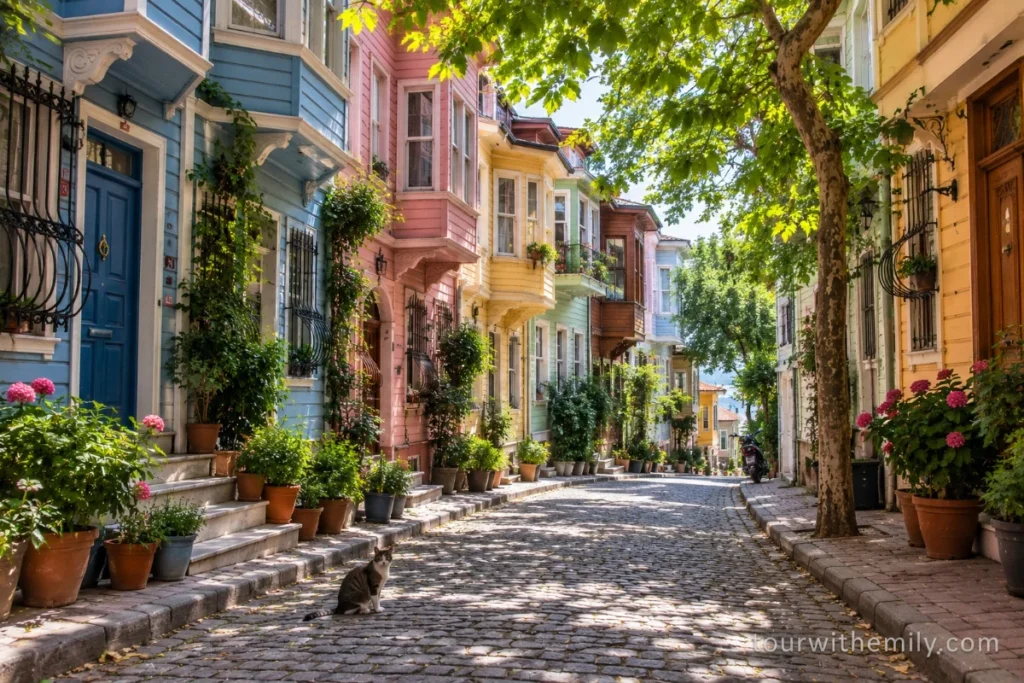
Fifteen minutes on foot from Üsküdar. Kuzguncuk feels like a village that got absorbed by a megacity and refused to change. Narrow streets, colorful wooden houses, a few small cafés. A mosque, a synagogue, and a church all within a few blocks of each other. That’s left over from the neighborhood’s mixed Ottoman-era communities. I spent a morning here wandering without a plan and didn’t see another tourist.
Beylerbeyi Palace
On the Bosphorus waterfront in Üsküdar. The summer palace of the Ottoman sultans, completely overshadowed by Dolmabahçe even though the interiors hold up just as well. Construction ran from 1861 to 1865, Second Empire style. I visited late on a weekday afternoon when the tour groups had cleared out, and one of the guards walked me through two rooms that were roped off the previous time I’d tried to visit. The gardens face the Bosphorus with the bridge connecting both continents in the background. According to local guides, Empress Eugénie of France visited and was so taken with the palace that she had elements of it replicated in Paris.
Küçüksu Palace
A small rococo palace on the Asian shore of Turkey’s largest city. Originally a hunting lodge and summer retreat. You can see the whole thing in half an hour. I found it while walking along the water after visiting Beylerbeyi and almost didn’t go in because it looked closed. It wasn’t. The setting, right on the water with trees all around, makes it feel less like a museum and more like you’ve wandered into someone’s private estate.
Offbeat Things to Do in Istanbul Beyond the Main Sights
Once you’ve done the main sights and want something that feels less like tourism, these are what stuck with me. They might sound like crazy things to do in Istanbul compared to mosque visits and bazaar shopping, but they gave me a better feel for the city than any guided tour did.
Walking the Theodosian Walls
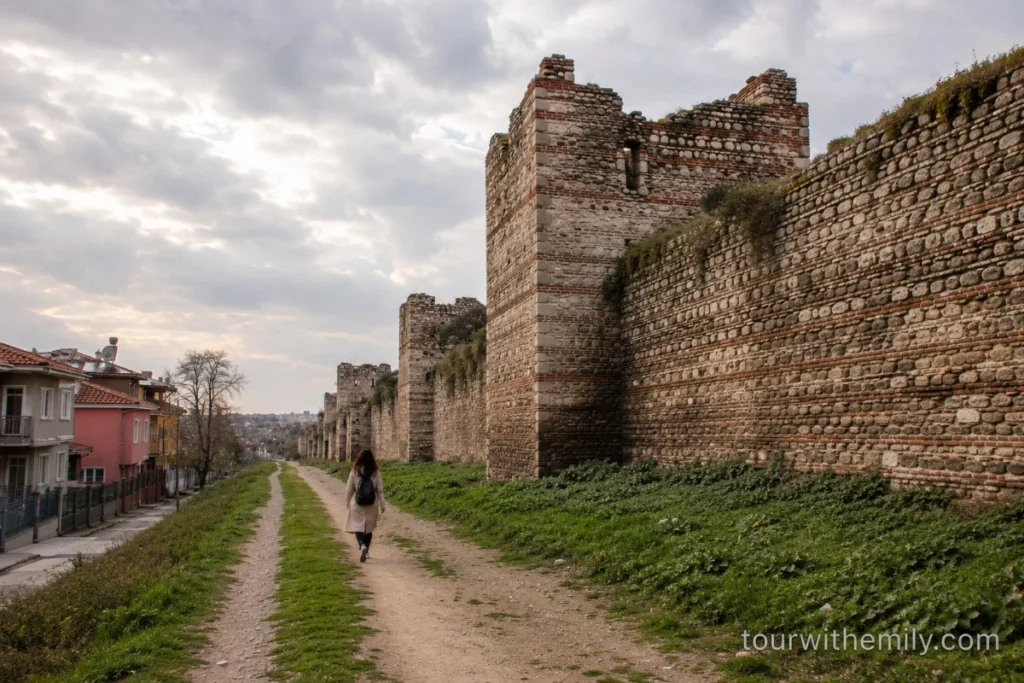
The ancient land walls of Constantinople run roughly six kilometers from the Sea of Marmara to the Golden Horn. Parts of them are walkable. You climb through gaps in the stonework, pass through residential neighborhoods far from the tourist center. It’s not a maintained trail. Some sections are rough. I did about two kilometers of it on a morning walk that started near Yedikule and worked north. The neighborhoods along the wall feel like a different Istanbul entirely. Wear sturdy shoes. But if you want an adventure activity in Istanbul that connects you to the city’s history rather than just looking at it from behind a rope, this is it.
The Hidden Hans Around the Grand Bazaar
The bazaar itself is the opposite of a hidden gem. 60 covered streets, 4,000 shops, wall-to-wall tour groups. But scattered within and around it are hans: Ottoman-era commercial courtyards where artisans have worked for centuries. The courtyards are quiet, open to the sky, and most tourists walk right past the narrow entrance passages. I ducked into Zincirli Han because a shopkeeper in the jewelry section pointed me toward it. Inside: a stone courtyard, a couple of cats, and the distant hum of the bazaar muffled by the walls.
Ebru Marbling or Turkish Coffee Workshops
Small studios in Fatih and Sultanahmet run hands-on workshops: traditional paper marbling (Ebru) or Turkish coffee making with fortune-telling from the grounds. Sessions run one to two hours. I took a marbling workshop near Sultanahmet on a slow afternoon. The instructor spoke mostly Turkish, but the process is visual enough that it didn’t matter. Quality varies across studios, so check recent reviews before you book.
Before You Go
A couple of things that apply to all of the spots in this guide.
Go early. The same place can feel completely different at 8:30 AM versus noon. The backstreets around Süleymaniye are calm before 10 AM. By lunch they’re overrun. Ferry terminals shift from pleasant to chaotic during rush hour, roughly 5 to 7 PM.
Pick one or two per day. Istanbul’s distances fool you. The hills are steep and the city is massive. Trying to knock out five spots in one afternoon is how you end up at 3 PM with nothing left in the tank. Go slow. Leave room for whatever you stumble into on your own. That’s how the best days in this city happen.
For the full picture on planning your trip to Turkey’s most visited city, including transport, neighborhoods, budget, and main landmarks, the Istanbul travel guide has everything.
Frequently Asked Questions
What are the real hidden gems in Istanbul?
The Theodosius Cistern, Hagia Irene, Aqueduct of Valens, Salt Galata, Büyük Valide Han rooftop, and the backstreet lokantas around Süleymaniye. Most are free.
Is Istanbul safe for exploring off the beaten path areas?
Yes. All spots in this guide are safe during the day. I walked through every one of them solo. More detail in the Is Istanbul Safe guide.
What can you do in Istanbul for free?
Salt Galata, Aqueduct of Valens, Süleymaniye courtyards, Librería Minoa Pera, Bulgur Palas, and the Ecumenical Patriarchate are all free to enter.
How do I get around to these hidden spots?
İstanbulkart on trams, metros, ferries, and buses. For the Asian side, take a public ferry from Eminönü or Karaköy.
How many hidden gems can I visit in one day?
One or two. Istanbul’s hills are steep and distances are deceptive. Rushing defeats the purpose.