Quick Answer: Start with a Turkish breakfast, eat street food all day, end with meze and raki.
Istanbul is one of the best cities in the world to eat in, and most of what’s worth eating costs almost nothing. The street food is genuinely good, the breakfast culture is worth building your morning around, and a proper meyhane evening with meze and raki runs on its own schedule — unhurried and better for it. If you’re still figuring out the broader trip, the Istanbul Travel Guide covers transport, neighborhoods, and costs.
This guide covers what to eat, where to find it, and which restaurant zones to skip.
What to Eat in Istanbul — At a Glance
| Dish | Where to Find It | Approx. Cost |
| Simit | Red carts citywide | $0.50 |
| Balık ekmek | Galata Bridge boats, Eminönü | $3 |
| Midye dolma | Evening vendors near İstiklal | $0.20–0.30/mussel |
| Lahmacun | Hocapaşa Pidecisi, near Grand Bazaar | Under $3 |
| Gözleme | Market stalls and street vendors | $2–4 |
| Kumpir | Ortaköy waterfront stalls | Under $5 |
| Kokoreç | Gala Kokoreç, Fatih | $3–5 |
| Döner kebab | Dürümzade, Beyoğlu | $4–6 |
| Baklava | Karaköy Güllüoğlu / Hafız Mustafa 1864 | $2–5 |
| Turkish breakfast | Van Kahvaltı Evi, Cihangir | $10–15/person |
| Turkish coffee | Mandabatmaz, off İstiklal | $2–3 |
Prices are approximate and shift with the TRY/USD exchange rate.
Istanbul is one of the best cities in the world to eat in, and most of what’s worth eating costs almost nothing. The street food is genuinely good, the breakfast culture is worth building your morning around, and a proper meyhane evening with meze and raki runs on its own schedule — unhurried and better for it.
This guide covers what to eat, where to find it, and which restaurant zones to skip.
Turkish Breakfast — Worth Planning Your Morning Around
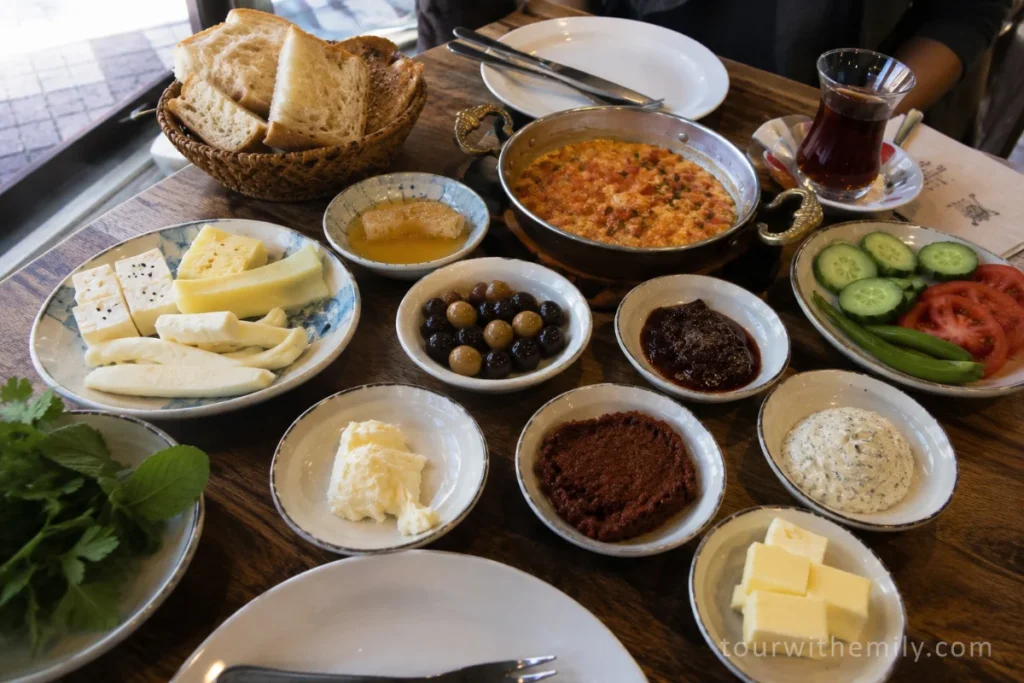
A Turkish breakfast is not a light meal. It arrives in multiple small dishes — white cheese, kaşar cheese, olives, tomatoes, cucumbers, honey, kaymak (clotted cream), butter, jam, menemen (eggs scrambled with tomatoes and peppers), and a substantial amount of bread. The ritual is slow, communal, and unlike any other breakfast culture in the region.
Menemen specifically is worth knowing — eggs cooked down with tomatoes, green peppers, and spices, often with bubbling cheese on top. Simple ingredients, not a simple result.
Van Kahvaltı Evi in Cihangir is the most cited Turkish breakfast spot in Istanbul, with weekend waits that are generally justified. Café Privato in Beyoğlu runs shorter queues. If your hotel includes a proper Turkish breakfast, don’t skip it — it covers the first meal of the day well.
Istanbul Street Food
Simit is the starting point — sesame bread rings from red carts everywhere in the city, around $0.50. Eat one near Galata in the morning, still warm, with tea. Crisp outside, chewy inside.
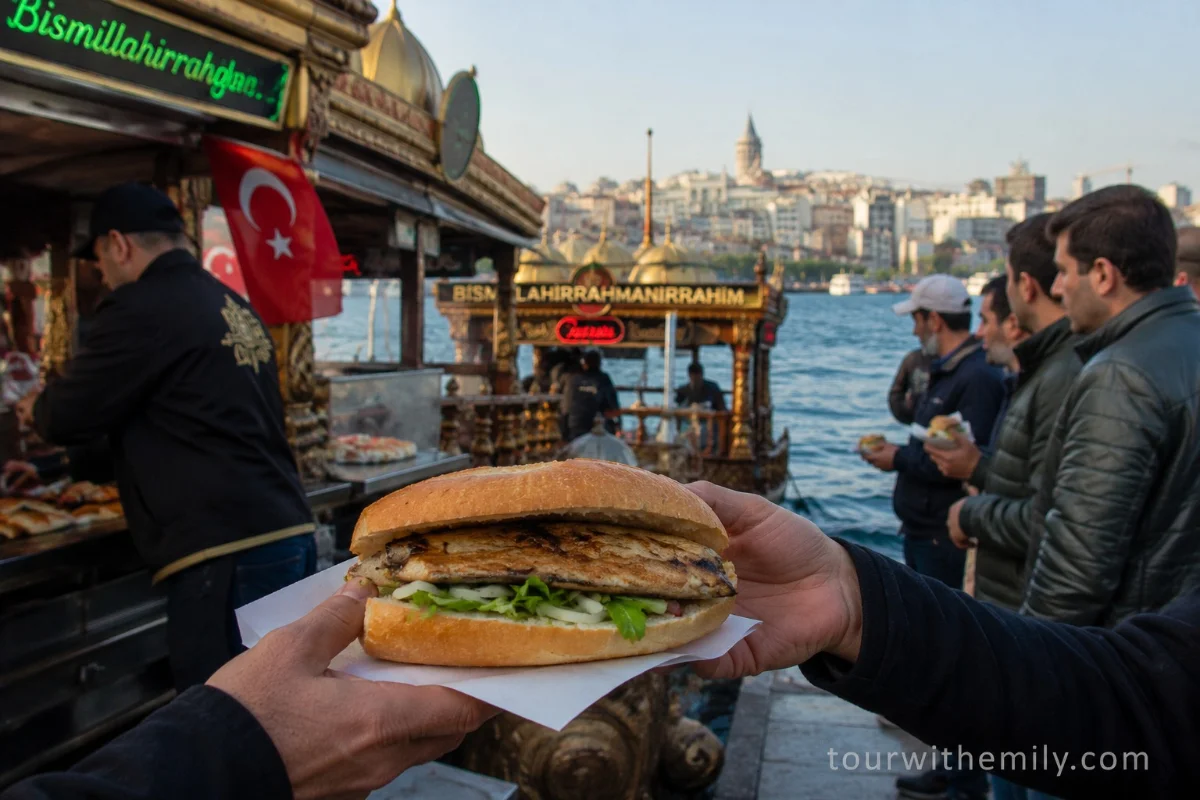
Balık ekmek is grilled mackerel in crusty bread with onion, lettuce, and lemon, sold from boats moored at the Galata Bridge near Eminönü. Around $3. It looks plain and isn’t. Eat it at the water rather than walking away with it.
Midye dolma — mussels stuffed with herbed rice, pine nuts, and spices, served cold with lemon — appears on trays carried by vendors near bars and busy streets, especially after dark. Around $0.20–0.30 per mussel. Locals eat them fast and in quantity.
Gözleme is stuffed flatbread on a griddle — spinach and cheese, potato, or meat — for $2–4. Good for lunch on the move. Lahmacun is thin crispy flatbread with minced meat, tomato, and herbs, rolled with fresh parsley and lemon. Under $3 at a non-tourist spot; Hocapaşa Pidecisi near the Grand Bazaar is reliable and has been there long enough not to need foot traffic from tourists.
Kumpir, at Ortaköy, is a baked potato loaded with toppings — cheese, corn, pickles, olives, sausage. The stalls sit on the waterfront with the illuminated Bosphorus Bridge behind them. Under $5, and the setting is a good reason to go specifically to Ortaköy for it.
Kokoreç — grilled lamb intestines chopped fine and served in bread with oregano and chili — is a cultural fixture, not an adventurous choice for locals. Gala Kokoreç near the Grand Bazaar in Fatih has been running long enough to count as an institution. Try a small portion first.
Islak hamburger is a steamed burger soaked in garlicky tomato sauce, sold from stalls on İstiklal Avenue late at night. The combination works in a way that defies the description. Best after midnight, specifically because of where you’re eating it.
The Best Kebab in Istanbul
Most visitors try döner without realizing the range it covers. Good döner — the rotating meat cone sliced to order — is exceptional; bad döner is everywhere. Dürümzade in Beyoğlu is the one Anthony Bourdain featured. The queue moves. Get the dürüm (wrap) rather than the plate.
Cağ kebab is a different thing — lamb on a horizontal spit, sliced directly onto flatbread, with a texture and flavor profile that döner doesn’t have. It originated in eastern Turkey and is harder to find in Istanbul than it should be. Şehzade Cağ Kebap near Beyazıt is the most reliable source.
İskender kebab is döner served over flatbread and drenched in tomato sauce and hot butter. A full meal. Best eaten sitting down.
Meze and Raki — How a Real Istanbul Dinner Works
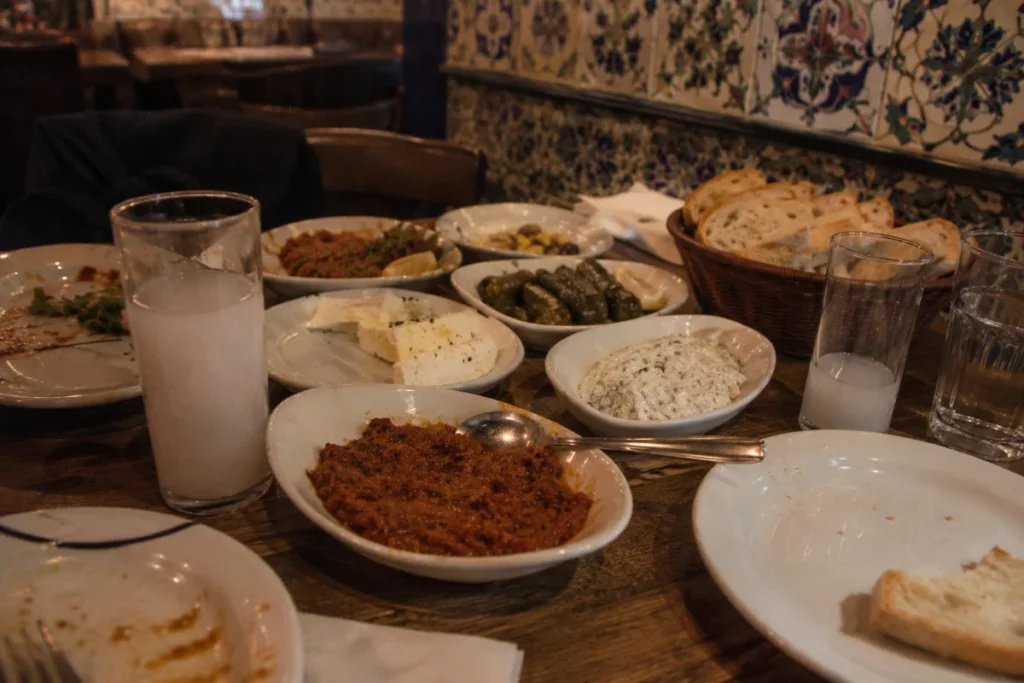
A meyhane is a traditional Turkish tavern built around raki — an anise-flavored spirit mixed with cold water, which turns it milky white. Pour water into the raki, not the other way. It’s called “lion’s milk” and it arrives alongside meze.
Meze are cold and hot small plates: hummus, ezme (spiced tomato paste), haydari (yogurt with herbs), stuffed mussels, white cheese, fried liver, sigara böreği (crispy pastry rolls), and more. You order several, share across the table, eat slowly, refill the raki, repeat. The main course, if it comes at all, arrives well into the evening.
This is how Istanbul eats on a proper night out — the meal is the evening, not something before it.
Karaköy Lokantası is the most established restaurant of this type in the city — the meze changes daily and the tiled interior earns its reputation. The Asmalımescit strip off İstiklal in Beyoğlu is the most concentrated area for meyhane evenings. Nevizade Street runs parallel and has a louder, more casual version of the same.
Sweets and Desserts
Baklava at Karaköy Güllüoğlu in Karaköy is the most serious version in the city, open since 1949. Hafız Mustafa 1864 has multiple locations and their Sirkeci branch is the most accessible from the main tourist sites — the baklava is good and the sweets counter covers everything else worth trying.
Künefe is shredded wheat pastry filled with unsalted white cheese, soaked in syrup, and served hot. Crispy outside, molten inside, simultaneously sweet and savory. It’s specific and nothing like baklava.
Kazandibi is a milk pudding with a caramelized bottom from the cooking method — subtle, not sweet-heavy, and different from anything else in the dessert category here.
Turkish coffee at Mandabatmaz — in an alley directly off İstiklal — is some of the best in the city. Order it without sugar on the first cup.
Best Restaurants in Istanbul by Neighborhood
| Restaurant | Area | Best For | View |
| Tarihi Sultanahmet Köftecisi | Sultanahmet | Köfte (meatballs) | Street |
| Hocapaşa Pidecisi | Sultanahmet | Lahmacun, pide | Street |
| Dürümzade | Beyoğlu | Döner wrap | Street |
| Antiochia / Antakya Mutfağı | Beyoğlu | Hatay meze | Street |
| Yeni Lokanta | Beyoğlu | Contemporary Turkish | Street |
| Karaköy Lokantası | Karaköy | Meze and mains | Street |
| Karaköy Güllüoğlu | Karaköy | Baklava, sweets | Street |
| Mandabatmaz | Beyoğlu | Turkish coffee | Alley |
| Çiya Sofrası | Kadıköy | Anatolian cooking | Street |
Kadıköy: Çiya Sofrası does seasonal Anatolian cooking, dishes you won’t find at any tourist-facing restaurant, with a menu that changes based on what’s available. On the Asian side; worth the ferry crossing.
Beyoğlu: Dürümzade for döner. Antiochia / Antakya Mutfağı for Hatay-region cuisine and an exceptional meze spread — it’s just off İstiklal but the entrance is easy to miss. Yeni Lokanta for an elevated contemporary Turkish dinner, the kind that works for a proper occasion rather than a quick meal.
Karaköy: Karaköy Lokantası for meze and mains in a space that has earned its reputation without needing to market itself. Karaköy Güllüoğlu for baklava, ideally mid-morning.
Near Sultanahmet: Hocapaşa Pidecisi for lahmacun and pide. Tarihi Sultanahmet Köftecisi Selim Usta for meatballs — one of the oldest köfte restaurants near the main sights and one of the few where the food justifies the queue rather than the location.
For hidden gem restaurants in Istanbul further off the tourist track, Culinary Backstreets runs food tours that cover neighborhoods most visitors don’t reach on their own — Beşiktaş, Fener, Arnavutköy — and the itineraries are worth reading even if you don’t book a tour.
Best Restaurants in Istanbul with a View
The Ortaköy waterfront is the most accessible combination of food and setting in the city — kumpir stalls on the Bosphorus with the illuminated bridge directly behind them, no reservation, under $5.
Rooftop restaurants in Beyoğlu look toward Sultanahmet over the Golden Horn. The view is real; prices at most of them run higher than the food warrants. Factor that in before booking.
Where NOT to Eat in Istanbul
The restaurant strips directly around Hagia Sophia, the Blue Mosque, and the Basilica Cistern are reliably overpriced. Menus in eight languages, aggressive hosts at the door, prices that have nothing to do with the food. Two streets in any direction, the same dishes cost half the price at a lokanta that isn’t competing for foot traffic from visitors who just left a UNESCO site.
The sit-down restaurants facing the Eminönü ferry terminal follow the same logic. The balık ekmek boats are a different thing — those are worth it.
Budget Eating in Istanbul
A lokanta meal — soup, main, bread, ayran — runs $4–7. Simit is $0.50. Balık ekmek is $3. Lahmacun is under $3 at a non-tourist spot. A full day of eating well on the street costs $10–15. The Istanbul on a Budget: How to Travel Cheap guide covers where tourist pricing actually bites and how to avoid it across the whole trip.
Frequently Asked Questions
What is Istanbul most famous for food?
Balık ekmek at the Galata Bridge, döner kebab, Turkish breakfast, baklava, and meze. Most visitors are surprised by how much the breakfast and meze cultures stick with them.
What is the best street food in Istanbul?
Simit for breakfast, lahmacun or gözleme for lunch, balık ekmek at the Galata Bridge, midye dolma in the evening. Kumpir at Ortaköy if you’re near the waterfront.
Where should I eat near Hagia Sophia?
Hocapaşa Pidecisi for lahmacun and pide, or Tarihi Sultanahmet Köftecisi Selim Usta for köfte. Both within ten minutes’ walk, neither a tourist trap.
What is raki?
Turkey’s national spirit — anise-flavored, mixed with cold water, drunk slowly alongside meze. Central to the meyhane dinner tradition. Skip it and you’re having a completely different kind of evening.
Is street food safe in Istanbul?
Yes. Midye dolma and kokoreç get nervous glances from first-timers; both are safe, both are worth trying.
Where is the best baklava in Istanbul?
Karaköy Güllüoğlu for the most serious version. Hafız Mustafa 1864 — Sirkeci branch — for accessibility from the main tourist sites.