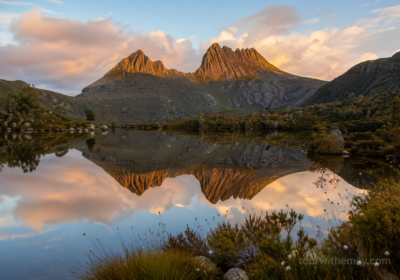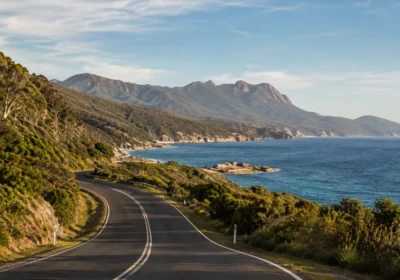
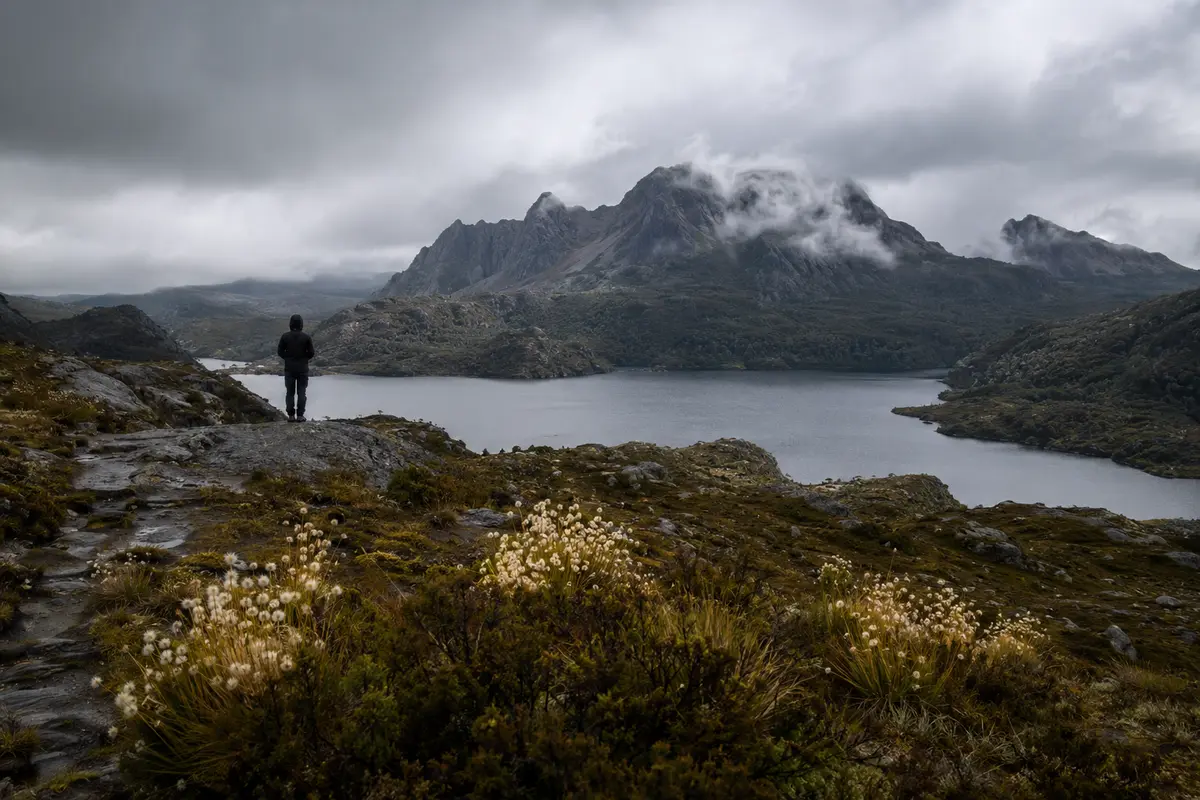
Tasmania gives you an unusual problem: there are far more worthwhile places than most trips can hold. The island looks compact on a map, yet slow roads, mountain weather, ferry timetables and long walks make rushed itineraries unravel quickly.
For a first visit, prioritise Cradle Mountain, Freycinet National Park, Port Arthur Historic Site, one Hobart experience and one wildlife encounter. Add the west coast if you have enough time to enjoy it rather than simply drive through it.
I spent two weeks travelling around Tasmania and still had to make choices. I walked Dove Lake, climbed to the Wineglass Bay lookout, visited Port Arthur and MONA, watched wombats near Ronny Creek and travelled on the West Coast Wilderness Railway. I also skipped Mount Amos when wet weather made the exposed rock unsafe. That decision tells you more about travelling well in Tasmania than any enormous bucket list: the best plan leaves room to change course.
This guide separates personal experience from research-backed recommendations. Opening times, access rules and booking details were checked against official sources, but conditions can change. Use the linked operator or park page before setting out.
The best things to do in Tasmania at a glance
If you do not want to read a list of 25 places before making a decision, start here.
| Experience | Planning snapshot |
| Dove Lake, Cradle Mountain | Region: Central Highlands | Allow: Half day | Effort: Easy–moderate | Cost: Parks pass + shuttle fee | Book ahead?: Usually no | Best for: Alpine scenery, wildlife | Main limitation: Fast-changing weather |
| Wineglass Bay Lookout | Region: East coast | Allow: 2–3 hours | Effort: Moderate, steep | Cost: Parks pass | Book ahead?: No | Best for: Iconic coastal view | Main limitation: Busy at peak times |
| Port Arthur Historic Site | Region: Tasman Peninsula | Allow: Half–full day | Effort: Easy, much walking | Cost: Paid | Book ahead?: Recommended | Best for: History, families | Main limitation: Emotionally heavy subject |
| MONA | Region: Hobart | Allow: 3–5 hours | Effort: Easy | Cost: Paid | Book ahead?: Recommended | Best for: Art, rainy days | Main limitation: Not designed for every taste |
| Maria Island | Region: East coast | Allow: Full day | Effort: Easy–moderate | Cost: Ferry + parks pass | Book ahead?: Yes | Best for: Wildlife, cycling, history | Main limitation: No shops; carry supplies |
| Bruny Island | Region: South | Allow: Full day | Effort: Flexible | Cost: Vehicle ferry + activities | Book ahead?: Check current ferry advice | Best for: Food, coast, wildlife | Main limitation: Queues and too much driving |
| Russell Falls | Region: Derwent Valley | Allow: 1–2 hours | Effort: Easy, accessible route | Cost: Parks pass | Book ahead?: No | Best for: Short walk, families | Main limitation: Limited on its own |
| Cape Hauy | Region: Tasman Peninsula | Allow: About 4 hours | Effort: Moderate, many steps | Cost: Parks pass | Book ahead?: No | Best for: Sea cliffs, hiking | Main limitation: Exposed weather |
| Gordon River cruise | Region: West coast | Allow: Most of a day | Effort: Easy | Cost: Paid | Book ahead?: Yes in busy periods | Best for: Wilderness without hiking | Main limitation: Long journey to Strahan |
| West Coast Wilderness Railway | Region: West coast | Allow: 1.5–3 hours | Effort: Easy | Cost: Paid | Book ahead?: Yes | Best for: Heritage, rainforest | Main limitation: Journeys vary by date |
My first-time shortlist: if I had only one week, I would choose Hobart and MONA, Port Arthur, Freycinet, Cradle Mountain and either Maria Island or a wildlife-focused stop. I would not squeeze in Strahan unless the route allowed at least two nights on the west coast.
Best things to do in Hobart and southern Tasmania
Hobart works best as more than an airport stop. It combines strong food, confronting art, colonial history and an alpine-feeling summit within a short radius.
1. Take the ferry to MONA, not just the road
The Museum of Old and New Art is one of the few Tasmania attractions that can reshape an entire day rather than fill an hour. Its underground galleries mix antiquities with provocative contemporary work, and the building matters as much as the collection.
The ferry from central Hobart creates the better arrival. On my visit, the journey up the Derwent made the museum feel deliberately removed from the city. Give yourself at least three hours inside; people who enjoy reading every label can spend most of the day.
Worth it if: you like art, architecture or experiences that invite disagreement.
Skip it if: confronting themes would spoil rather than enrich your day.
Plan it: MONA currently opens Thursday to Monday, and advance entry and ferry bookings are recommended. Check the official MONA visit page and ferry timetable before choosing your day.
2. Pair Salamanca Market with Hobart’s waterfront
Salamanca Market earns its place because it brings Tasmanian food, craft and small producers together in one walkable area. The market operates on Saturdays, so do not build a weekday plan around it. The official market site lists current hours as 8.30 am–3 pm.
Arrive early, buy breakfast rather than another generic souvenir, then continue through Salamanca Place, Battery Point and the waterfront. This turns a crowded market visit into a coherent half-day on foot.
Best for: first mornings, food lovers and travellers without a car.
Watch for: the 11 am–1 pm crush; early visitors get more space to talk to stallholders.
3. See Hobart from kunanyi / Mount Wellington
At 1,271 metres, kunanyi / Mount Wellington can feel several seasons removed from Hobart. The summit gives a clear sense of the Derwent, surrounding ranges and the scale of southern Tasmania, but cloud can erase the view completely.
Treat the mountain as a weather-dependent opportunity, not a fixed appointment. Pinnacle Road can close for snow, ice, unsafe conditions or congestion, and the temperature difference from the waterfront can reach 12°C. Check the official road and track updates before leaving.
If the summit is closed or buried in cloud, stop at The Springs for short walks and a lower viewpoint. There is no café at the Pinnacle, so take water and an extra layer.
4. Give Port Arthur more than a quick photo stop
Port Arthur Historic Site is not simply a row of convict ruins. The landscape, harbour and surviving buildings help explain how punishment, labour and surveillance operated here—and how those systems affected real people.
I expected the Penitentiary to dominate my visit, but the smaller personal accounts stayed with me longer. Allow half a day at minimum and take one of the introductory talks before wandering independently. The standard site entry currently includes short talks and a harbour cruise; confirm inclusions and hours on the official Port Arthur entry page.
Worth it if: you want context rather than a picturesque ruin.
Plan it well: combine it with one Tasman Peninsula stop, not five. The site itself deserves time.
5. Explore Bruny Island without turning it into a driving race
Bruny Island is often sold as a checklist of The Neck, oysters, cheese, lighthouse views and wildlife. Trying to collect all of them in one day leads to more windscreen time than island time.
Choose a theme. Food-focused visitors can stop at a few producers and walk The Neck. Hikers can commit to Fluted Cape; its coastal views were one of my highlights, but the circuit has steep sections. Families or mixed-mobility groups may prefer shorter lookouts and beaches.
The vehicle ferry runs every day and takes around 15–20 minutes. Tasmania’s transport department advises passengers to check in at least 20 minutes before departure; fares depend on vehicle size and pedestrians travel free. Verify current conditions on the official Bruny Island ferry page.
Pain point solved: you do not need every famous food stop. Pick two and leave room for the coast.
6. Walk to Russell Falls in Mount Field National Park
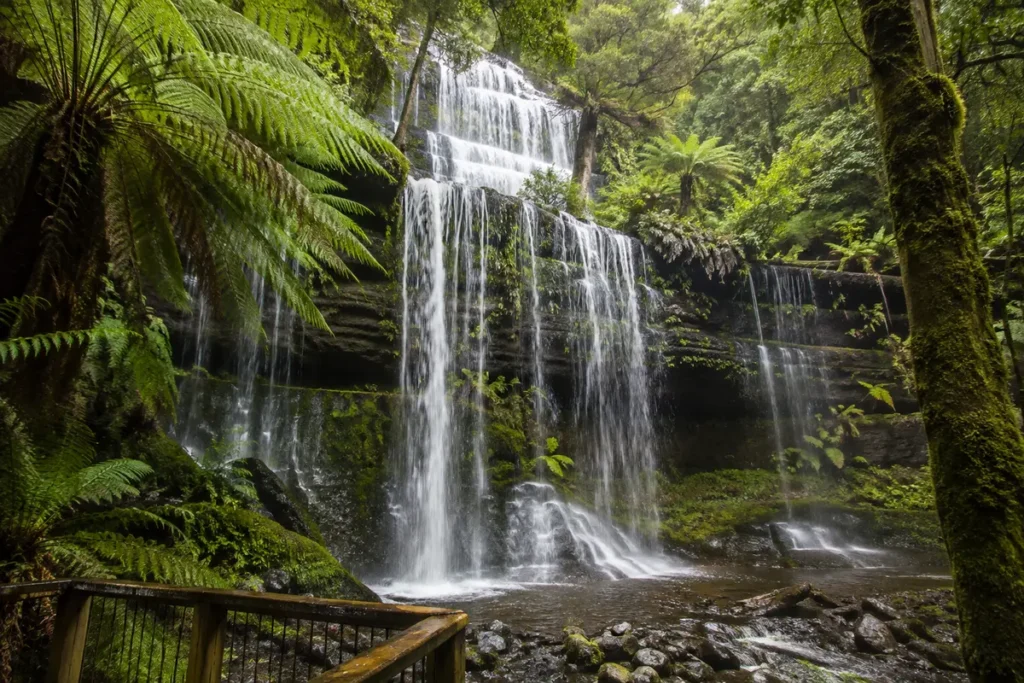
Russell Falls delivers a high scenic return for very little effort. The sealed, wheelchair-accessible route from the visitor centre takes about 15 minutes each way through wet forest. It suits children, pushchairs and travellers who cannot manage Tasmania’s steeper trails.
I continued beyond the first waterfall on the Three Falls Circuit and found the forest as memorable as the cascades. If your time or mobility is limited, Russell Falls alone still feels complete. A valid parks pass is required; the official park page lists current alerts and access advice.
7. Choose Cape Hauy or a Tasman coast cruise
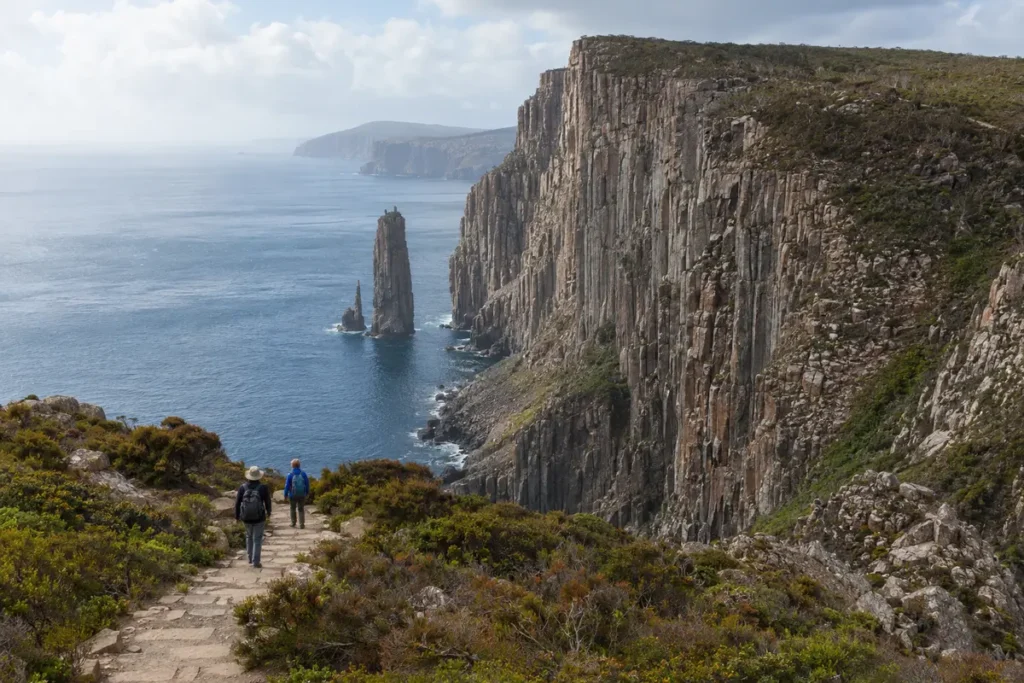
Both experiences reveal the Tasman Peninsula’s dolerite cliffs, but they suit different travellers.
Cape Hauy is a 9.4 km, roughly four-hour return walk with repeated stone steps and exposed coastal weather. I loved the drama of reaching the cape on foot, yet it is not an easy lookout stroll. The 12 km access road to Fortescue Bay is unsealed but suitable for conventional two-wheel-drive vehicles. Check the official Cape Hauy information for alerts.
A boat trip costs more but opens sea-level views of caves, cliffs and marine life without a long climb. Choose the walk for physical achievement; choose the cruise for geology, wildlife potential or limited walking ability.
8. Use Hastings Caves as a weather-proof southern detour
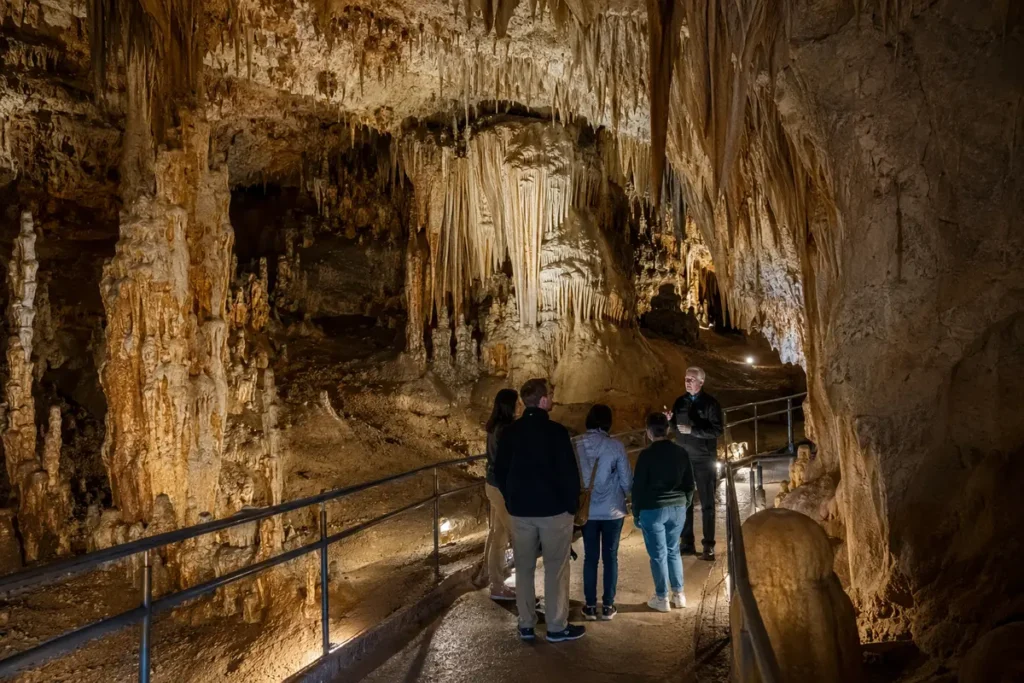
Hastings Caves gives southern Tasmania a genuinely different texture: a guided dolomite cave, cool underground chambers and a thermal pool surrounded by forest. It works especially well when exposed mountain or coastal plans become unpleasant.
Individual visitors currently buy 45-minute cave-tour tickets at the visitor centre on the day, first come, first served; only large, commercial and educational groups require bookings. Check tour times on the official Hastings Caves page before making the long drive south.
Best for: families, geology and a wet-weather alternative.
Limitation: it is too far from Hobart for a casual one-hour diversion.
Best things to do on Tasmania’s east coast
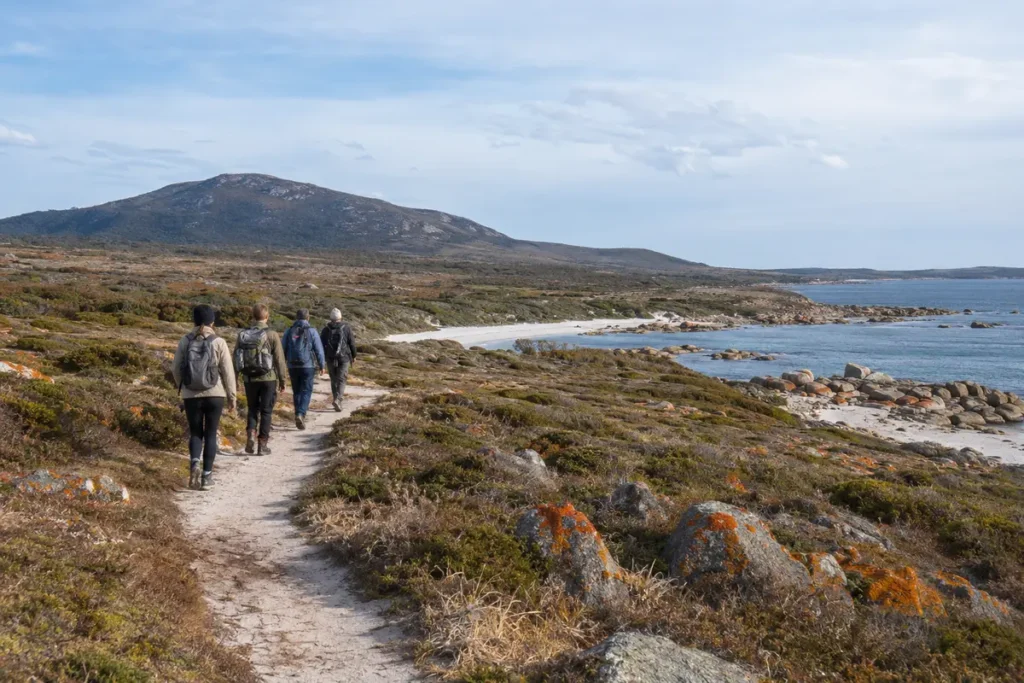
The east coast supplies many of Tasmania’s most recognisable places, but its real strength is variety: granite mountains, white beaches, wildlife, seafood and layered Aboriginal history.
IMAGE PLACEHOLDER
Hikers following a granite trail above a white-sand bay on Tasmania’s east coast
File: images/tasmania-east-coast-hiking.webp
Suggested image filename: tasmania-east-coast-hiking.webp
9. Walk to Wineglass Bay Lookout in Freycinet National Park
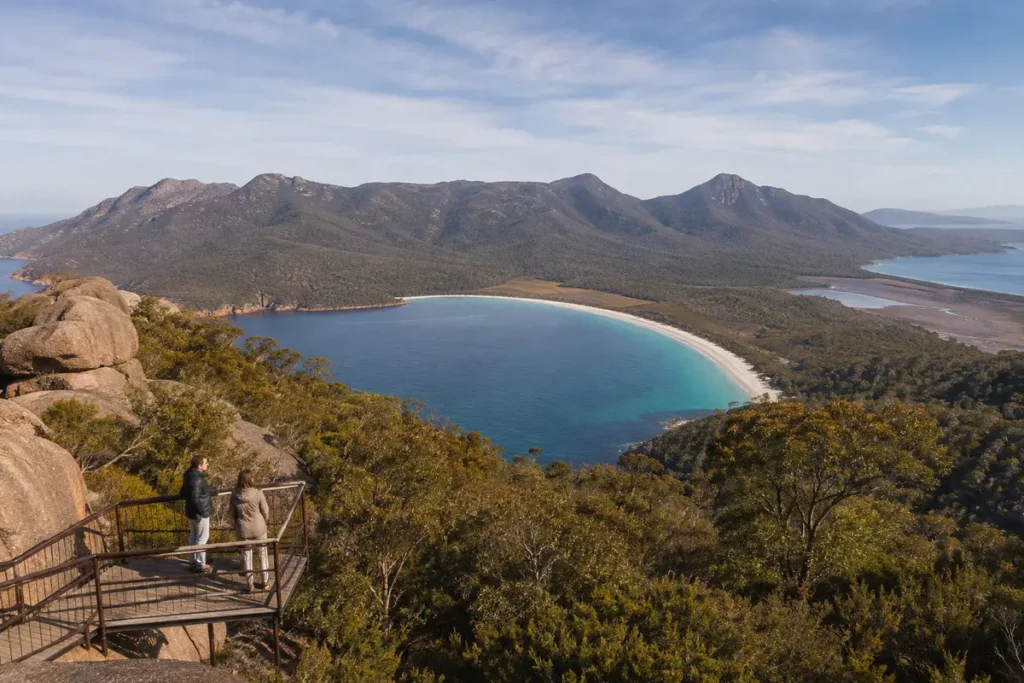
Wineglass Bay Lookout is popular for a reason. The saddle frames the curved beach between granite peaks and gives a rewarding view without demanding a full-day hike.
The official route climbs steeply for about 1.3 km each way. On my trip, I continued into the Hazards rather than treating the lookout as the finish; the quieter trail gave me a better feel for Freycinet. If you have limited time, the lookout alone is worthwhile.
I did not climb Mount Amos after rain. Its exposed granite requires scrambling and becomes dangerous when wet, so social-media photos should not make the decision for you. Use the official Wineglass Bay Lookout page for the standard walk and assess harder routes separately.
10. Spend a full day on Maria Island
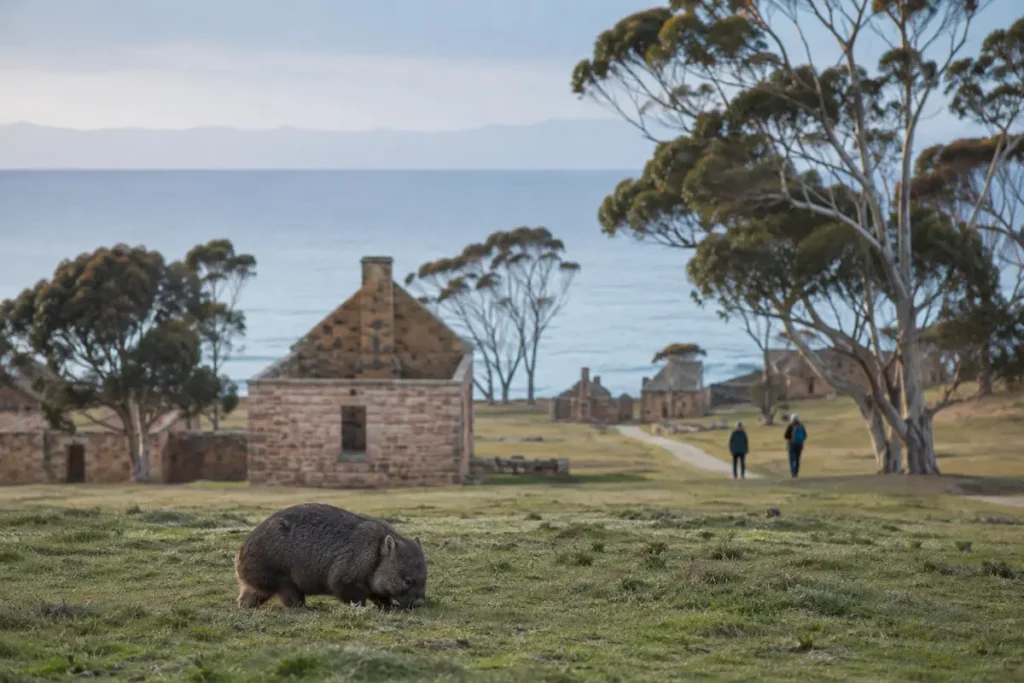
Maria Island combines free-roaming wombats, quiet roads, convict-era Darlington and coastal geology in a place without private cars. That mix makes it one of the most complete day trips in Tasmania.
I found the Painted Cliffs and Fossil Cliffs gave the day a clear shape, while the wildlife appeared naturally between them. Do not approach or feed animals, even when wombats seem unconcerned by people.
The ferry must be booked, and you also need a valid parks pass. There are no shops on the island, so carry lunch, water and weather protection. Painted Cliffs is safest on the exposed rock platform within two hours of low tide. Confirm ferry and tide advice through the official Maria Island page.
11. Slow down at larapuna / Bay of Fires
The Bay of Fires is a long stretch of north-east coastline, not a single orange-rock viewpoint. Its appeal comes from pale sand, clear water, lichen-covered granite and enough space to escape the busiest pull-offs.
I would choose one longer beach walk over six brief roadside stops. Binalong Bay is the easy introduction, while the coast farther north feels progressively quieter. Pack for wind even when the sky looks settled.
To understand this landscape beyond its photogenic surface, consider the four-day wukalina Walk. It is a Palawa-owned and operated journey across Country in north-east lutruwita / Tasmania. The official wukalina Walk site explains its cultural focus and current departures.
12. Watch little penguins responsibly in Bicheno
Penguins come ashore after dark, which creates two problems: visitors use bright lights, and people stop or drive carelessly near nesting areas. A guided tour controls lighting and movement while helping protect habitat.
Bicheno Penguin Tours operates on a private rookery and involves about 500 metres of walking. The route is not suitable for wheelchairs, walking frames or prams, so check accessibility before paying. Tour times shift with dusk and season; use the operator’s current information, not an old blog timetable.
Never use flash, block a penguin’s path or handle a bird. Wildlife sightings remain natural events, not guaranteed performances.
13. Build one east-coast meal around oysters and wine
Tasmania’s food experiences work best when attached to a real route, not collected as unrelated tasting stops. On the east coast, pair local oysters or seafood with a Coal River or Freycinet-area cellar door rather than attempting a full day of constant sampling.
One of my favourite simple stops was oysters with an east-coast view. It felt more connected to the place than a formal “food trail”. Check cellar-door opening days, appoint a driver and leave space for lunch; several small producers do not operate daily.
14. Choose wukalina Walk for cultural depth, not another viewpoint
Most ranked lists of things to do in Tasmania mention scenery repeatedly but barely explain whose Country visitors are travelling through. wukalina Walk addresses that gap through Palawa-led knowledge, history, food and time on Country.
The experience runs for four days and three nights, so it is not an add-on to a rushed east-coast drive. It suits travellers willing to exchange quantity for context. I have not personally completed it; this recommendation rests on its Aboriginal ownership, clear cultural purpose and official programme rather than second-hand claims of personal experience.
Best things to do in Launceston and northern Tasmania
Northern Tasmania rewards travellers who stay rather than pass through. Launceston provides food and heritage, while the Tamar Valley and north-east add wine, lavender and mountain biking.
15. Walk Cataract Gorge from Launceston
Cataract Gorge is unusual because a dramatic river gorge begins within walking distance of the city centre. You can choose an easy riverside stroll, cross the suspension bridge, use the chairlift or extend the walk onto steeper tracks.
I liked it most early, before the central lawns and pool became busy. It is one of the best free things to do in Tasmania and a useful first or final activity because it does not consume a driving day.
Best for: a free half-day, families and flexible walking distances.
Limitation: some gorge tracks are steep even though the main visitor area feels easy.
16. Taste cool-climate wine in the Tamar Valley
The Tamar Valley Wine Route links more than 30 vineyards and wineries around kanamaluka / Tamar River. Sparkling wine, pinot noir and aromatic whites dominate, but the value lies in meeting producers and seeing the river landscape—not racing between cellar doors.
Choose two or three places on the same side of the river and check opening days directly. The official Tamar Valley Wine Route is more reliable than an old list of “best wineries” because cellar doors change hours and tasting arrangements.
If everyone wants to taste, book a driver or tour. Rural distances make casual ride-hailing a poor safety plan.
17. Give Launceston’s food culture an evening

Launceston became a UNESCO Creative City of Gastronomy in 2021, but the title only matters if you use it to eat locally. Look for menus that name farms, fisheries, cheesemakers and wine regions rather than simply adding “Tasmanian” to a dish.
Book one strong dinner, visit Harvest Launceston Community Farmers’ Market if your dates align, and leave room for bakeries and casual produce during the day. This is a better use of time than driving to a remote attraction solely for a photo. See the UNESCO city profile for the designation and its food-system focus.
18. Ride the Blue Derby mountain-bike trails
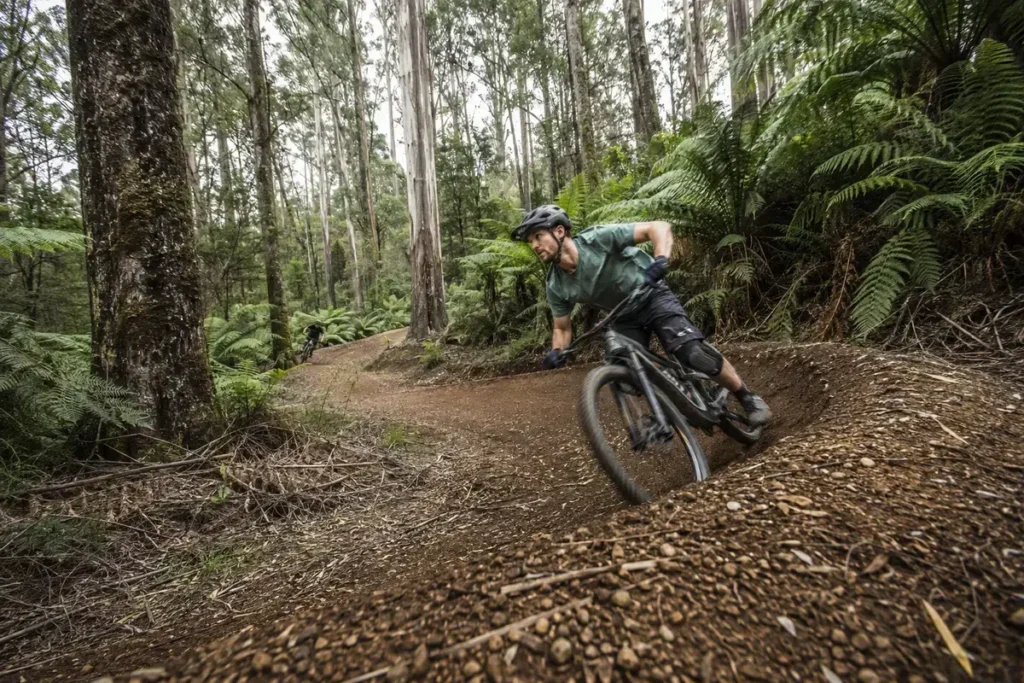
Blue Derby transformed a former mining town into a major mountain-bike destination. The network has more than 125 km of purpose-built trails, with routes for different skill levels, uplift services and bike hire.
This is not a place to overstate your ability. Wet roots, granite and speed can punish a poor trail choice, so match the route to the least experienced rider in your group. Use the official Blue Derby trail information for maps, closures and grades.
Worth it if: riding is a main reason for your trip.
Skip it if: nobody in your group wants to spend at least half a day on a bike.
19. Visit Bridestowe for lavender only in season
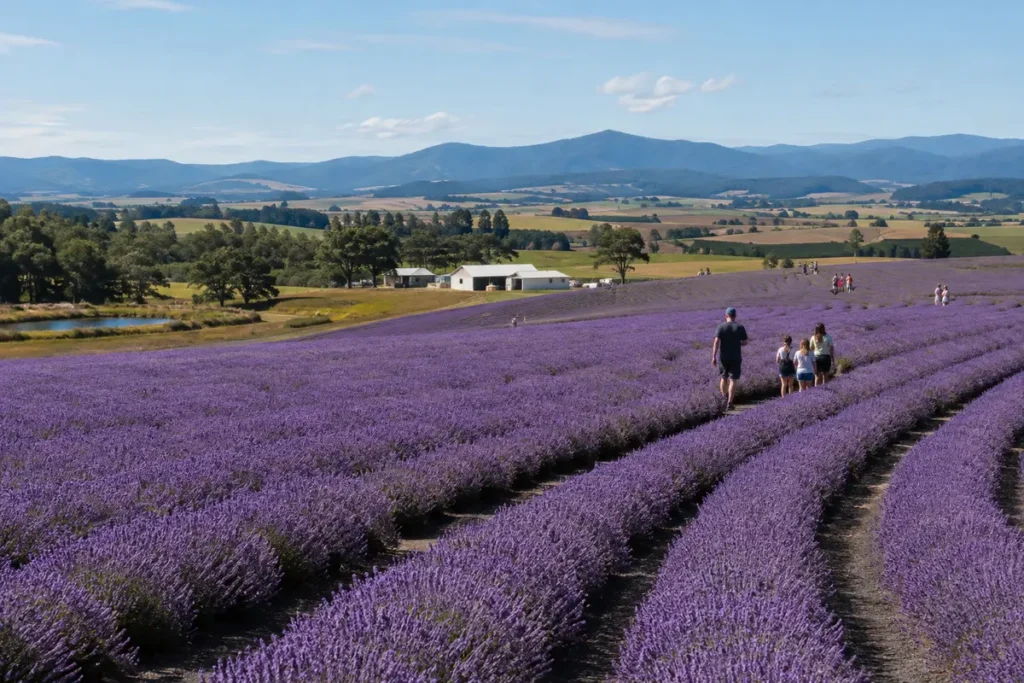
Bridestowe Lavender Estate is often shown as if purple rows cover the farm year-round. They do not. The estate says the main bloom usually falls in December and January, with most fields harvested by February. Flowering varies with conditions.
Outside that window, visit only if the working farm, gardens and products interest you. Do not make a long detour expecting the famous purple panorama. Check the official seasonal guide before travelling.
Best things to do in central, western and north-west Tasmania
This region contains Tasmania’s strongest wilderness experiences and its easiest planning mistake. Roads are slower than their distance suggests, so choose a few substantial stops.
20. Walk the Dove Lake Circuit at Cradle Mountain
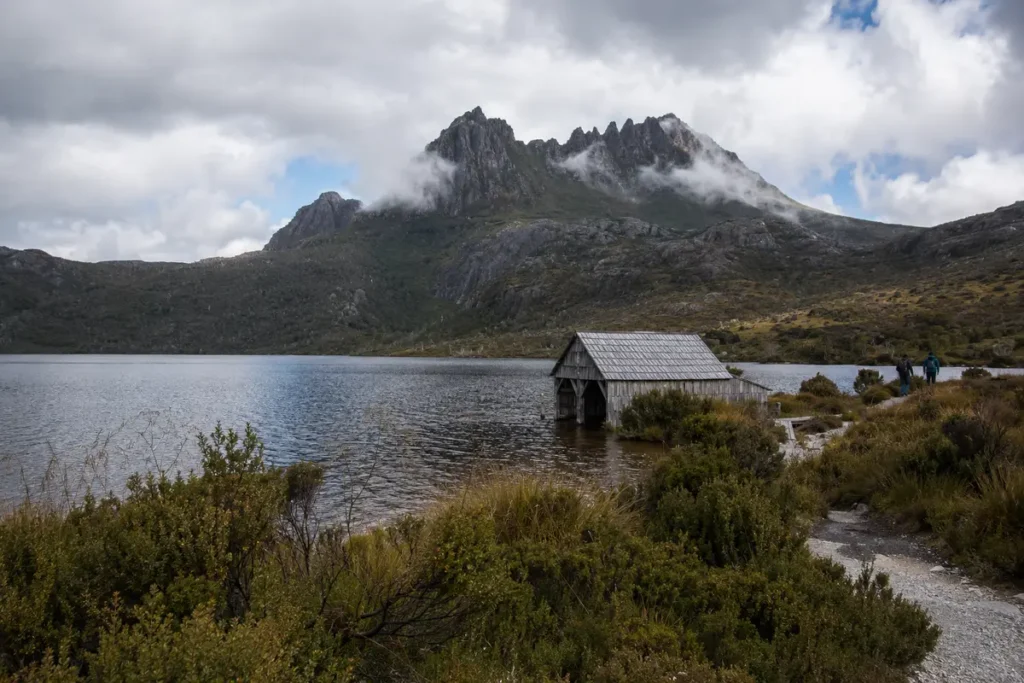
Dove Lake gives first-time visitors a close view of Cradle Mountain without committing to a difficult summit. The full circuit is about 6 km and passes rainforest, button grass, small beaches and the much-photographed boatshed.
I walked clockwise, which matches current park guidance. The weather moved quickly across the mountain, and that changing light made the landscape more interesting, not less. Carry waterproofs and warm layers even on a promising morning.
During shuttle operations, private vehicle access beyond the visitor centre is restricted. A parks pass is required, and most visitors also need a separate shuttle ticket; current Icon Pass holders and under-18s have different arrangements. Read the official Cradle Mountain shuttle information before arrival.
For a shorter alternative, walk around Ronny Creek or part of the Enchanted Walk. I saw wombats near Ronny Creek in the cooler part of the day, but no route can guarantee wildlife.
21. Ride the West Coast Wilderness Railway
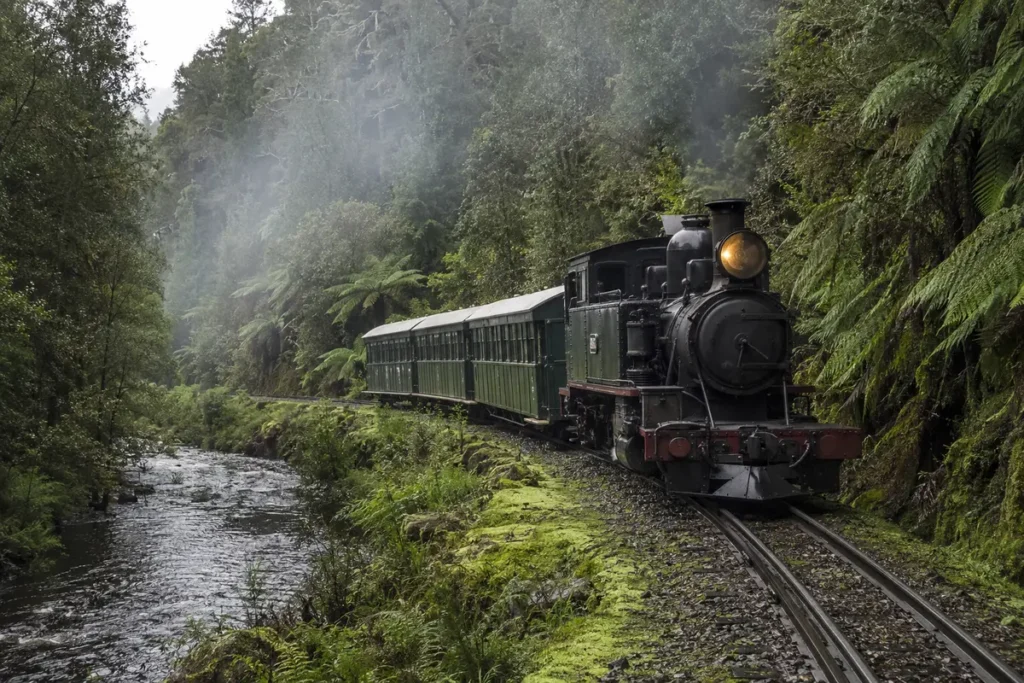
The railway works because it is both a landscape experience and an engineering story. From Queenstown, restored steam locomotives use the Abt rack-and-pinion system on steep sections through rainforest; shorter diesel journeys currently operate from Strahan.
I remember the forest, commentary and local honey tasting more than the staged gold panning. Choose the journey by departure town and locomotive type, not by a recycled “full line” description. Services have changed over time, and the current official railway journey list shows which trips actually operate. The operator recommends booking several weeks ahead when possible.
22. Cruise Macquarie Harbour and the Gordon River
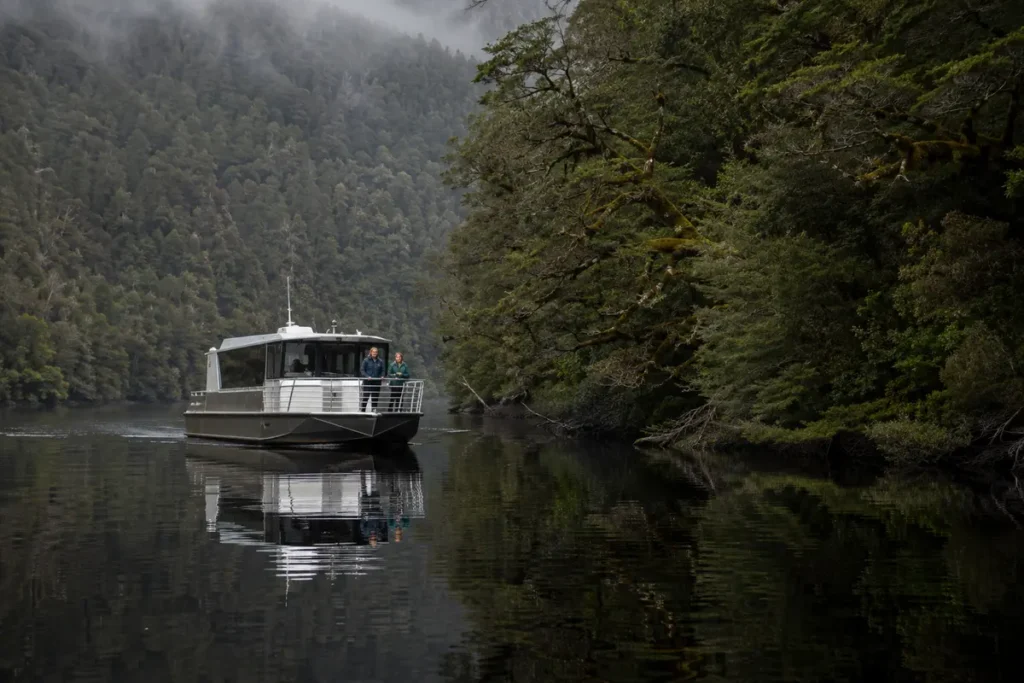
A Gordon River cruise makes remote west-coast wilderness accessible to people who cannot undertake a multi-day walk. Most journeys combine Macquarie Harbour, the lower Gordon River, rainforest and the history of Sarah Island.
The cruise occupies most of a day, so stay in Strahan the night before. A calm reflection photograph is never guaranteed; west-coast weather determines the mood. Compare deck access, seating, food and shore stops rather than buying only on price. Start with the official cruise itinerary and confirm what your chosen fare includes.
23. Experience takayna / Tarkine from Corinna
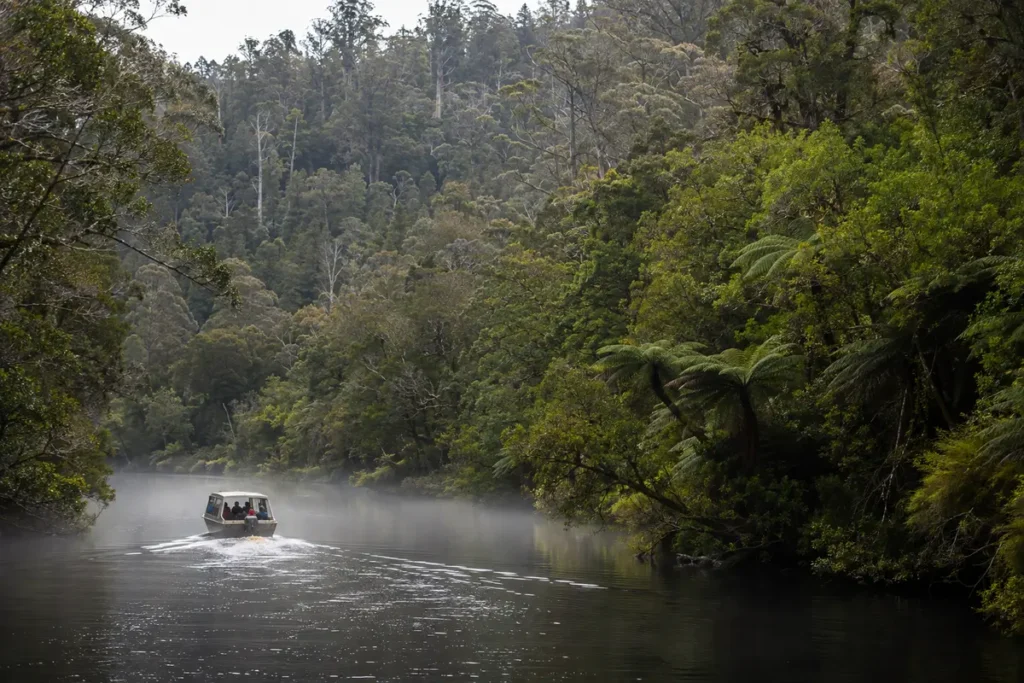
takayna / Tarkine is not one bounded national park or a single lookout. It is a large living landscape of rainforest, rivers, coast and Aboriginal heritage in north-west Tasmania. That scale makes vague “drive the Tarkine” advice unhelpful.
Corinna gives the visit a practical focus through river trips, rainforest walks and access to the Pieman River. Choose it if you can stay overnight and accept limited services. Travellers with less time can follow a defined north-west loop, but should check road surfaces, fuel and phone coverage rather than improvising late in the day.
This is one place where respectful language matters: use takayna alongside Tarkine, remain on formed tracks and do not treat cultural places as photo props.
24. Walk or ride up The Nut at Stanley
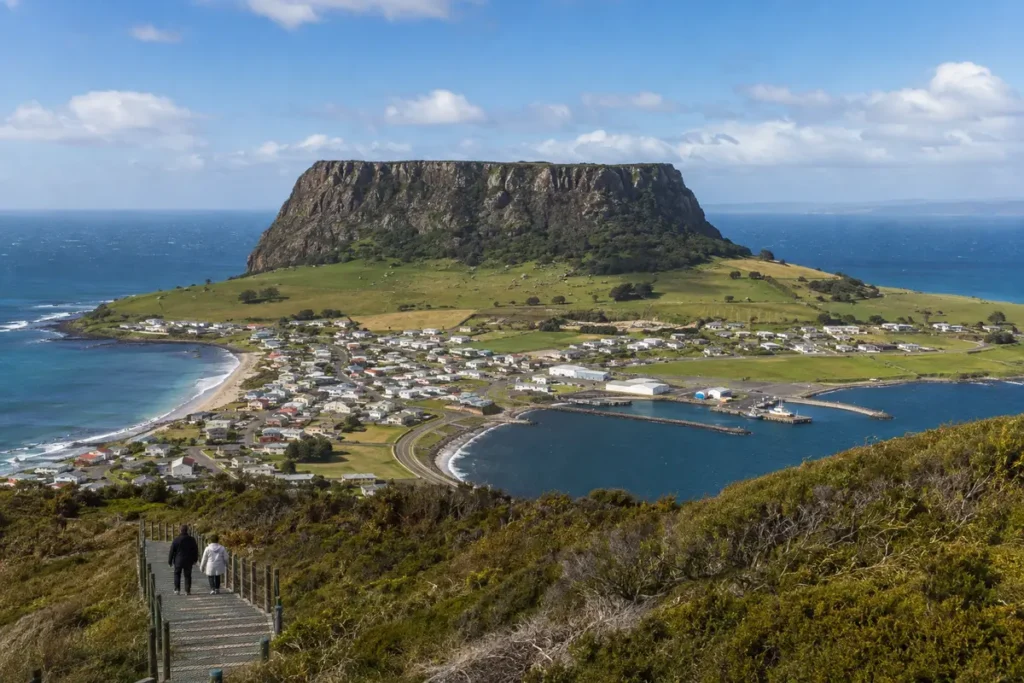
The Nut rises 143 metres above Stanley and gives the north-west coast a memorable landmark. The direct Zig Zag Track is short but very steep; the chairlift can reduce the climb, although it closes seasonally and still requires visitors to manage boarding and summit terrain.
At the top, the 2.7 km circuit takes about an hour and opens views over Bass Strait, farmland and the historic town. The official reserve page lists accessibility details, current alerts and seasonal chairlift information.
Best for: a half-day with Stanley.
Low-effort option: enjoy the base, Godfreys Beach and town if wind or mobility rules out the summit.
25. See Tasmanian wildlife without making it perform
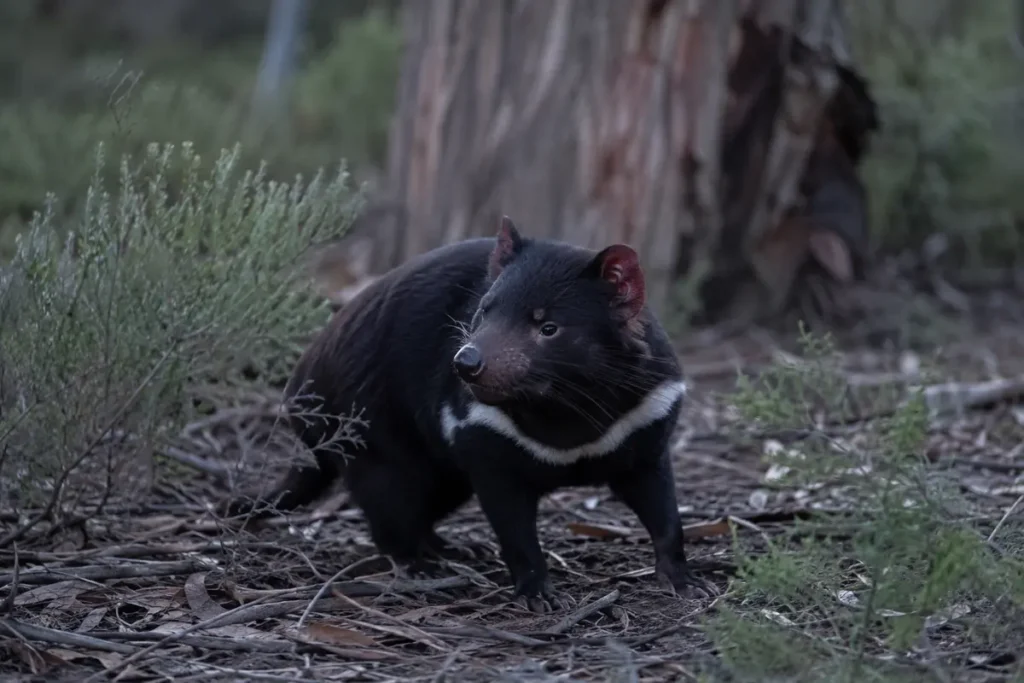
Wombats, pademelons, wallabies and echidnas may appear beside walks, especially around quieter dawn and dusk periods. I saw wombats near Ronny Creek and white Bennett’s wallabies around Bruny Island, but I never saw a platypus. Honest wildlife advice needs both sides of that sentence.
For more reliable viewing, choose a reputable sanctuary or conservation-led night tour. Ask whether the organisation supports rescue, rehabilitation, habitat protection or breeding programmes. Keep distance, never feed wildlife and avoid driving quickly after dark, when roadkill risk rises.
If seeing a Tasmanian devil matters, a responsible sanctuary offers a better chance than hoping for a rare roadside encounter. Wild sightings remain a bonus, not something an itinerary can promise.
How to choose the right Tasmania attractions for your trip
Do not select only by popularity. Match each experience to the time, effort and weather your group can realistically handle.
| Your priority | Recommendation |
| First-time highlights | Strongest choices: Cradle Mountain, Freycinet, Port Arthur, Hobart | Easier alternative: Dove Lake viewpoint, Cape Tourville, Hobart waterfront | What to avoid: Adding the west coast without enough nights |
| Wildlife | Strongest choices: Maria Island, guided Bicheno penguins, ethical sanctuary | Easier alternative: Ronny Creek at quieter times | What to avoid: Feeding or crowding wild animals |
| Limited mobility | Strongest choices: MONA, Port Arthur core site, Gordon River cruise, Russell Falls | Easier alternative: Scenic drives and accessible lookouts | What to avoid: Assuming every “short walk” is easy |
| Families | Strongest choices: Russell Falls, Maria Island cycling, Cataract Gorge, Port Arthur | Easier alternative: Hastings Caves, wildlife sanctuary | What to avoid: Overloading one day with long drives |
| Serious hiking | Strongest choices: Cape Hauy, longer Freycinet circuits, Cradle trails | Easier alternative: Wineglass lookout, Dove Lake Circuit | What to avoid: Mount Amos or exposed walks in wet weather |
| Food and wine | Strongest choices: Hobart, Tamar Valley, east-coast seafood | Easier alternative: Salamanca Market | What to avoid: Cellar-door driving without a sober driver |
| Rainy day | Strongest choices: MONA, Hastings Caves, Launceston food stops | Easier alternative: Port Arthur with waterproofs | What to avoid: Exposed summits in high wind |
| Free or low-cost | Strongest choices: Cataract Gorge, Hobart waterfront, Bay of Fires beaches | Easier alternative: Short reserve walks | What to avoid: Forgetting parks-pass costs |
For route planning, weather, transport, accommodation and realistic driving times, use my separate Tasmania travel guide. Keeping those logistics in one place avoids repeating a second itinerary inside this attraction guide.
Tasmania experiences to book first
Availability matters more than a rigid booking calendar. Reserve the experiences that can remove an entire destination from your plan if they sell out.
- Maria Island ferry: booking is essential, especially when your route allows only one suitable day.
- MONA entry and ferry: the museum currently opens only Thursday–Monday, so secure both parts together.
- West Coast Wilderness Railway: departures, durations and locomotive types vary; popular dates can fill weeks ahead.
- Gordon River cruise: book once your Strahan dates are fixed, particularly in summer.
- Penguin tours and wildlife experiences: departure times follow dusk and capacity is controlled.
- Port Arthur special tours: general entry has more flexibility, but evening and specialist experiences need earlier planning.
Do not pre-book every outdoor hour. Keep at least one flexible half-day around Cradle Mountain, kunanyi / Mount Wellington or Freycinet so you can respond to cloud, rain, heat or strong wind.
Essential costs and access checks
Most urban walks, beaches and public lookouts are free. Tasmania’s national parks require a valid pass, while several tours, ferries and historic sites charge separately.
As of 1 July 2026, Parks Tasmania lists a two-month Holiday Pass at AUD 98.35 per vehicle and a daily pass at AUD 49.15 per vehicle for parks other than Cradle Mountain. The Holiday Pass covers entry to all national parks but does not include the Cradle Mountain shuttle. Fees change, so check the official parks-pass page rather than copying these figures into a fixed trip budget.
Before any park visit, check three things: the current alert, the weather forecast and whether the activity has a separate transport or tour charge. A parks pass does not pay for the Maria Island ferry, cave tour, commercial cruise or private attraction.
Frequently asked questions
Which is better for a short trip: Cradle Mountain or Freycinet?
Choose Cradle Mountain for alpine scenery, wombat potential and moody weather; choose Freycinet for coastal views, beaches and easier integration into an east-coast route. From Hobart, Freycinet usually fits a short loop more naturally. From Launceston or Devonport, Cradle Mountain often makes better route sense.
What is the best one-day trip from Hobart?
Port Arthur is the strongest all-weather choice for history and a structured day. Bruny Island suits food and coast, Mount Field suits an easier nature day, and Maria Island is excellent but requires a longer transfer and pre-booked ferry. Pick one region rather than combining two.
Can I take my dog into Tasmania’s national parks?
Usually not. Companion dogs are prohibited in reserves unless that specific reserve allows dogs; neighbouring areas can have different rules. Assistance dogs are allowed, but you must be able to show evidence if staff ask. Check the official Dogs in Parks guide for the exact reserve rather than relying on a generic “dog-friendly” map.
Is it worth planning a Tasmania trip around the Southern Lights?
No. Aurora Australis visibility depends on solar activity, cloud, darkness and a clear southern horizon, so no date guarantees a display. Treat an alert during your trip as a bonus. Never sacrifice a good day plan or drive an unfamiliar wildlife-heavy road at night solely for a forecast.
Will my phone work at Tasmania’s remote attractions?
Do not depend on it. Parks Tasmania says mobile range cannot be relied upon, particularly on remote walks. Download maps before leaving, carry a paper map for remote routes and tell someone where you are going. A Personal Locator Beacon is strongly recommended for remote walking; see the official park-safety guidance.
Can I fly a drone in Tasmania’s national parks?
Not as an ordinary park visitor. Parks Tasmania prohibits visitor drone use on reserved land, including national parks, because of wildlife, privacy and safety impacts. Limited commercial, event and scientific exceptions require authorisation and relevant certification. Check the official drones-in-parks rules before filming anywhere near a reserve boundary.
A final way to make the list manageable
The best things to do in Tasmania are not the 25 places you can tick off fastest. Choose one defining experience in each region you actually visit, add one flexible weather option, then leave enough time to notice what happens between them.
My strongest memories came from that slower rhythm: cloud moving across Cradle Mountain, the climb above Wineglass Bay, the quiet around Maria Island’s cliffs and a wombat appearing when I had stopped looking for one. Build a trip around depth, not collection, and Tasmania becomes much easier to enjoy.