Quick Answer: Yes — with the same street awareness you’d bring to any large city.
Istanbul is generally safe for tourists and solo travelers. Violent crime against visitors is rare, the main tourist areas are well-policed, and millions of people visit without incident every year. The realistic concerns are petty theft, taxi scams, and a few specific neighborhoods to avoid. 2025 added one specific warning — covered in the section below.
If you’re still planning the broader trip, the Istanbul Travel Guide covers transport, neighborhoods, and costs.
Is Istanbul Safe? The Direct Answer
The Numbeo Safety Index rates Istanbul comparably to — and in many metrics better than — several popular European cities. The FCDO, US State Department, and Australian DFAT all classify Istanbul as safe for general travel with standard precautions.
The Global Peace Index ranks Turkey 147 out of 163 countries — a figure that gets cited often when people ask is istanbul safe. It reflects national-level factors including geopolitical tensions and regional conflicts, not the day-to-day tourist experience in Istanbul. Worth knowing but not the most useful metric for a city trip.
Is Istanbul Safe for Solo Female Travelers?
Yes, with honest caveats.
Violent crime against tourists is rare. The main istanbul crime concerns for visitors are pickpocketing in crowded areas — the Grand Bazaar and the T1 tram specifically — and scams including taxi overcharging. Catcalling is more frequent around the bazaar areas than in the residential neighborhoods.
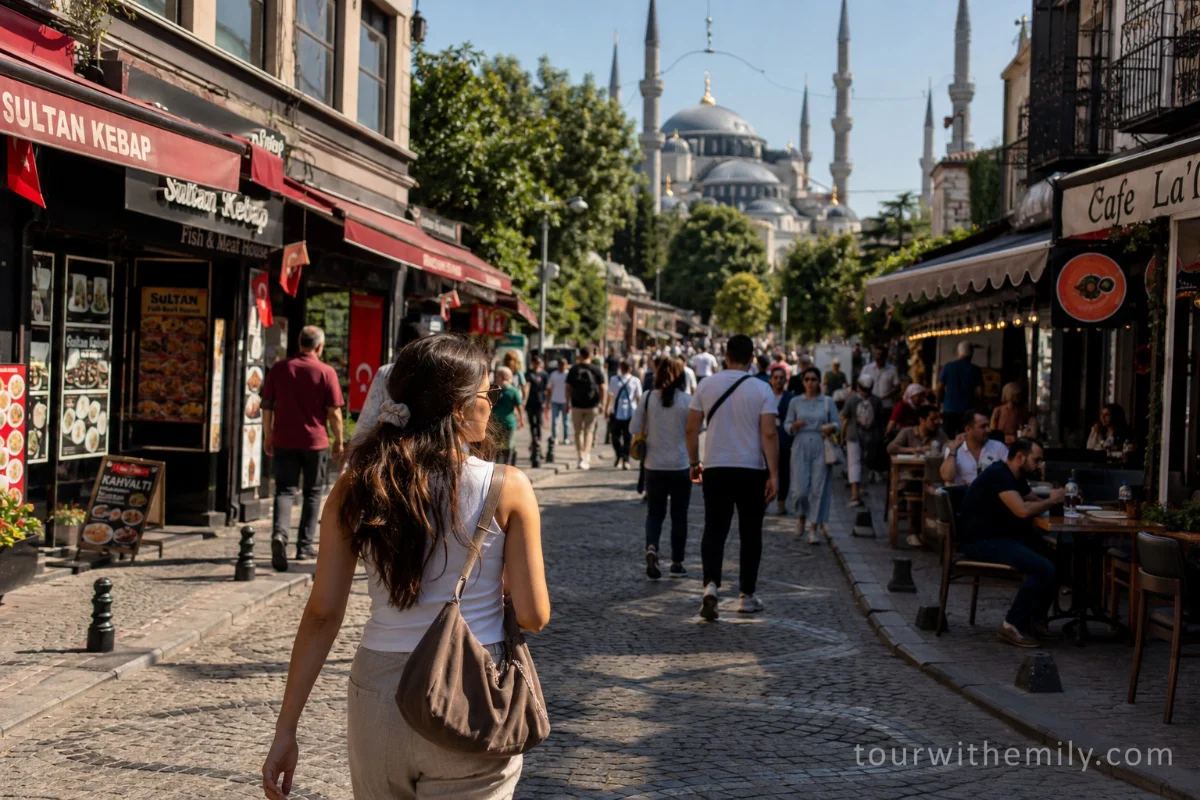
I walked around Sultanahmet and Beyoğlu alone, including evenings, without needing constant vigilance. The Asian side — Kadıköy specifically — felt more relaxed than the European tourist center.
One honest perspective worth including: Istanbul is safe, but may not be the best first solo destination for someone who’s never traveled alone. The city is large, the culture gap from Western Europe or North America is real, and that combination can feel disorienting before you’ve settled in. If you’re an experienced solo traveler, it’s fine. If this would be your first solo trip, somewhere smaller and more straightforward might serve you better.
Is Istanbul Safe Right Now? 2025 Update
In early 2025, at least 160 people died in Istanbul and Ankara from methanol-tainted bootleg alcohol, with 230 more hospitalised. The deaths came from counterfeit spirits — fake rakı, vodka, and whiskey — sold through unlicensed vendors. Authorities cracked down and made arrests.
Buy alcohol only from licensed shops, supermarkets, and reputable restaurants. Don’t buy spirits from street vendors or informal sellers. Rakı is particularly commonly counterfeited. If a bottle is suspiciously cheap or the seal looks wrong, don’t drink it.
Safe Areas in Istanbul
Sultanahmet has the highest police presence of any tourist area in the city. Very safe during the day. It quiets down after 9pm — not unsafe, but the main caution shifts from physical safety to overpriced restaurants and aggressive tour touts.
Beyoğlu and Taksim — İstiklal Avenue is busy, well-lit, and heavily policed. The crowds that make it feel lively are the same crowds where pickpocketing happens. Keep bags in front.
Karaköy and Galata — safe during the day and into the evening on the main streets. Side streets get quieter after midnight.
Kadıköy and the Asian side — the streets around the food market are active and safe into the evening. More local, fewer scam operators than the European tourist zones.
Nişantaşı — upscale shopping district, low crime, safe at all hours.
Cihangir — residential, expat-popular, calm. Solo female travelers consistently rate it well as a base.
After dark, the pattern across all these areas: Sultanahmet empties out but stays safe; İstiklal and Karaköy main streets stay active until late; Kadıköy runs quieter but local — fewer scam operators than anywhere on the European side at night.
Areas to Avoid
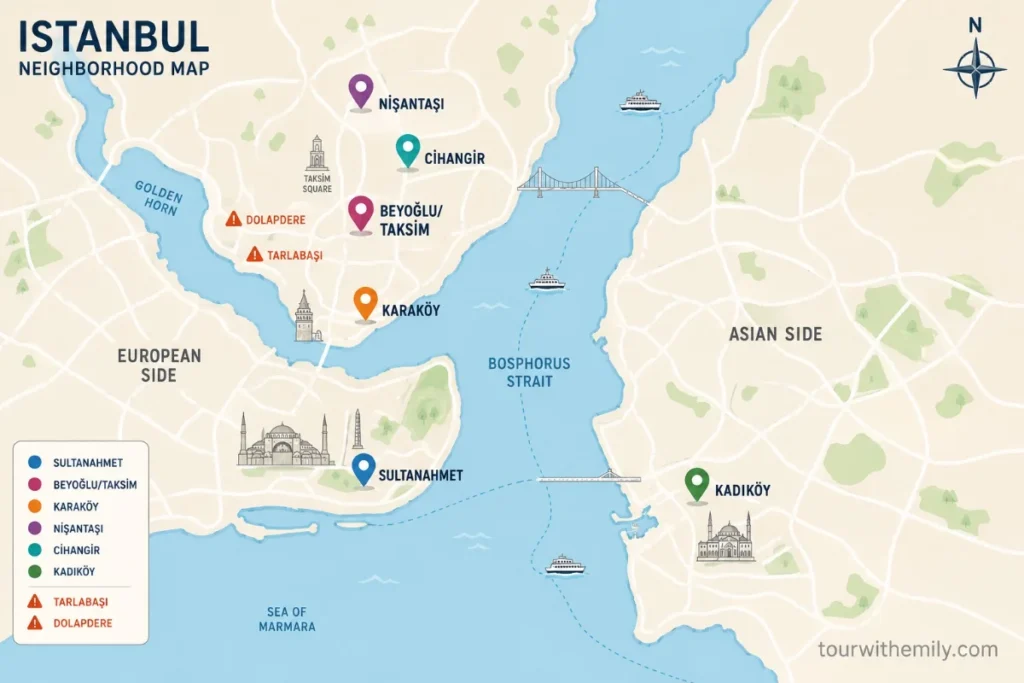
Tarlabaşı — in Beyoğlu, west of İstiklal Street — is the most commonly flagged area by people who know the city well. Avoid it, especially at night. If you need to pass through, take a taxi rather than walking.
Dolapdere, also near Taksim, carries the same advisory. Neither area is somewhere tourists should be based or walking through after dark.
Common Scams in Istanbul
Shoeshine: A shoe shiner drops his brush near you. If you pick it up and return it, he insists on shining your shoes as thanks — then demands a large payment. Don’t pick up the brush.
Fake drink invitation: A friendly stranger suggests a specific bar or club for a drink. Once inside, the bill runs into hundreds of euros. This targets solo male travelers around Taksim and İstiklal at night specifically. Don’t go to a venue suggested by someone you just met on the street.
Taxi overcharging: Use BiTaksi or Uber rather than hailing a cab on the street. Transparent pricing removes the negotiation entirely.
Carpet and souvenir pressure: Tea, conversation, then a sales pitch. Not dangerous — time-consuming. Walk away.
Grand Bazaar pickpockets: Keep bags in front, not on your back, in the bazaar and on the T1 tram.
Is Istanbul Safe for LGBT Travelers?
Istanbul has a historically visible LGBT community, concentrated in Beyoğlu. Pride marches have been banned since 2015 and the political environment has shifted toward conservatism over the past decade. Violence against LGBT individuals in Turkey has increased.
For tourists specifically: Istanbul is manageable for LGBT travelers in the tourist-facing neighborhoods — Sultanahmet, Beyoğlu, Karaköy, Kadıköy. Same-sex couples walking together, dining together, or staying in the same hotel room don’t typically encounter problems in these areas. Public displays of affection draw more attention than in Western European cities and carry more risk in conservative neighborhoods.
Lower risk than rural Turkey, less comfortable than Western European cities, more nuanced than the standard “Turkey isn’t LGBT-friendly but Istanbul is fine” answer implies.
Transport Safety
The İstanbul Kart system — metro, tram, bus, ferry — is safe and heavily used by locals. The T1 tram and official ferries are the most reliable options for getting around without dealing with taxis.
Taxis have a documented history of overcharging and route manipulation. BiTaksi or Uber give transparent pricing and a record of the journey.
Emergency Contacts
Police: 155 Ambulance: 112 Tourist Police (Sultanahmet): English-speaking, handles theft and tourist-related incidents. Your accommodation can direct you to the nearest office. Your country’s embassy or consulate: Save this contact before you travel.
Practical Safety Tips
Stay in Sultanahmet, Beyoğlu, Karaköy, or Kadıköy — all have good transport links and are well-lit at night. For a full neighborhood comparison, the Best Areas to Stay in Istanbul for Tourists guide covers each area in detail.
Buy alcohol only from licensed establishments — the most important practical change specific to 2025.
Use İstanbul Kart for public transport rather than taxis where possible.
Don’t follow strangers to bars or restaurants.
Frequently Asked Questions
Is Istanbul safe for solo female travelers?
Yes. Violent crime against tourists is rare. Main concerns are catcalling near bazaars, pickpocketing in crowds, and scam awareness.
Is Istanbul safe right now in 2025?
Yes, with one specific precaution: avoid unlicensed alcohol vendors following the 2025 bootleg alcohol deaths. Licensed shops and reputable bars only.
What areas of Istanbul should tourists avoid?
Tarlabaşı and Dolapdere, both near Taksim Square, especially at night.
Is Istanbul safe for LGBT travelers?
Manageable in tourist neighborhoods with awareness. Public displays of affection draw more attention than in Western European cities. Pride has been banned since 2015.
What are the most common scams in Istanbul?
Shoeshine scam, fake drink bar invitation (targets solo men near Taksim at night), taxi overcharging, carpet shop pressure
What is the emergency number in Istanbul?
Police: 155. Ambulance: 112.