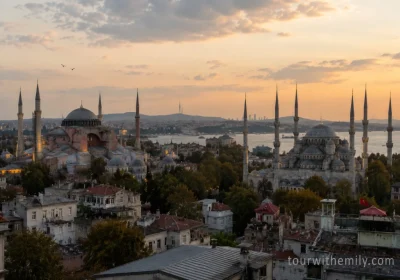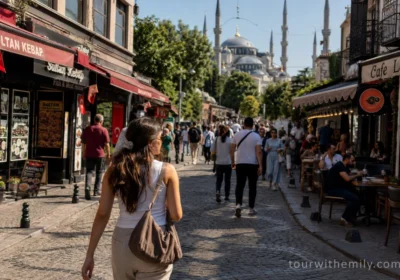
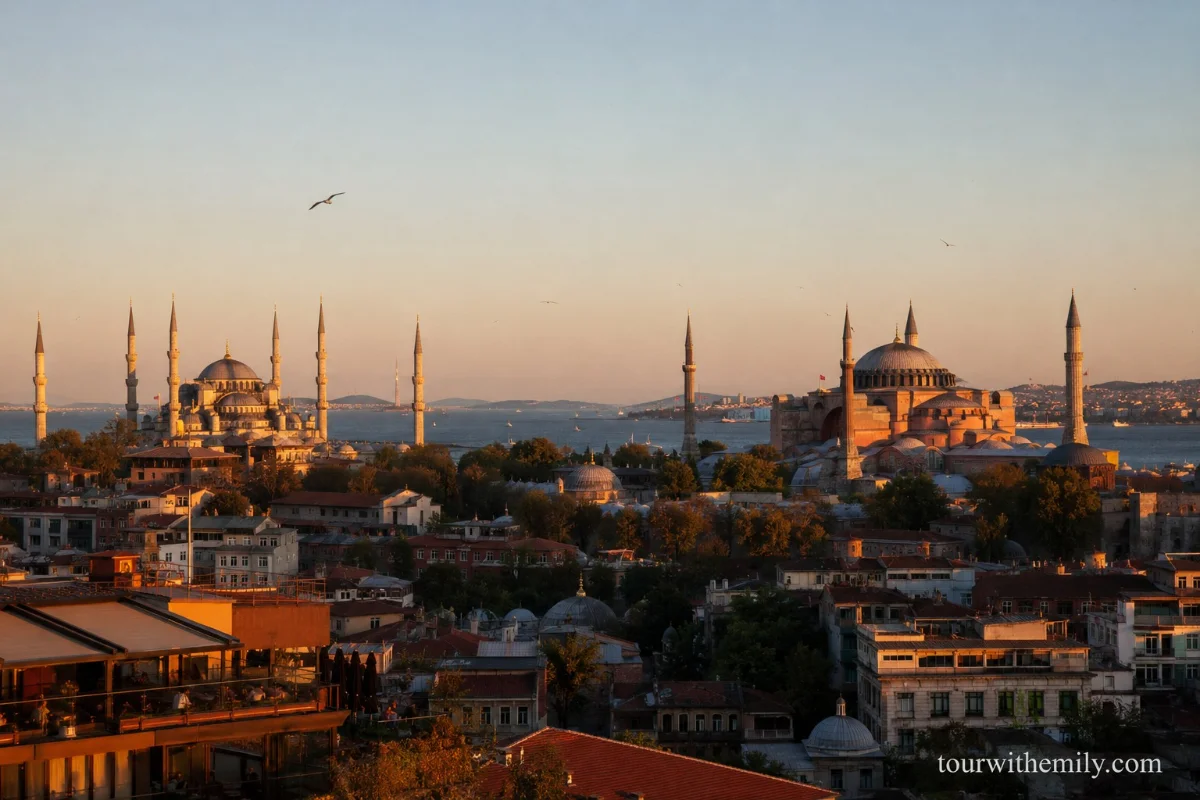
Istanbul doesn’t ease you in. The first morning you step outside in Sultanahmet, you’re standing between the Hagia Sophia and the Blue Mosque with the Bosphorus glinting at the end of the street. The question isn’t what to see — it’s how to sequence it without spending every day in a queue.
This guide covers the 15 best things to do in Istanbul, organized by area, with timing for each so you can plan your days rather than guess. If you’re still in the early planning stage, the Istanbul Travel Guide covers transport, neighborhoods, and costs all in one place.
The Must-See Landmarks in Sultanahmet
The historic peninsula of Sultanahmet is where most first-timers spend the majority of their time. The main sites are all walkable from each other, and most visitors can cover all five in two focused days.
1. Hagia Sophia
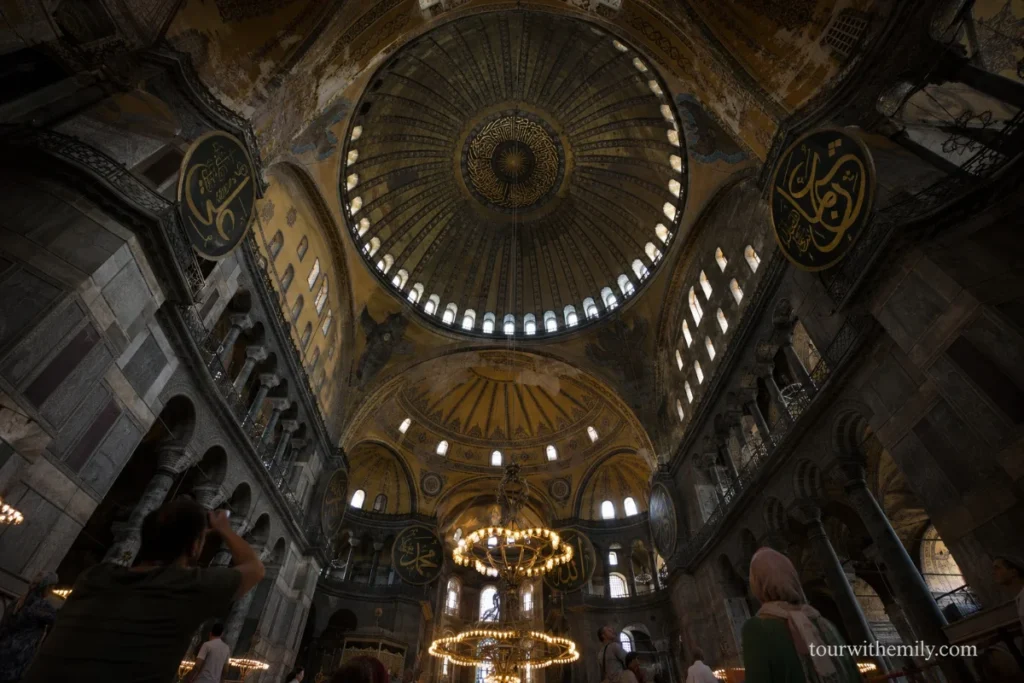
Built in 537 AD, the Hagia Sophia has served as an Eastern Orthodox cathedral, a Roman Catholic cathedral, an Ottoman mosque, a museum, and since 2020, an active mosque again. Each conversion left visible layers — Byzantine mosaics alongside Ottoman calligraphy, Christian iconography partially uncovered under plaster. The interior dome stands 55 meters high.
Entry is free. Women need to cover their heads inside — scarves are available at the entrance. Go before 9am. By mid-morning the interior is crowded enough to make it hard to stand still and look.
Time needed: 1–1.5 hours
2. Blue Mosque (Sultan Ahmed Mosque)
The Blue Mosque sits directly across from the Hagia Sophia and is the only mosque in Istanbul with six minarets. The name comes from the 20,000 hand-painted blue İznik tiles covering the interior walls. It’s an active mosque, which means it closes during the five daily prayer times — each closure lasts around 90 minutes. Check the prayer schedule before planning your morning.
Entry is free. Shoulders and knees covered, shoes off.
Time needed: 45 minutes
3. Basilica Cistern
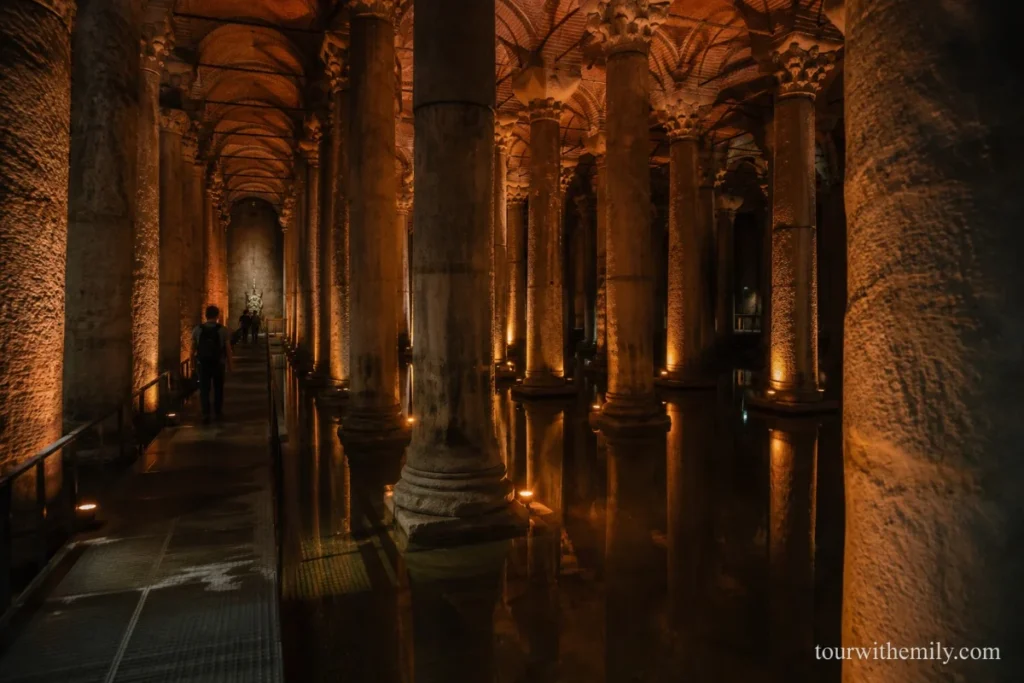
Underneath Sultanahmet’s streets is a 6th-century underground water reservoir built during the reign of Emperor Justinian. Over 300 marble columns rise from shallow water in a space that’s dimly lit and nothing like what you expect to find beneath a busy street. Two enormous Medusa heads repurposed as column bases sit at the far end — one upside down, one on its side.
Entry is paid. Go at opening time — tour groups arrive from 10am and the space fills fast.
Time needed: 45 minutes
4. Topkapi Palace
Topkapi Palace was the administrative heart of the Ottoman Empire for over 400 years. The complex overlooks the Bosphorus with multiple courtyards, treasury rooms, and the Harem — the private imperial residence that requires a separate ticket. The treasury section, with its Ottoman jewels, weapons, and religious artifacts, takes most people longer than they planned for.
Entry is paid. The Müze Kart (Turkish Museum Pass) covers Topkapi and the Harem — worth buying if you’re visiting multiple paid sites across the city. Allow at least three hours.
Time needed: 3–4 hours
5. Grand Bazaar
The Grand Bazaar has operated since 1461 with over 4,000 stalls across 60 covered streets. Getting lost is part of it. The best sections for browsing are the leather goods corridor, the jewelry district, and the ceramics stalls near the main entrances. Prices are negotiable and vendors expect it.
Entry is free. Open Monday to Saturday, closed Sunday.
Time needed: 1.5–2 hours
Beyond Sultanahmet
6. Galata Tower
The Galata Tower is a 14th-century stone tower in Karaköy with a 360-degree observation deck. The views take in both the European and Asian sides of the city, the Bosphorus, and the Sultanahmet skyline from a different angle than you get at street level. Book tickets online — walk-up queues run long in peak season.
Entry is paid.
Time needed: 1 hour
7. Spice Bazaar and Galata Bridge
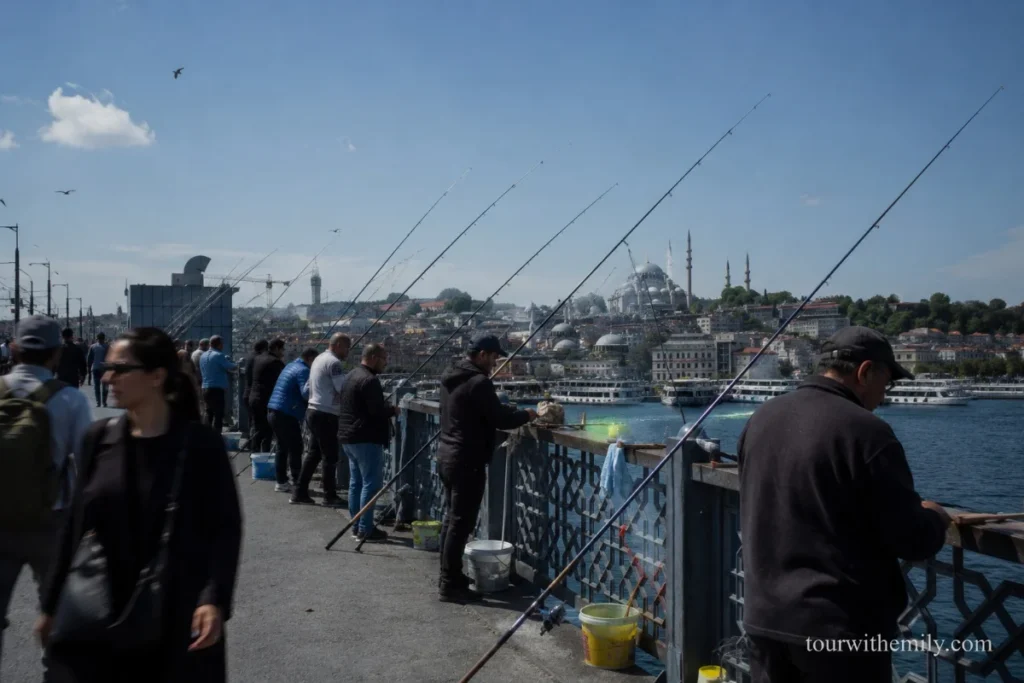
The Spice Bazaar (Mısır Çarşısı) is smaller and less overwhelming than the Grand Bazaar — Turkish spices, dried fruits, lokum, tea, coffee. It sits at the southern end of the Galata Bridge, which crosses the Golden Horn between Eminönü and Karaköy.
Walk the bridge slowly. Fishermen line the upper rail with rods hanging over the edge. Underneath the bridge, in the pedestrian level, fish sandwich vendors and small restaurants face the water. The balık ekmek — grilled fish in bread, sold from boats moored at the waterside — is cheap, good, and specific to this city. Eat it standing at the rail.
Both free to enter.
Time needed: 1.5 hours for both
8. Dolmabahçe Palace
Dolmabahçe was built in the 19th century as a European-style imperial palace on the Bosphorus waterfront — the Ottoman Empire’s shift away from the older Topkapi. The interior has 285 rooms and 46 halls, with a ceremonial chandelier that dominates the main hall. Atatürk died here in 1938 and his bedroom is preserved exactly as it was.
Entry is paid, by guided tour only. Book in advance.
Time needed: 2 hours
9. Bosphorus Cruise
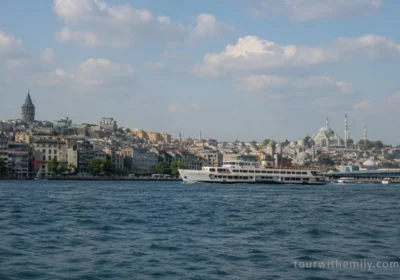
Taking the public ferry from Eminönü up the Bosphorus costs almost nothing with an İstanbul Kart. The route passes both European and Asian waterfronts, Ottoman wooden mansions (yalıs), the two Bosphorus bridges, and Rumeli Fortress. The skyline of Sultanahmet seen from the water — minarets above the roofline, two continents visible at once — is a different city from the one you walk through.
I skipped the expensive cruise boats and took the public ferry instead. Same views, a fraction of the cost, and you’re sitting next to locals commuting to work rather than tourists in matching lanyards. Honestly one of the best hours I spent in the city.
The full route takes around 1.5 hours each way; most people ride one way and return by metro.
Time needed: 1.5–3 hours depending on route
Neighborhoods Worth Half a Day
10. Balat
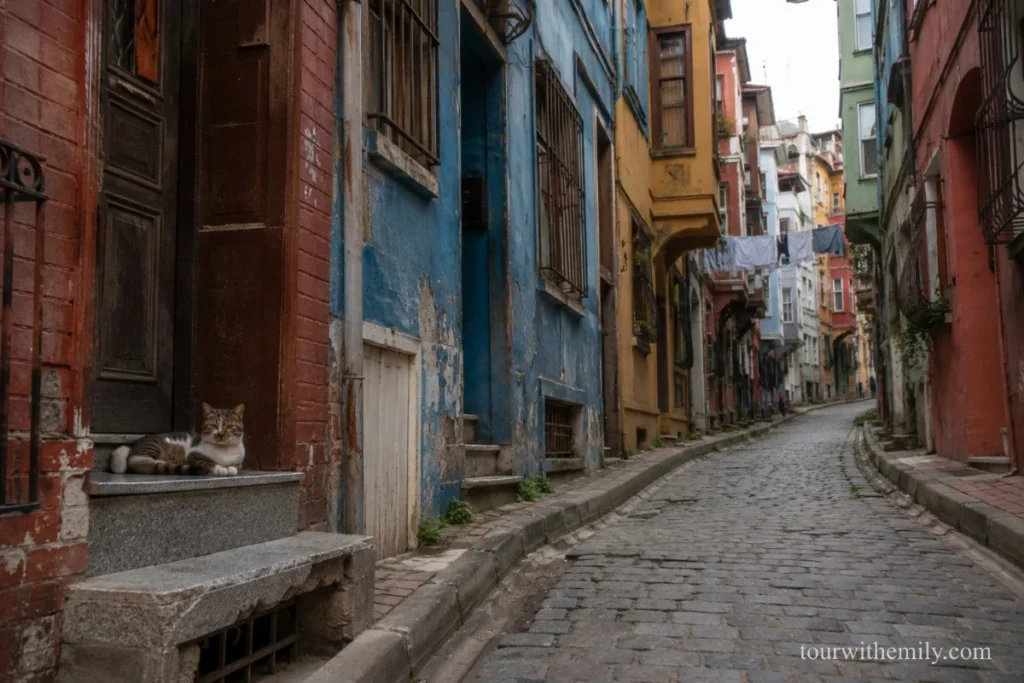
Balat has cobbled streets, painted Ottoman houses, independent cafes, and a local pace that Sultanahmet stopped having long ago. The painted houses are on Kiremit Street. The adjacent neighborhood of Fener is historically Greek, with Orthodox churches and an even quieter atmosphere. Both are best explored without a fixed plan — just walk.
One thing nobody prepares you for in Istanbul: the cats. Thousands of them, all over the city, and particularly visible in neighborhoods like Balat — sitting in doorways, sleeping on café chairs, being fed by locals who leave out food and water on the streets. It’s one of those small things that makes the city feel unlike anywhere else.
Free to explore.
Time needed: 2–3 hours
11. Kadıköy — The Asian Side
The ferry from Eminönü or Karaköy to Kadıköy takes 20 minutes and arrives somewhere that feels like a completely different city. The food market here is better for actual browsing than the Spice Bazaar — fewer tourists, better prices, local vendors. Moda, at the southern tip of Kadıköy, has a waterfront promenade and some of the best coffee in Istanbul.
I crossed on my second day and ended up staying most of the afternoon. Moda specifically — the southern tip of Kadıköy — has a completely different energy: beautiful cafés, proper restaurants, tree-lined streets, and a waterfront promenade where people actually sit and stay rather than pass through. If I went back to Istanbul, Moda is where I’d base myself. The pace is slower, the streets are less polished, and the food costs a fraction of what the same meal runs on the European side.
Ferry fare only — cheap with an İstanbul Kart.
Time needed: Half a day
Experiences Most Visitors Miss
12. Turkish Hamam
A traditional Turkish bath deserves time rather than a rushed hour between sightseeing. The ritual — steam room, marble slab, full body scrub, foam massage — is the same in the historic hamams as it was three centuries ago. The architecture of those older buildings is often as worth seeing as the experience itself.
Skip the ones with someone outside trying to pull you in — prices are inflated and the experience runs like an assembly line. Ask your hotel to recommend a hamam that locals actually use.
Time needed: 2 hours
13. Whirling Dervishes (Sema Ceremony)
The Sema is a Sufi devotional practice — the whirling is meditation, not performance. An authentic ceremony is completely different from the dinner-show version packaged for tourists. The silence, the white robes, the sustained spinning in low light — it’s an experience that stays with you.
Authentic ceremonies run periodically in Beyoğlu and elsewhere. Ask your hotel to find one rather than booking through a general tour operator.
Time needed: 1.5 hours
14. Turkish Coffee and Fortune Telling
Turkish coffee fortune telling — tasseography, or kahve falı — is one of the most distinctly local experiences Istanbul offers and barely appears in standard travel guides. After drinking a Turkish coffee, the cup is turned upside down on the saucer, left to cool, and read by a falcı who interprets the shapes left by the grounds.
Sand coffee (Közde Kahve) is a separate experience worth trying — the cezve sits in hot sand rather than on a stove, which distributes heat evenly and produces a stronger cup. Symbol Cafe in Taksim offers fortune telling. For sand coffee, Nostalgia Cafe in Karaköy is a reliable spot.
Time needed: 1 hour
15. Princes’ Islands (Büyükada)
The Princes’ Islands are a 45-minute ferry ride southeast of the city — car-free, quiet, lined with Ottoman wooden mansions. Büyükada is the largest and most visited. Rent a bicycle or take a horse-drawn carriage to the hilltop monastery with views across the Sea of Marmara. Spring and autumn are better than summer for walking; summer brings beach crowds.
Ferry from Eminönü or Kabataş.
Time needed: Full day
Free Things to Do in Istanbul
Entrance fees add up in Istanbul — the Müze Kart (Turkish Museum Pass) covers Topkapi, the Harem, Istanbul Archaeological Museums, and other state-run sites and is worth buying early. A large part of what’s worth seeing here costs nothing at all.
Free: Hagia Sophia (since 2020), Blue Mosque, Grand Bazaar, Spice Bazaar, walking the Galata Bridge, exploring Balat and Fener on foot, the Kadıköy ferry crossing (very cheap with İstanbul Kart), Gülhane Park below Topkapi, and any waterfront promenade at sunset.
Things to Do in Istanbul by Travel Type
For couples: Bosphorus ferry at sunset, dinner in Ortaköy with the illuminated bridge behind you, a morning in Balat before the crowds arrive.
With family: Grand Bazaar, Princes’ Islands bicycle ride, Miniaturk (scale models of Turkish landmarks), ferry crossings — the water crossing between continents is something children respond to.
For adults who want something beyond the sights: A proper hamam, an authentic Sema ceremony, coffee fortune telling, and the Museum of Innocence — Orhan Pamuk’s novel-turned-museum in Beyoğlu — are what repeat visitors come back for.
Practical Tips
Müze Kart: Buy at the first major paid site. Covers Topkapi, the Harem, and other state-run museums. Worth it for three days of sightseeing.
Booking ahead: Topkapi Palace and Basilica Cistern both benefit from online tickets in peak season (April–May, September–October).
Getting around: The T1 tram covers Sultanahmet through to Karaköy and Eminönü. İstanbul Kart works on all public transport including ferries.
Frequently Asked Questions
What are the top things to do in Istanbul for first-timers?
Hagia Sophia, Blue Mosque, Basilica Cistern, and Grand Bazaar in Sultanahmet; Galata Tower and the Bosphorus ferry; and half a day in Balat or Kadıköy.
What is free to do in Istanbul?
Hagia Sophia, Blue Mosque, Grand Bazaar, Spice Bazaar, Galata Bridge, Balat, and the public ferry to Kadıköy — all free or very cheap. If budget is a concern across the whole trip, Istanbul on a Budget: How to Travel Cheap covers the full cost breakdown.
How many days do you need to see Istanbul?
Three days for the main sites and one neighborhood. Four adds the Asian side. The Istanbul Itinerary: Perfect 3-Day Plan covers it day by day.
What is the Müze Kart?
Turkey’s national museum pass covering Topkapi Palace, the Harem, Istanbul Archaeological Museums, and other state-run sites. Buy it at the first major paid attraction you visit.
What are unique things to do in Istanbul beyond the main sights?
Coffee fortune telling, an authentic Sema ceremony, the Museum of Innocence, Kadıköy market, and the Princes’ Islands — all experiences most first-time visitors skip.
.Is the Bosphorus cruise worth doing?
Yes. Take the public ferry rather than a tour boat — same views, a fraction of the cost.